
A Japanese Bookshop Story, Discovered in a Korean One
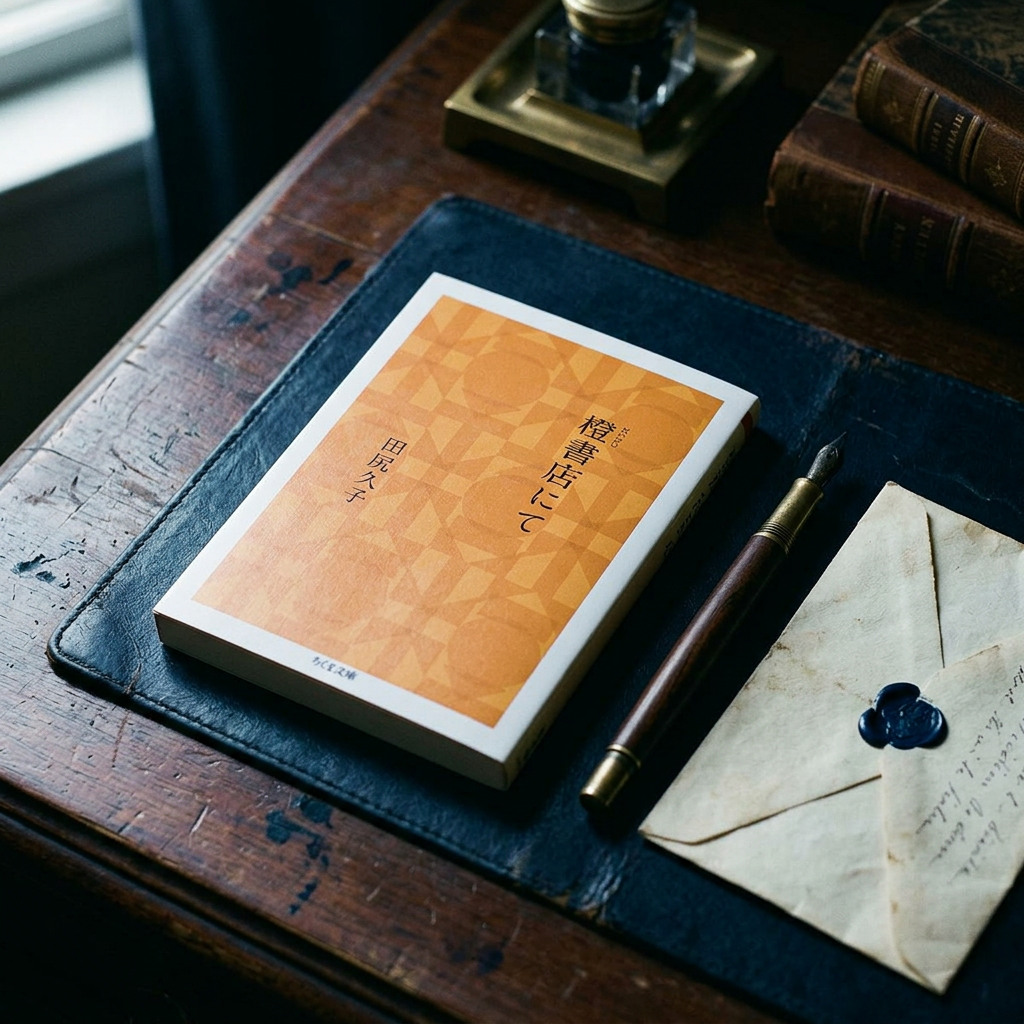
Regular readers of faith.log may remember the column we ran this past March in the spot.log series — a tour of independent bookshops across Jeju Island. It was during that trip, at a shop called Saseo Chaekbang, that I first came across the book I want to introduce today: At Daidai Bookshop. I picked it up off the shelf nearest the entrance, and something about the cover stopped me before I even read the title. That almost never happens. I usually do my due diligence — check the author, skim the table of contents, get a sense of the argument — before committing to a purchase. But this one pulled me in on instinct. A quick look inside confirmed it. What made the whole encounter feel especially fitting was the layered coincidence of it: stumbling onto a book about an independent bookshop in Japan while standing inside an independent bookshop in Korea.
"You Become a Pro by Doing It" — What One Sentence Can Do
The last book I covered in read.log Ⓛ — Welcome to the Hyunam-dong Bookshop — was also built around a bookshop and the people who pass through it. But that was a novel. At Daidai Bookshop is something different: a collection of real stories, drawn from the actual people connected to Daidai Bookshop in Kumamoto, Japan. Of the many episodes in the book, a few stayed with me long after I finished it.
The first involves the author herself, Tajiri Hisako, who owns and runs Daidai Bookshop, and a contractor named Muramoto who handled the renovation when she was just getting started. Tajiri had originally set out to open a café. She had signed the lease, and like anyone standing at the edge of something new, she was carrying a quiet mix of excitement and anxiety. At some point during the construction, Muramoto said something offhand: "You become a pro by doing it — you'll be fine." She writes that those words settled somewhere deep and stayed there, steadying her whenever doubt crept back in.
It's a small thing to say. And yet. We live in a moment that rewards the already-polished and punishes visible uncertainty, and the pressure of that can be genuinely wearing — on the mind first, then on the body. What this story quietly insists is that what lifts people, more often than not, isn't a grand gesture or a perfectly calibrated piece of advice. It's a few honest words, said at the right moment, by someone who means them.
The Years a Book Holds
I read a lot, and I write about what I read — which means my apartment has developed a book problem. What's harder to explain is the subset of books I keep even though I have no particular reason to. They're not classics. They're not references I'll return to. But they stay. At Daidai Bookshop had a passage that got at exactly why:
"I still have a few faded magazines. I've moved several times, but never thrown them out — perhaps because when I turn the pages, I can see my younger self looking back.”
There's something to that. A book doesn't just record ideas; it records you at the time you read it. Open an old one and you're not just revisiting the text — you're revisiting the person who first held it, what they were worried about, what they were hoping for. Books read at different points in your life become a kind of unofficial autobiography. Reading this passage, I found myself quietly grateful that someone had put into words what I'd never quite managed to justify. The author, without meaning to, had made a very convincing case for my clutter.
What a Handshake Can Mean
The book also includes a story about a man named Seki, who had Hansen's disease and contributed writing to Artel, a literary journal that Tajiri edits and publishes. She describes meeting him for the first time:
"On the day I first met Mr. Seki, when it was time to say goodbye, I held out my hand for a handshake. He shook it with a shy smile. 'Me too,' said Ms. Namitoko, and she held out her hand as well. The look on his face in that moment was the happiest I ever saw from him. For someone from outside the sanatorium to make physical contact — that must have been no small thing. The high walls of that place had never once disappeared for Mr. Seki.”
We tend to believe that people in hard circumstances need hard solutions — and that if we can't offer something substantial, we're better off saying nothing and doing nothing. This story pushes back on that quietly but firmly. What reached Mr. Seki wasn't a program or a policy or a profound statement. It was a hand, extended without hesitation. I thought about the times in my own life when I was the one struggling, and what actually helped — and it was almost always someone simply being present. Staying. Showing up in small, unglamorous ways. That's what this passage keeps asking us to consider: whether the reason we so often do nothing for people on the margins is that we've talked ourselves into believing that nothing less than everything is worth offering.
Beyond the Bookshop

I came to this book for the bookshop. What I found was something harder to categorize. The people of Kumamoto — their ordinary, particular, human lives — had a way of making me look at my own more honestly. That's what good personal essays do, and Tajiri Hisako is quietly excellent at it. The book doesn't moralize or instruct; it just pays close attention to the people around one small shop, and trusts that their stories are worth telling. They are.
If you've been moving too fast lately — if the world has started to feel like a machine you're just a component of — this book is a good place to slow down.
About Author

faith.log
A journal that connects faith and everyday life. In each small piece of writing, we share the grace of God and the depth of life together.


