A Society That Never Learned to Rest
There's a particular kind of tiredness that doesn't go away with sleep. You know the kind. It sits in your chest even on weekends, whispering that you should be doing more — reading more, earning more, becoming more. If you've felt it, you're not alone. And if you live in a city, you've probably stopped questioning it altogether.
We have built societies — Seoul, New York, Tokyo, London, take your pick — around a single, largely unspoken agreement: that success is measured in what you accumulate, and that the pursuit of accumulation justifies almost any sacrifice. Happiness, rest, even relationships get quietly reshuffled to the bottom of the priority list. Not because anyone decided this was a good idea, but because the system moves fast enough that most of us never stop to ask whether it should.
The acceleration is real. Technology advances, expectations rise, and the baseline of what counts as "keeping up" shifts upward without warning. There's always a new skill to learn, a new platform to master, a new metric by which to measure yourself and be found wanting. The cultural response to all this pressure hasn't been to slow down — it's been to glorify the sprint. Hustle culture. The 5 AM club. Productivity as a personality. The implicit message embedded in all of it is clear: if you're resting, you're falling behind.
What gets lost in this framing is something quietly devastating. When rest becomes a sign of weakness, and busyness becomes a badge of worth, the people who simply cannot keep up — and there are many — are left not just exhausted, but ashamed. Burnout rates climb. Depression deepens. And still, the dominant cultural voice tells them to try harder.
People Who Ran Until They Couldn't

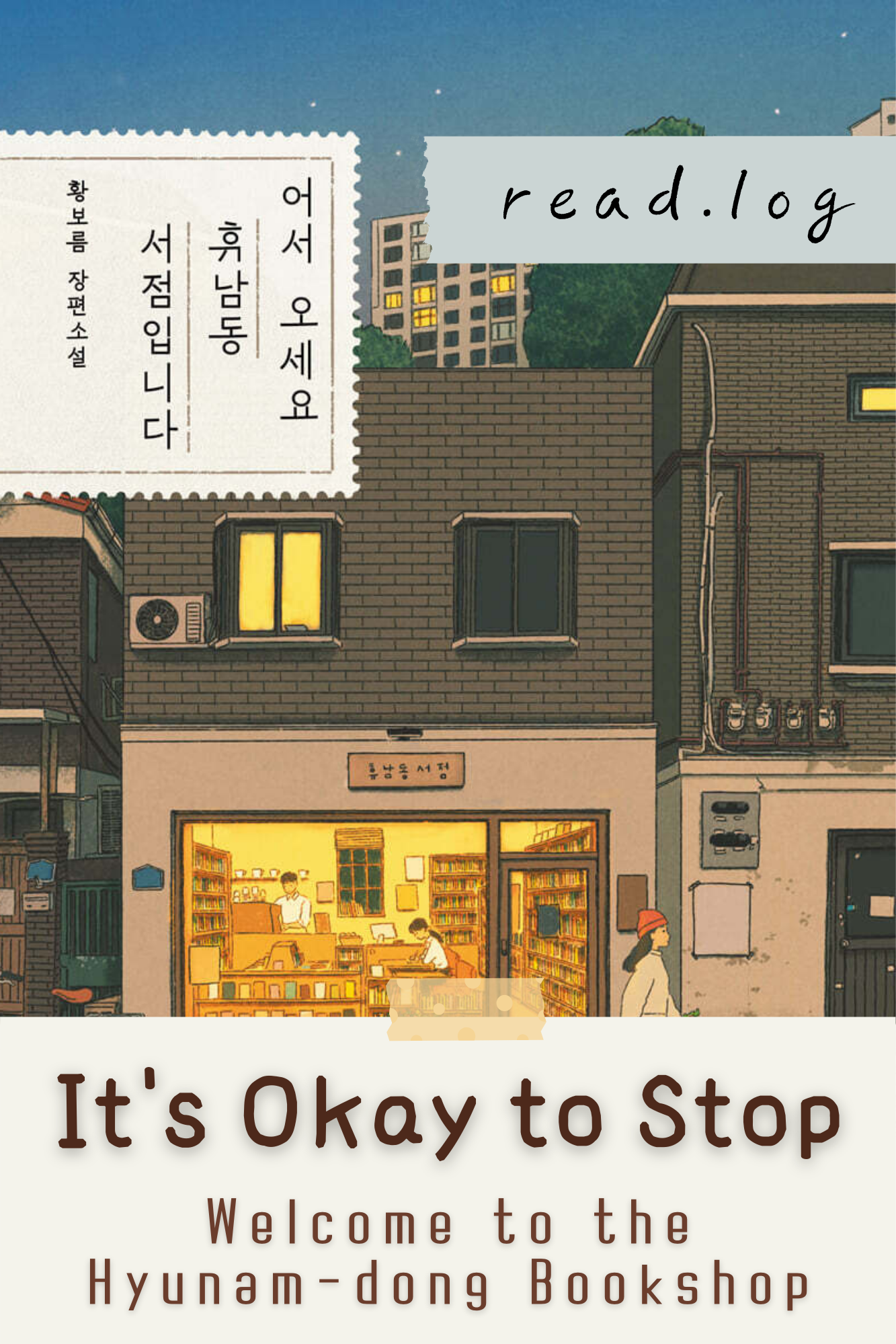
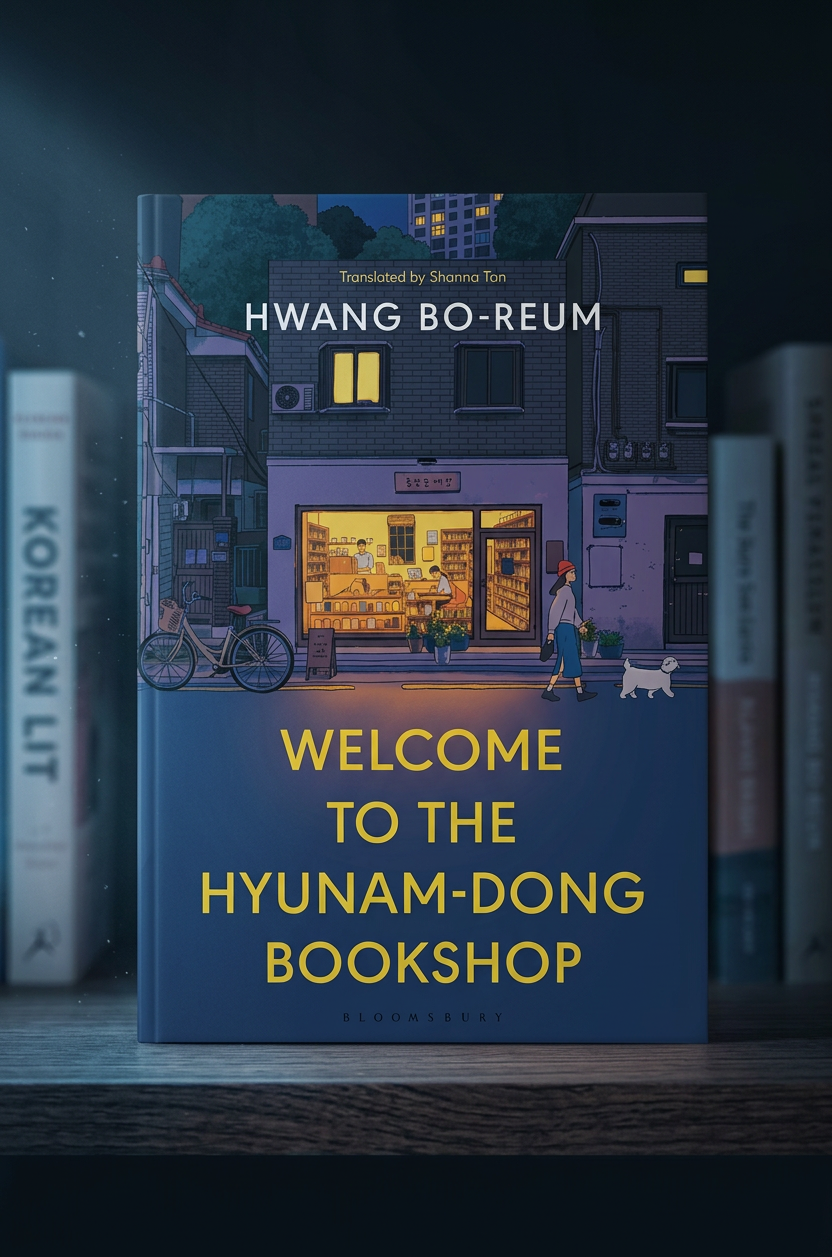
<Welcome to the Hyunam-dong Bookshop> (어서오세요, 휴남동 서점입니다), a novel by Korean author Hwang Bo-reum, doesn't flinch from this reality. Its characters are not abstractions — they are recognizable. They are the people at the next desk, on the morning commute, in the mirror. People who played by the rules, ran the race they were handed, and quietly broke under the weight of it.
Yeongju, the novel's central figure, grew up watching her parents fail by society's standards. That early wound became fuel: she studied relentlessly, threw herself into her career, and even approached marriage as another goal to achieve. She was, in every external sense, doing everything right. And then, without warning, burnout arrived — not as a gentle nudge but as a collapse. She stopped being able to care about the things she had organized her entire life around.
What followed was almost worse than the breakdown itself. The people closest to her — family, colleagues — didn't see someone who needed rest. They saw someone who had given up. They pushed. They criticized. They measured her against the standard she had briefly escaped, and found her lacking. It was only when Yeongju created distance from that pressure that she began, slowly, to find her footing again. She opened a small bookshop in her neighborhood — the Hyunamdong Bookshop of the title — and in that quieter space, something began to mend.
Her story cuts because it's not really about individual weakness. It's about what happens when a person gives everything the system asks for, and discovers that the system was never going to give anything back. As one character in the novel puts it:
"In a world designed to make you sprint toward success without a second thought, reading is what makes you stop and look at the people around you.”
There's another character worth meeting. Minjun's story begins in kindergarten — a perfect score on a dictation test, a teacher's praise, parents who lifted him up in celebration. From that moment, the trajectory was set: better grades, a better university, a higher GPA, a better job. He ran the whole course. And when the job market didn't cooperate, when failure arrived not as a lesson but as a wall, he didn't just feel disappointed. He felt like he had ceased to exist.
"I wanted to be completely free," he reflects, "from morning alarms, from other people's expectations, from my parents' sighs, from endless competition and comparison and fear of the future.”
The reason these two characters stay with you long after the last page is precisely because neither of them is fictional in any meaningful sense. They are composites of people most of us know — or people we have been. Which raises an uncomfortable question: how many of us are living in a society whose priorities have become so inverted that we've lost sight of what we were actually running toward?
And Yet — Recovery Is Possible
Here is where the novel earns its place. It does not leave its characters in the rubble. Imperfectly, haltingly, they move forward. They discover, or rediscover, something worth orienting a life around — and that discovery happens not in isolation, but in relationship.
This is one of the book's most honest observations: the same force that wounds is also the one that heals. People hurt Yeongju. People also helped her find her way back. There is no contradiction in this — only the complicated truth that human beings remain, for better and worse, the primary architects of each other's experience.
"Somewhere in the world," the novel says, "there are people who have already carved out a wide, open space — and who wait for someone to find their way into it. Who help that person make something beautiful once they arrive.”
You may not be lucky enough to find that person easily. But you might be that person for someone else. And you can certainly try to be that person for yourself — the voice that says, when everything feels like too much: It's okay to stop for a moment.
Not everyone needs to want the same things. Not every life should look the same. The paths are different, and that is not failure — that is just the actual shape of human experience, which no productivity system has ever successfully flattened.
If you find yourself tired in the way that sleep doesn't fix, Welcome to the Hyunam-dong Bookshop might be worth your time. Somewhere in its pages, Minjun's quiet resolution might start to feel like your own:
"He decided, finally, to stop being shaken. He had learned that when you don't want to be moved, you find something that doesn't move — and you hold on.”
"Forget the destination. Just do your best with what's in front of you today."
About Author

faith.log
A journal that connects faith and everyday life. In each small piece of writing, we share the grace of God and the depth of life together.


