Hidden dangers are revealed only through examination

We know this to be true. There are illnesses that show no outward signs—conditions that remain unnoticed until they are discovered through careful medical examination. The absence of pain does not guarantee health. In fact, the quieter the symptoms, the more necessary regular checkups become. This is why societies encourage routine health screenings as we age. Hidden dangers are not exposed by how we feel, but by intentional examination.
Faith is no different. In fact, faith may deceive us more easily than the body ever could. The longer we attend church, the more familiar we become with worship and service, the more likely we are to assume that our faith is healthy. Yet Scripture does not share this optimism about the human heart. “The heart is deceitful above all things and desperately sick,” it tells us. Human beings are remarkably skilled at deceiving themselves.
For this reason, Scripture never treats faith as a condition that simply maintains itself. Faith that is not examined gradually deteriorates. This is why Revelation warns of those who have “the reputation of being alive, but are dead.” The outward appearance of faith and its inner reality can easily drift apart.
What, then, must be examined?

What should we examine in our faith? Reformed theology always returns this question to the foundations. We confess that we believe in God—but who is this God? Is He a being adjusted to human needs, or the sovereign Lord who rules all things according to His will?
Why did Jesus Christ come into the world? Was He sent merely to offer comfort, or to redeem a humanity utterly lost in sin? Is the cross a moral example, or a real substitution in which Christ bore the guilt of sinners? When a person believes in Christ, does anything truly change—or is it merely a shift in attitude rather than a passage from death to life?
The purpose of faith itself must also be examined. Faith is not a tool for making life more stable or manageable. What is salvation, and why must humanity be saved at all? Is the human being capable of approaching God by nature, or entirely dependent on grace from beginning to end?
Are heaven and hell symbols, or realities? Is the church a matter of personal preference, or the covenant community God gathers through Word and Sacrament? Worship is not designed for human satisfaction, but is the place where God meets His people in the way He has ordained. Scripture is not a reference book, but the sole rule of faith and life. Prayer is not a means of reinforcing self-confidence, but a gracious act of submission to God’s will. And the Holy Spirit is not an impersonal force, but the personal God who works through the Word.
Why we must return to Scripture

Before these questions, we cannot say, “Is it really necessary to think this deeply?” The harshest warnings Jesus spoke were directed not at unbelievers, but at those whose faith had become outwardly polished and inwardly hollow. Faith shaped more by tradition than by Scripture, sustained by habit rather than grace, was firmly rebuked by the Lord.
Even the most carefully designed system will fail if accumulated errors are left unaddressed. In such moments, minor adjustments are not enough; what is needed is a fundamental reset. Faith is no different. Over time, experiences, customs, and unexamined assumptions can obscure its very center.
This is why the Reformed faith has always insisted: Return to Scripture.
Not to experience, but to the Word.
Not to tradition, but to revelation.
Not to emotion, but to truth.
Whatever is not grounded in Scripture—no matter how old, familiar, or convenient—must be laid aside. Renewal does not come from adding something new, but from returning to where we first belonged.
“Do not be conformed to this world, but be transformed by the renewal of your mind.” This is not a call to emotional resolve, but to a structural reorientation of life before the Word of God.
The place where we begin again

Through start.log, we hope to examine—one theme at a time—the essence and reality of the Christian faith, guided by Scripture. This is not a space to evaluate others, but a place to set our own faith honestly before God’s Word.
Faith does not sustain itself.
Faith that is not examined will inevitably grow dim.
So let us begin again.
At the place of first grace.
Before the Word.
About Author
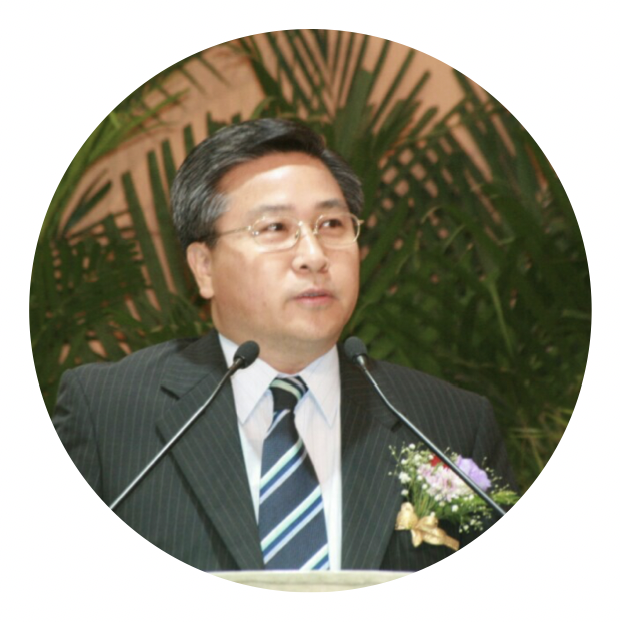
Choi Jong Eui
Pastor, teacher, and writer committed to connecting Christian faith with everyday life. He writes with the hope of praising the Lord and faithfully completing the mission entrusted to him, bearing good fruit to the glory of God.


