Encountering the Bible’s Translation and the Reformation at the National Museum of World Writing
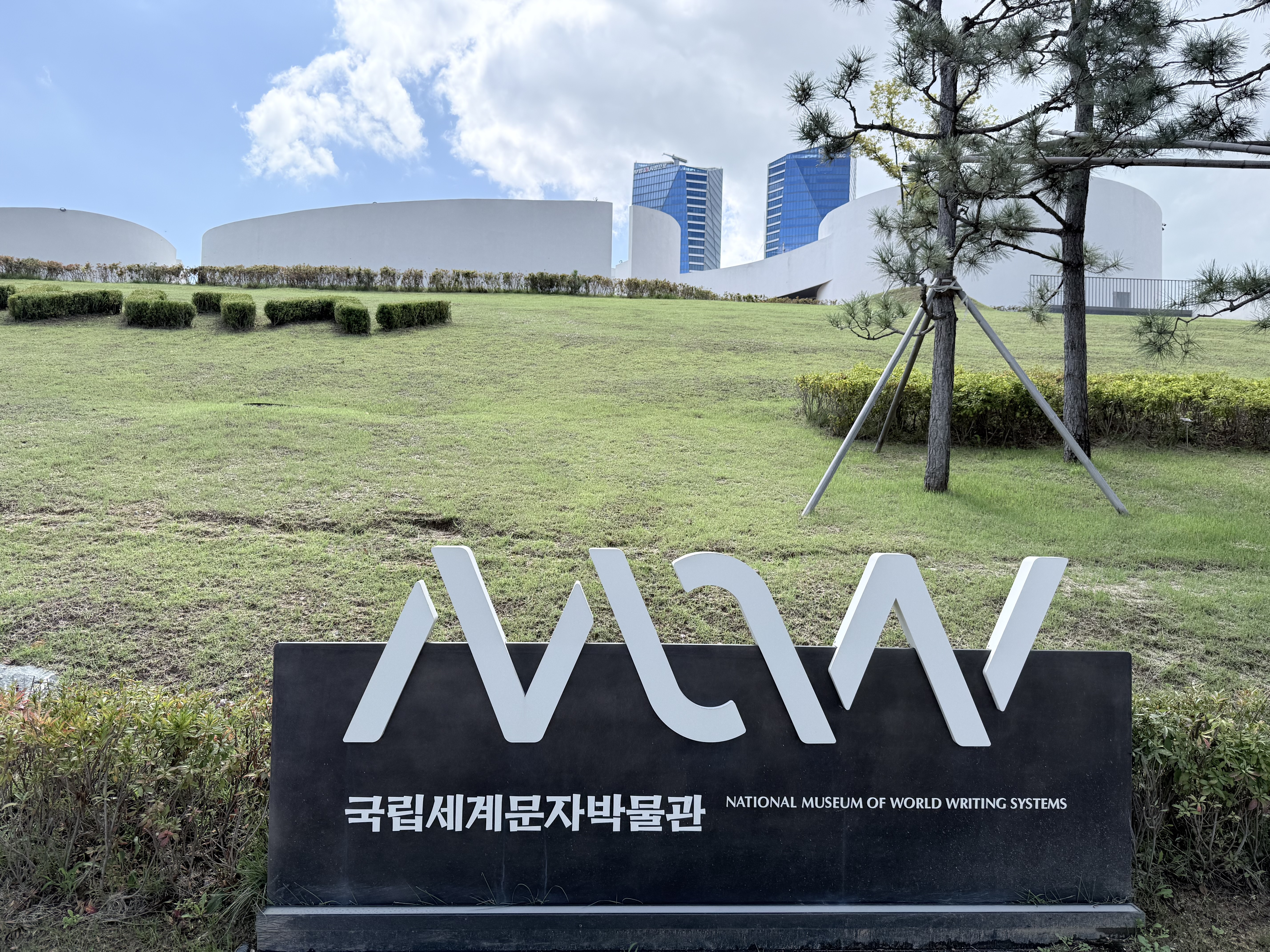
Songdo Central Park in Incheon is one of the city’s most beloved landmarks. With its skyline and wide-open views, it has become a favorite place for locals and visitors alike to take a leisurely walk. Yet tucked within this familiar park lies a treasure that many overlook—the National Museum of World Writing. I myself stumbled upon it by chance, wandering down a path I did not usually take. But this October, the season of the Reformation anniversary, the museum deserves to be more than a passing discovery. It should be a destination.
The History of Writing and the Bible
When people think of writing, they often recall Egyptian hieroglyphs or Chinese characters. Yet the foundation of Western civilization was shaped above all by Greek and Latin. And it was through one particular text—the Bible—that these languages exerted their most profound influence on the world.
The Old Testament was written in Hebrew, the New Testament in Greek, and later translated into Latin for the medieval church. For centuries, Scripture remained largely inaccessible to ordinary believers. But the Reformation, with its rallying cry of “Sola Scriptura” (Scripture alone), changed everything. The Bible was no longer the possession of clergy alone; it was translated into the languages of the people—German, English, and eventually Korean—so that every believer might read the Word of God for themselves.
The Bible on Display at the Museum
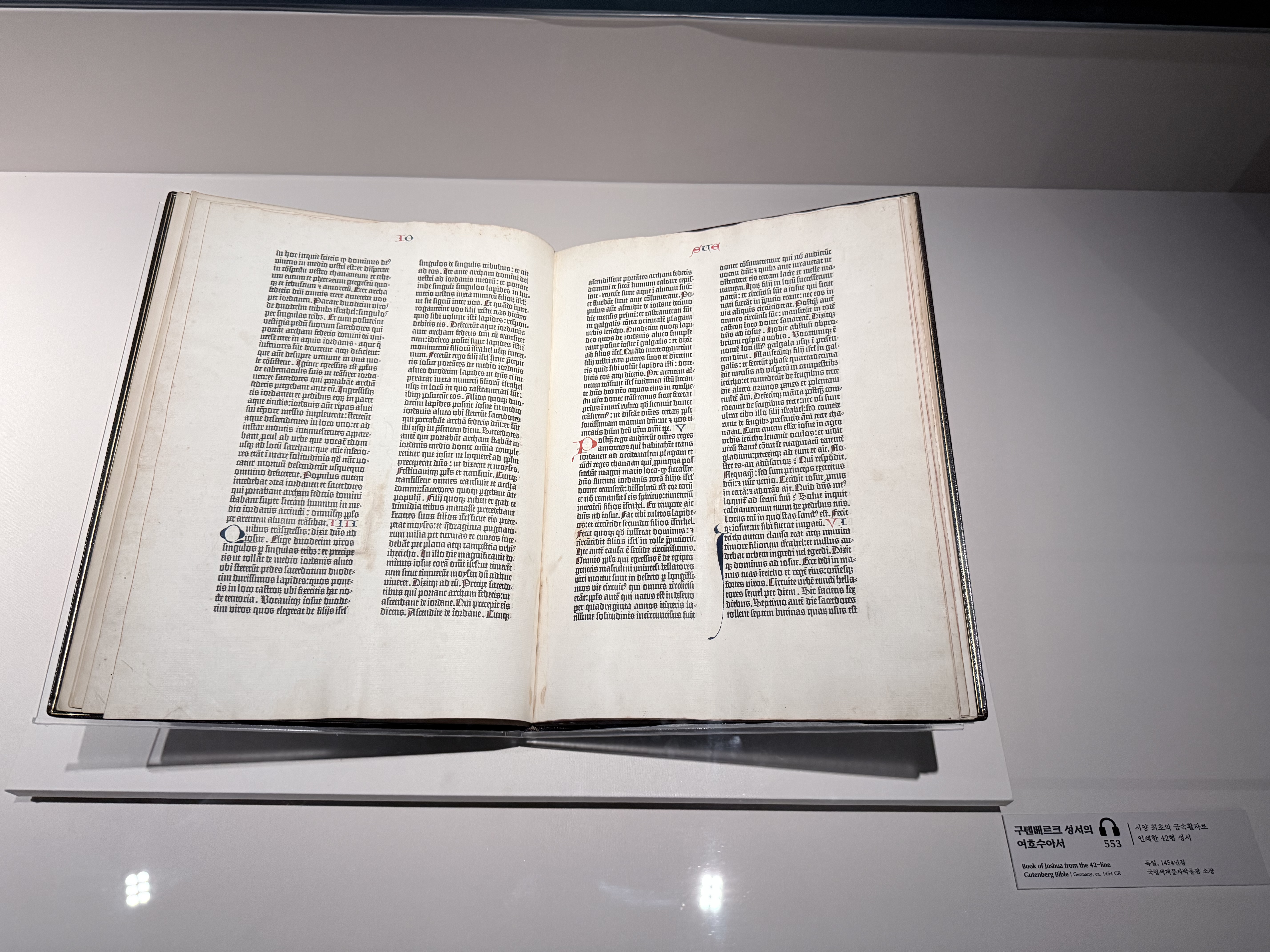
The National Museum of World Writing tells this story with remarkable clarity. Here, one can encounter treasures such as the Codex Sinaiticus, one of the oldest surviving Greek manuscripts of the New Testament; the Gutenberg Bible, the first great product of movable type; Luther’s German Bible; and the earliest Korean New Testament, the Yesu Seonggyo Seongseo.
Among these, the Gutenberg Bible and Luther’s translation hold special weight in October, for they embody how Reformation ideals were carried on the wings of printing technology.
Gutenberg and God’s Providence
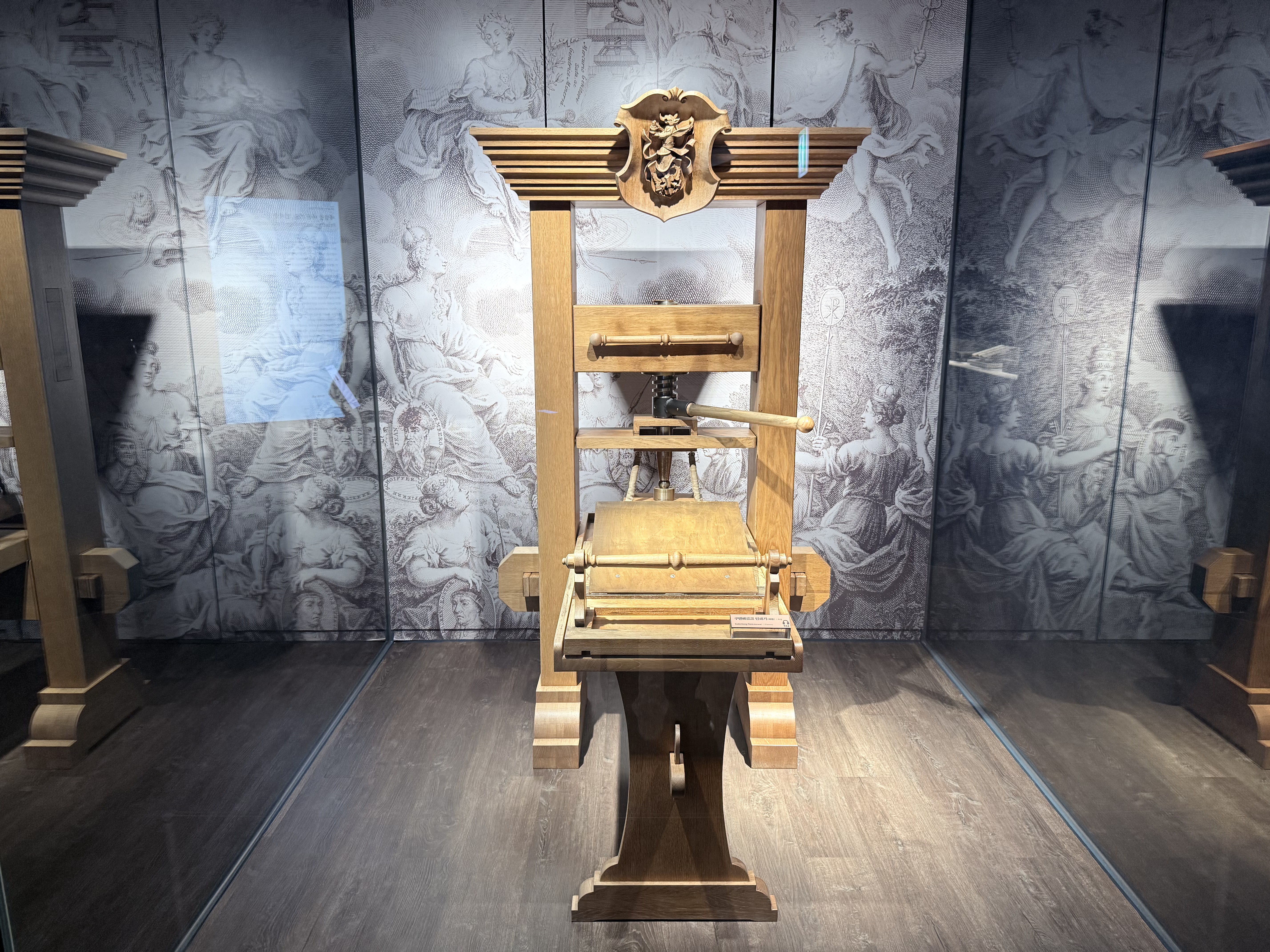
Long before Luther, reformers arose who sought to renew the church. Yet their voices often faded, unable to spread widely across Europe. In God’s providence, however, Luther’s time coincided with a remarkable technological breakthrough: Gutenberg’s movable type press.
What once required painstaking labor by scribes could now be multiplied by thousands. Luther’s Ninety-Five Theses and subsequent writings could circulate with unprecedented speed. This was no historical accident. God had prepared, through printing, a means by which the Reformation would not remain local but would become a world-shaping movement.
At the museum, visitors can see a replica of the Gutenberg press and metal type, along with a video demonstration of how books were produced. These are not merely relics of technological history; they are reminders of how the Lord uses human craft to advance His kingdom.
The Legacy of the Reformation and Our Present Calling
The Reformation was not about information alone. It was about liberation. By translating and distributing the Scriptures, the Reformers exposed the corruption of the medieval church and restored the authority of God’s Word as the only rule for faith and life.
“Sola Scriptura” was not just a slogan; it was the spark of transformation in countless ordinary lives.
Today, we face a similar question: if the Reformers harnessed the printing press for God’s work, what of us? With digital media, online platforms, videos, and publications, we hold tools of immense reach. Will we use them merely for entertainment and culture, or will we, like the Reformers, press them into service for the kingdom of God? This issue of faith.log step.log seeks to take up that challenge, bringing together words and images for the sake of the gospel.
Conclusion and Invitation
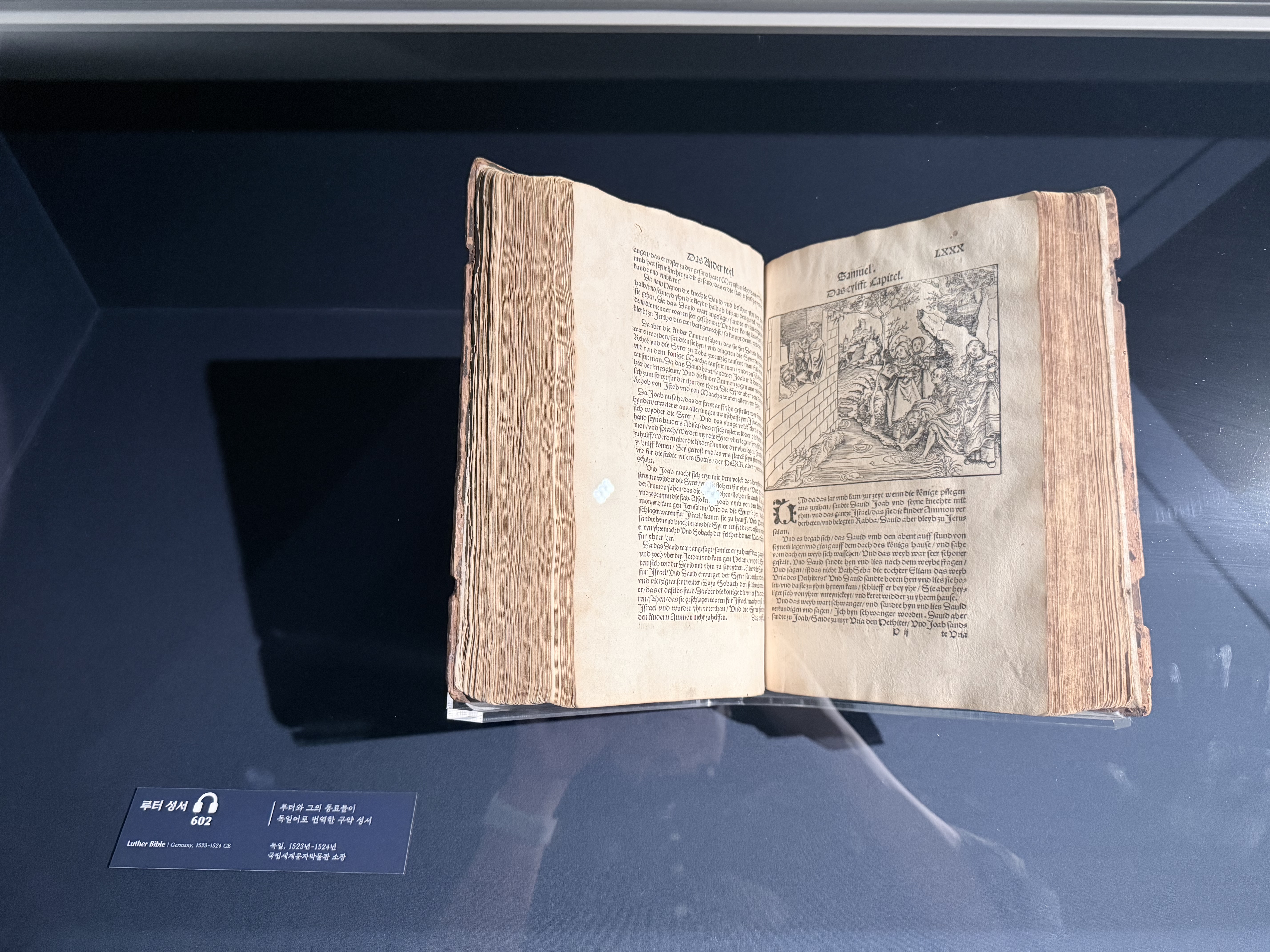
October 31 is not a night for costumes, ghosts, and worldly festivities. For the church, it is Reformation Day, a day to remember that God’s Word is our only foundation.
The National Museum of World Writing offers more than an exhibition—it is an encounter with history, with the providence of God, and with the Reformers who gave their lives so that the Bible might be read in every tongue. To stand before the Gutenberg press, to see Luther’s Bible, and to behold the earliest Korean Scriptures is not simply to observe history. It is to step into the story of the living church.
So this October, I urge you: as you stroll through Songdo Central Park, turn your steps into this museum. Let your eyes rest on the manuscripts, translations, and presses that God used to carry His Word to the nations. To do so is to remember the Reformation not as a distant event, but as a living call to faithfulness.
Sola Scriptura—Scripture alone!
About Author

faith.log
A journal that connects faith and everyday life. In each small piece of writing, we share the grace of God and the depth of life together.


