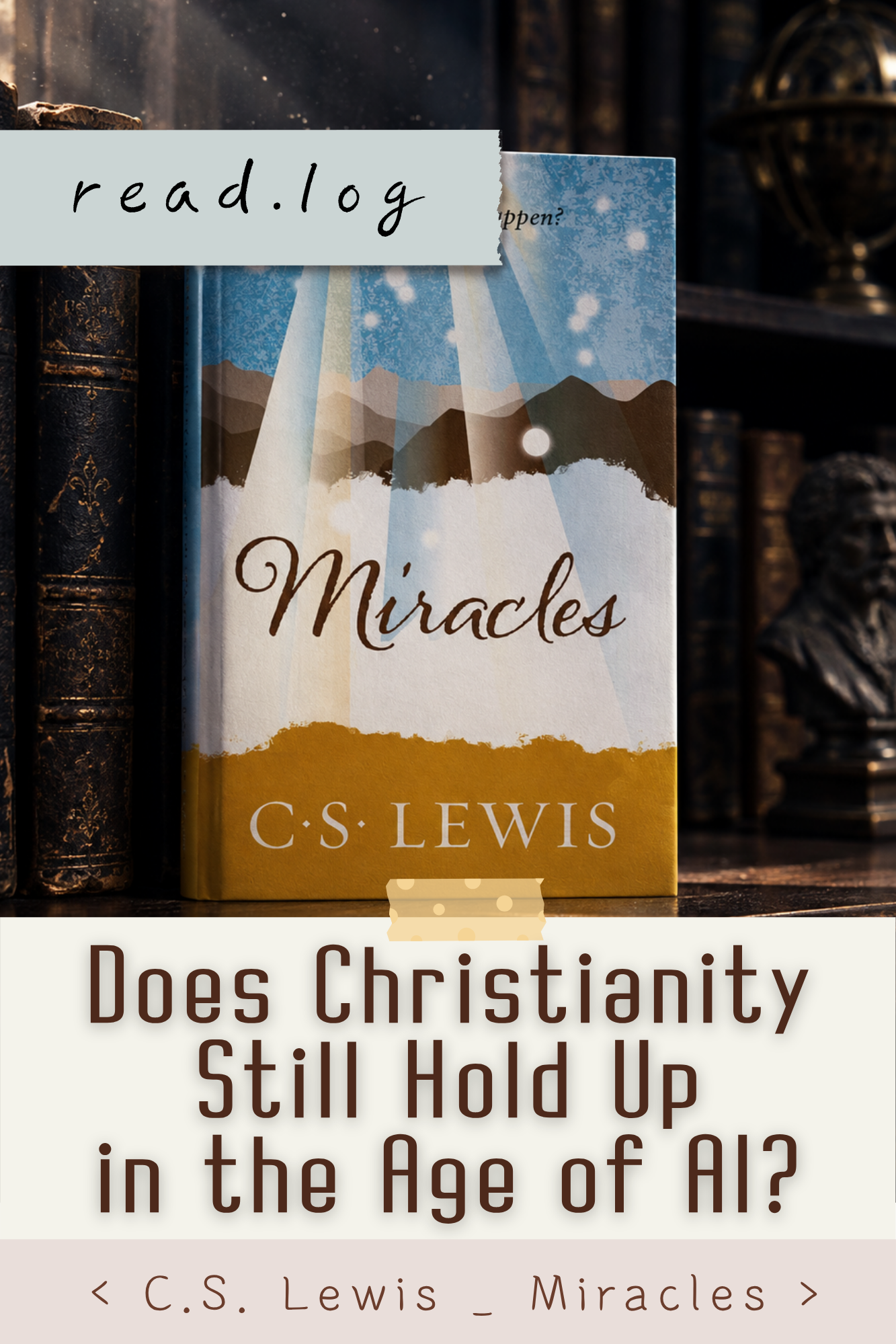
Miracles: Does Christianity Still Hold Up in the Age of AI?
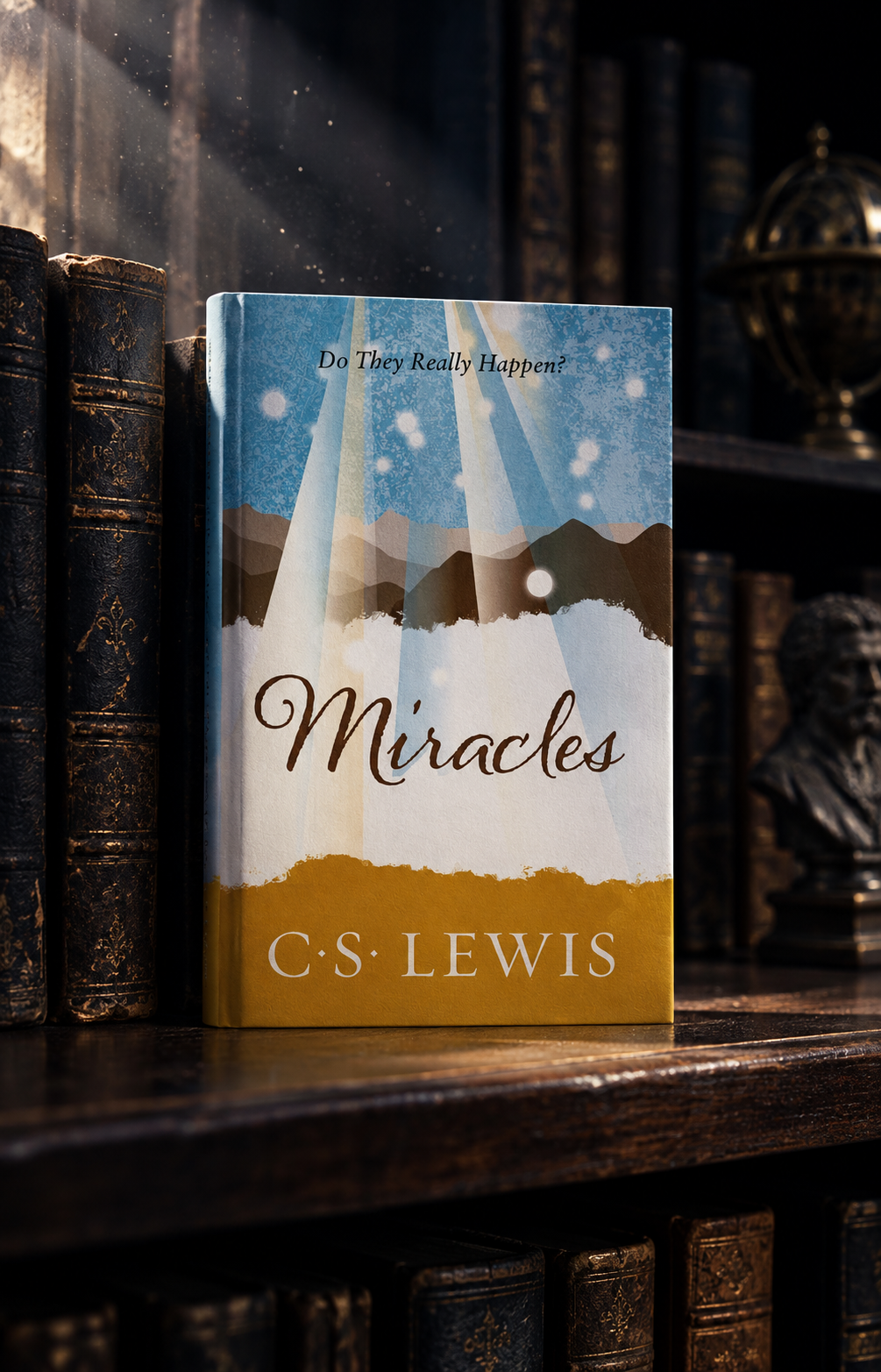
We have moved past the industrial age, through the information age, and now find ourselves living in the age of AI. Technological progress has given us tremendous convenience, but it has also reshaped traditional values along the way. That reshaping has not spared how people regard the Christian faith. It touches those outside the church as much as it does believers within it. In an age like this, one book stands out for restoring clarity about what Christianity actually is: C.S. Lewis's Miracles.
Modernist Christianity, Stripped of Miracle, Is Not Christianity
Most people today assume that miracles simply cannot happen. A miracle belongs to film and fiction, not to real life. That assumption gets carried straight into the church. Believers who want Christianity to remain respectable in the eyes of a secular culture end up stripping out everything a modern mind cannot rationally account for, and the miraculous is usually first on that list.
Lewis noticed the same tendency in his own day. He calls this pared-down faith "modernist Christianity" or "naturalistic Christianity." His verdict on it is unambiguous: it will not do. The reason is simple. Christianity, from its first page to its last, is a story about miracle. Strip the miraculous out to make the faith more palatable to modern sensibilities, and what remains is no longer Christianity. It is something else wearing its name.
That points to something worth guarding against. It is the habit of taking whatever a given culture finds acceptable and grafting it onto the faith, as though popularity were proof. What the majority follows is not thereby true. The universal is not the same as the absolute.
"For the Christian, Christianity just is a Grand Miracle.”
Nature Is a Creature, and Miracle Does Not Break Its Laws

So how should we think about the standoff between supernaturalism, which affirms miracle, and naturalism, which denies it? And what should we make of the modern, scientifically dressed case against miracle altogether?
Lewis begins by laying out naturalism's premise: since the laws of nature are absolute, nothing that breaks those laws, such as a miracle, can occur. But he argues that this premise collapses the moment we recognize that nature itself is a creature, something made, with a given nature of its own. God is the author of nature's laws, and when he works a miracle, that miracle is folded right back into nature, which then carries on according to those same laws.
The crucial point is that God, as Creator of nature, is also the author of natural law itself. A miracle worked within the world God made does not violate that law; it simply is not bound by it in the way ordinary events are. Miracles walks through a series of biblical accounts to show exactly this pattern: each miracle, once it occurs, is absorbed back into the natural order and continues on according to its laws.
Water turned to wine is a fitting example. God is the maker of water, of the vine, and of time itself. Given enough water, grapevines, and time, wine results without any miracle at all. What Lewis is getting at is that the Creator can simply take that same water, vine, and time and produce wine without waiting on the ordinary process. That is the point most readers miss. To confess Christ and simultaneously deny the God who works miracles is not a coherent position to hold.
Lewis also turns the tables on those who deny the supernatural while relying on their own reason to make the case. Reasoning itself, he points out, presupposes something that naturalism's own laws cannot account for. The moment a naturalist trusts his reasoning, he has already conceded a premise his system cannot support.
He applies the same logic to arguments from probability. That an event has been observed to happen frequently does not make it automatically true, and that an event has happened only once in history does not make it false. Probability itself rests on an assumed uniformity of nature, and mere experience cannot establish that uniformity as a given. Once uniformity itself is in question, arguments built on probability lose their footing.
Reading Miracles, I found myself recognizing a familiar pattern: much of the case against Christianity starts from the conclusion, "Christianity is false and miracles do not happen," and works backward to construct an argument that fits. Naturalists, probability skeptics, and those who lean on science all share this move. They are standing on a premise they take to be reasonable and building their conclusions on top of it beforehand. What is sadder still is how often believers absorb this same logic and quietly let go of the truth they claim to hold. But a believer is, by definition, someone who trusts that God exists. And as Lewis reminds us, if God is truly there, we are never safe from the miraculous.
"The result of what would ordinarily be called Faith and Reason, if you found them a hundred years ago or find them today, is not going to be different.”
Miracle Stands at the Center of Human History
So how should a Christian read miracle? Lewis frames it as one great story. God, the Author, is telling that story within the very nature we inhabit. The trouble is that we keep misreading what the story is actually about. As Lewis puts it, we have "assumed that we already knew what the central plot of this cosmic story is." Most assume it revolves around atoms, or space and time, or economics and politics. It does not.
The central plot, Lewis argues, is death and resurrection. Anyone with eyes to see could have caught hints of that miracle on nearly every page of the story. The moments in which God worked a miracle are, on Lewis's reading, the most central and decisive moments in the whole of human history.
If a believer, reading Scripture and walking in faith, meets a miracle along the way, that moment should be recognized as one of the pivotal moments in the redemptive history God is writing for us. To modern eyes, that redemptive story can look like myth. But Lewis's point stands regardless: the doctrine that redemption begins with the individual and moves outward until it embraces the whole created order is, philosophically, a richer account than any of the theories that deny it. And none of it happens by accident. It was, from the very beginning, the Creator's own design.
"If the Incarnation happened, it is the central event in the history of the earth.”
Apologetics Matters for Believers Too
Beyond what I have covered here, Miracles also takes up how we understand death, the ascension of Christ, and a good deal more, all argued with the same rigor. What strikes me most is how well Lewis's case holds up in an age of AI. If anything, it reads as remarkably contemporary. That staying power is itself evidence of why Lewis is remembered as one of Christianity's great apologists and men of letters.
One last word about apologetics as a genre. Most people assume apologetics exists to defend doctrine against attacks from outside the church. In our own moment, though, apologetics may matter more inside the church than outside it. Many believers find their faith unsettled by the sheer weight of competing ideas and disciplines the modern world offers. A good work of apologetics is one of the best tools available for seeing clearly where our own confidence has been wavering, why the world's counterarguments fall short, and why what we believe still holds.
For anyone who has sat in a pew and still wondered, quietly, whether God is really there, whether miracles really happen, or whether Christianity can still be taken seriously in a scientific age, I recommend Miracles.
About Author

faith.log
A journal that connects faith and everyday life. In each small piece of writing, we share the grace of God and the depth of life together.


