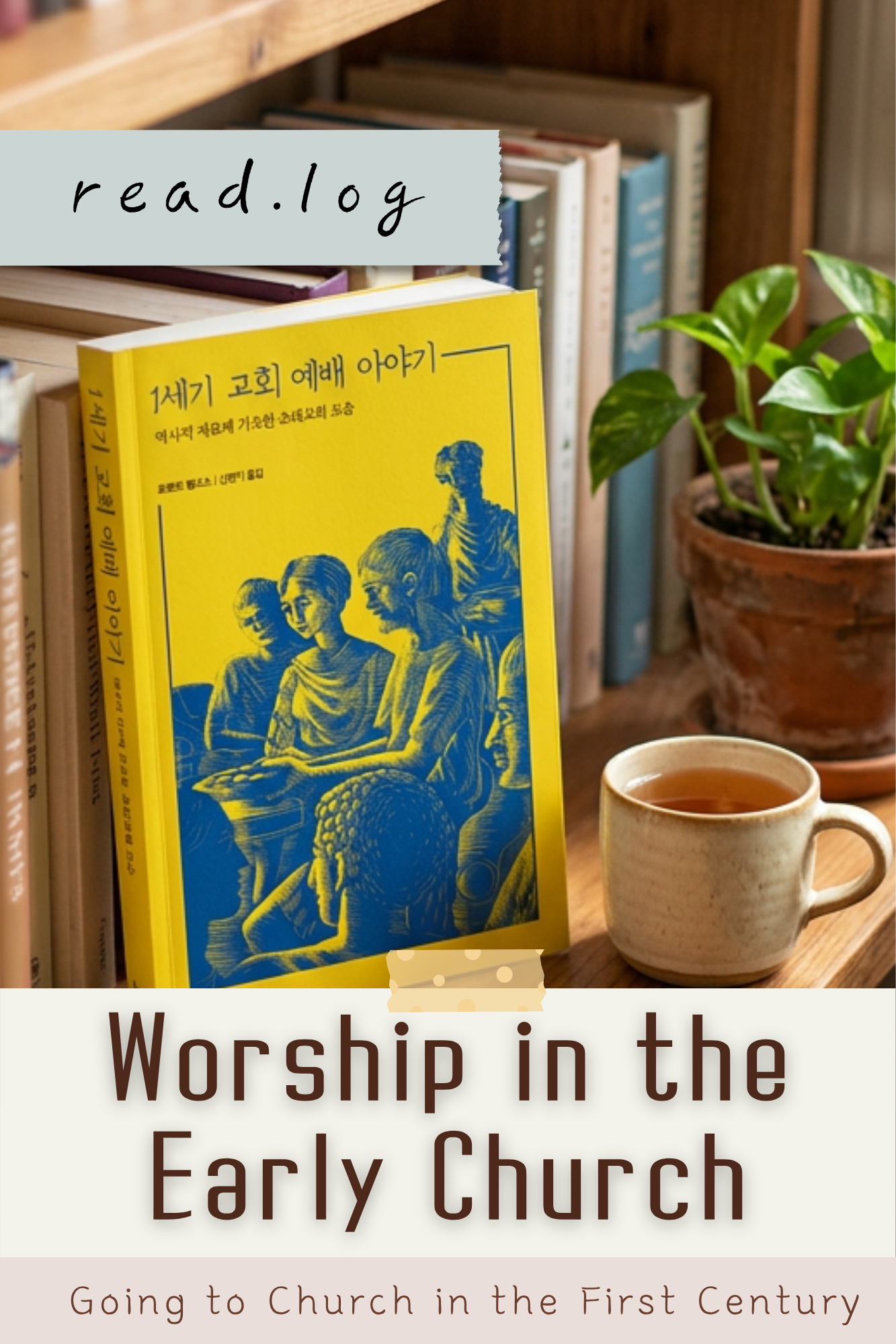
Going to Church in the First Century: Rediscovering the Substance of Worship in the Early Church

Christians go to church every Lord's Day and worship. There is no such thing as a Christian who never worships. Yet few of us stop to ask the harder question — whether the worship we offer is the worship God actually delights in. Too often Sunday comes out of habit, we walk into the sanctuary out of habit, and we worship without much thought at all, which means we rarely think carefully about what worship even is. If we want to know what worship God delights in, there is no better place to look than the early church. This month's read.log takes up a book that opens exactly that window: Robert Banks's Going to Church in the First Century.
The Early Church Stood Apart from Its Neighbors
We tend to think of worship as something that happens inside a church building on Sunday morning. That is not wrong, but widen the lens a little and the whole of our lives is worship. Going to Church in the First Century makes this vivid. The book opens with a man named Publius, introduced by his friends Clement and Euodia, arriving at the home of Aquila and Priscilla to join their gathering. What is striking is that before the meeting even begins, Publius is already commenting on the way Aquila and Priscilla actually live.
Throughout the gathering, Publius keeps noticing how different these Christians are from the Romans around him — morally upright lives, genuine (not performed) care for one another, a startling disregard for social rank. These details confirm what we already suspect: first-century believers were unmistakably distinct from their pagan neighbors.
Those Who Were First Called Christians, a book I reviewed here previously, makes a similar point. Against a culture that abandoned unwanted infants, enforced rigid class distinctions, and looked the other way at male sexual license, the early church took in abandoned children as its own, treated every member as an equal within the body regardless of social standing, and held men and women to the same standard of purity. In every visible way, they stood apart.
It is worth asking whether Christians today are still that visibly holy — still that distinct from the culture around us. The uncomfortable truth is that Christians and non-Christians often look indistinguishable, and we have to own that. The early church's example challenges us to examine the worship of our own lives first.
"I was struck that despite the clear difference in social standing, the Aquilas showed no partiality in how they welcomed people."
Early Church Worship Was Neither Ceremonial Nor Mystical

Publius, not yet a Christian himself, arrives at the gathering hosted by Aquila and Priscilla expecting something like the religions of his day — a mystical atmosphere, ritual formality, maybe even fanaticism. What he finds instead is worship that is simple and thoroughly real.
The worship in Going to Church in the First Century even takes the form of a shared meal. Unlike the way we practice it now, the Lord's Supper happened every time they gathered, and not as a ceremony but as an actual meal. Just as Jesus broke bread and drank wine with His disciples, they followed His command directly, breaking bread and drinking wine in remembrance of Him.
Reading how the early church worshiped makes plain how ceremonial our own worship has become. It can start to feel like a scripted program, and something of the fellowship and the remembrance of Christ gets lost along the way. Medieval Catholicism turned worship into the Mass, layering it with complexity and mystery, and the Reformers fought hard to strip that away. Even so, the substance of worship is still missing from much of what we do today.
After the meal, the book turns to a time of sharing Scripture together — a passage about David from the Old Testament, and a passage from Paul's letter to the Corinthians. Through this, the early church discovered God and found what He was calling them to, and shared that discovery with one another.
The word proclaimed in worship, as this book makes clear, must never be the preacher's own opinions or crowd-pleasing stories. It must be the word of God, full stop. Preaching is meant to be the moment when a congregation meets God and discovers the life He is calling them to live. Going to Church in the First Century brings us back, once again, to what worship actually is.
"There was almost nothing religious about what had happened so far. Where was the expected liturgical framework — where, for that matter, was the priest?"
The Early Church Was a Community of Prayer
Going to Church in the First Century highlights another mark of early church worship: prayer. Acts alone shows us how devoted to prayer the early church was — every great work of God in that book is bound up with the church gathering to pray. The same picture emerges here. As the gathering at Aquila's home draws to a close, everyone takes a turn praying aloud. Each prayer differs, but all of them grow out of the Scripture they had just shared and the real texture of their daily lives. What stands out is the register — not lofty or mysterious language, but plain, direct speech, as though God were simply present with them.
Their prayer has one more distinguishing feature: intercession. When an elderly woman named Maria falls ill, Gaius, who is leading the gathering, calls everyone to pray for her together. They lay hands on her and ask God, with real urgency, to heal her. This scene is a picture of what prayer in the church should look like — not only personal prayer, but intercession for the many members of the body.
The prayer in Going to Church in the First Century is real and unadorned. It gives thanks for grace received in daily life and asks for strength to live the life God calls His people to live. And beyond that, it is intercession for the members of the community. All of this points to what the church is meant to be — a community of prayer that prays exactly as God desires.
"Gaius stood beside the old woman, placed his hand on her head, and asked the others to join him in prayer for her. Then he asked God for His healing power on her behalf."
A Book That Calls Us Back to Examine Our Worship and Our Lives
Going to Church in the First Century is a valuable window into how the early church actually worshiped. It rings a bell we badly need to hear about the worship we have come to take for granted. It calls us back, once more, to the substance of worship, to ask what kind of worship God actually desires from us. It reminds us that the worship God receives is worship offered in spirit and in truth. For any Christian who wants to take an honest look at their own worship, this book is well worth the read.
"The larger reason was that he had embraced a new way of seeing the world — one that would go on to shape everything else in his outlook."
About Author

faith.log
A journal that connects faith and everyday life. In each small piece of writing, we share the grace of God and the depth of life together.


