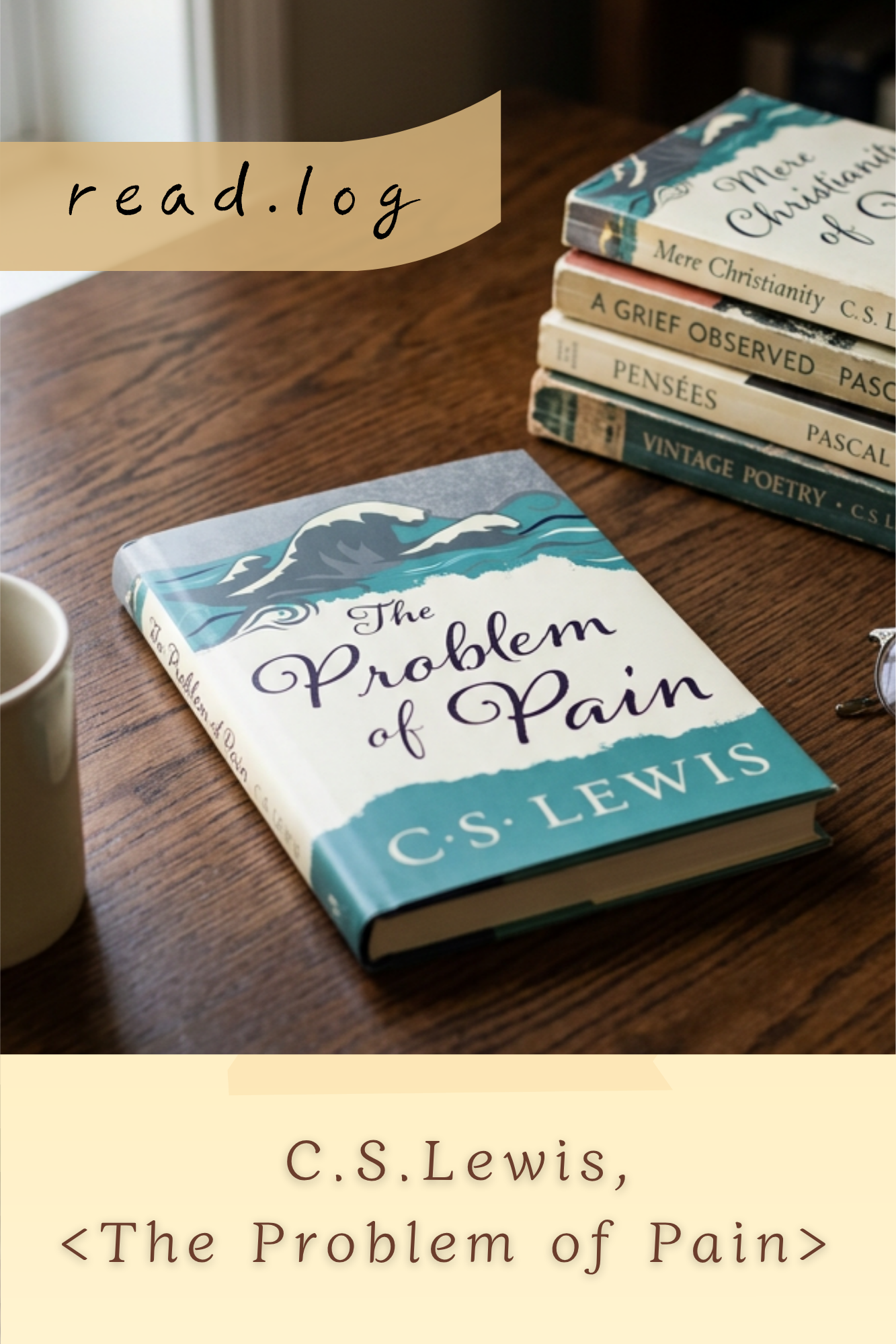
The Standing Before Pain - C.S. Lewis, The Problem of Pain

Life does not exempt us from suffering. The world presses in — and the pressure is often real, acute, and personal. When pain becomes acute enough, the questions rise instinctively: Why must we suffer? What does suffering mean? These are not idle philosophical questions. They are the questions of people who have been broken open by the weight of living. C.S. Lewis's The Problem of Pain, one installment in his apologetics series, takes them seriously — and answers them with a clarity that remains unsurpassed.
God's Omnipotence and Goodness: Where Understanding Begins

Any serious engagement with suffering must begin with a clear understanding of who God is and who we are. Lewis knows this. Of the book's ten chapters, four — chapters two through five — are devoted to precisely this groundwork, with particular attention to God's omnipotence and goodness.
Omnipotence means there is nothing God cannot do. That much is familiar. But Lewis addresses a confusion that lies beneath much popular theodicy: the assumption that God's failure to relieve our suffering signals some deficiency in His power. Lewis dismantles this entirely. God does not see the world through human eyes; He does not calibrate His actions by our preferences. Miracles do occur — but only when God, in His own sovereign judgment, determines that they shall. The point is not that God cannot intervene. It is that He intervenes as He wills, not as we demand.
The same logic governs divine goodness. We habitually misread it as mere kindness — imagining God as a benevolent grandfather in the sky who would never press us too hard. Lewis is withering in his response to this notion. God's love is not indulgence. He writes:
"A father uses his authority to make his son what the father judges, by the superior wisdom of a father, to be the best for the son.”
The implication cuts deep: humanity is not the center of the story. God does not exist for us; nor do we exist for ourselves. We were made to be the object of a love that transforms — and that transformation is the point. Not our comfort, but our conformity to something far greater than our immediate desires.
Human Evil and the Fall: The Origin of Pain

With a right understanding of God established, Lewis turns to the human side of the equation. He insists that we recover something like the older understanding of sin — not the attenuated version that modern culture prefers, which reduces guilt to embarrassment and imagines that time carries a kind of absolution. Lewis will not allow it:
"The mere passage of time does not change the fact that such things were done, nor does it diminish the guilt. It is repentance, and the blood of Christ, that washes away guilt — not time.”
Leaning on Augustine, Lewis traces sin to its root in pride: the creature refusing its creaturely place, reaching for self-sufficiency, insisting on ownership of the self. The original vocation — to glorify God — was exchanged for a project of self-determination. The result was not merely a moral failure but a total collapse. We became our own idols. Lewis's conclusion carries real force: we are not imperfect creatures who simply need improvement. We are rebels who need to lay down our weapons.
The Meaning of Suffering

Only after establishing this theological foundation does Lewis address what suffering actually accomplishes. At its most basic, suffering provides the wicked with what may be their only occasion for repentance. I have felt this acutely in my own life: in seasons of ease, when everything moves according to plan, God is often the last thought. Suffering breaks through that comfortable arrangement. It opens a door that prosperity tends to keep shut.
Lewis argues that humanity has spent so long usurping God's reign — living as autonomous lords of the self — that the very act of surrendering that self back to God cannot be painless. The habits of the old allegiance run deep. Dying to them costs something.
And yet God does not leave us to suffer without witness. Lewis names martyrdom as the highest expression of the Christian life, the fullest realization of what faithfulness looks like. And the supreme model of that life was given not by a martyr but by the God-man, Jesus Christ Himself. Martyrdom is not the only path to salvation; those who hold the faith through suffering without losing their lives are equally among the redeemed.
But why does suffering persist even after we have turned to God? Lewis illustrates this through a striking example. Consider a sudden sharp pain in the abdomen — possibly serious, possibly nothing. In that first moment of alarm, the ordinary pleasures scatter like toys knocked from a shelf. We scramble back — reluctantly — toward the posture we should never have abandoned: dependence on God alone. We remind ourselves, with urgency, that Christ is the only real treasure. And then the threat passes. And the old nature surges back toward its familiar objects.
Lewis's conclusion rings true: The necessity of tribulation is, in this way, overwhelmingly clear.
For Those of Us Living Today

The Problem of Pain is a genuinely useful book for anyone navigating the pressures of contemporary life. Readers unaccustomed to sustained theological argument may find it demanding at points. But those who follow Lewis's careful reasoning will find that their own pain comes into sharper focus — not as meaningless affliction, but as something addressed, something purposeful.
Last year, I went through a prolonged health struggle. That season drove me to depend on God more deeply than I had before. I began to ask, with unusual seriousness, what He was asking of me — and found that the direction of my life shifted in response. Suffering cannot be avoided. The question is what we do with it. The Problem of Pain is one of the better guides available for those willing to face that question honestly.
About Author

faith.log
A journal that connects faith and everyday life. In each small piece of writing, we share the grace of God and the depth of life together.


