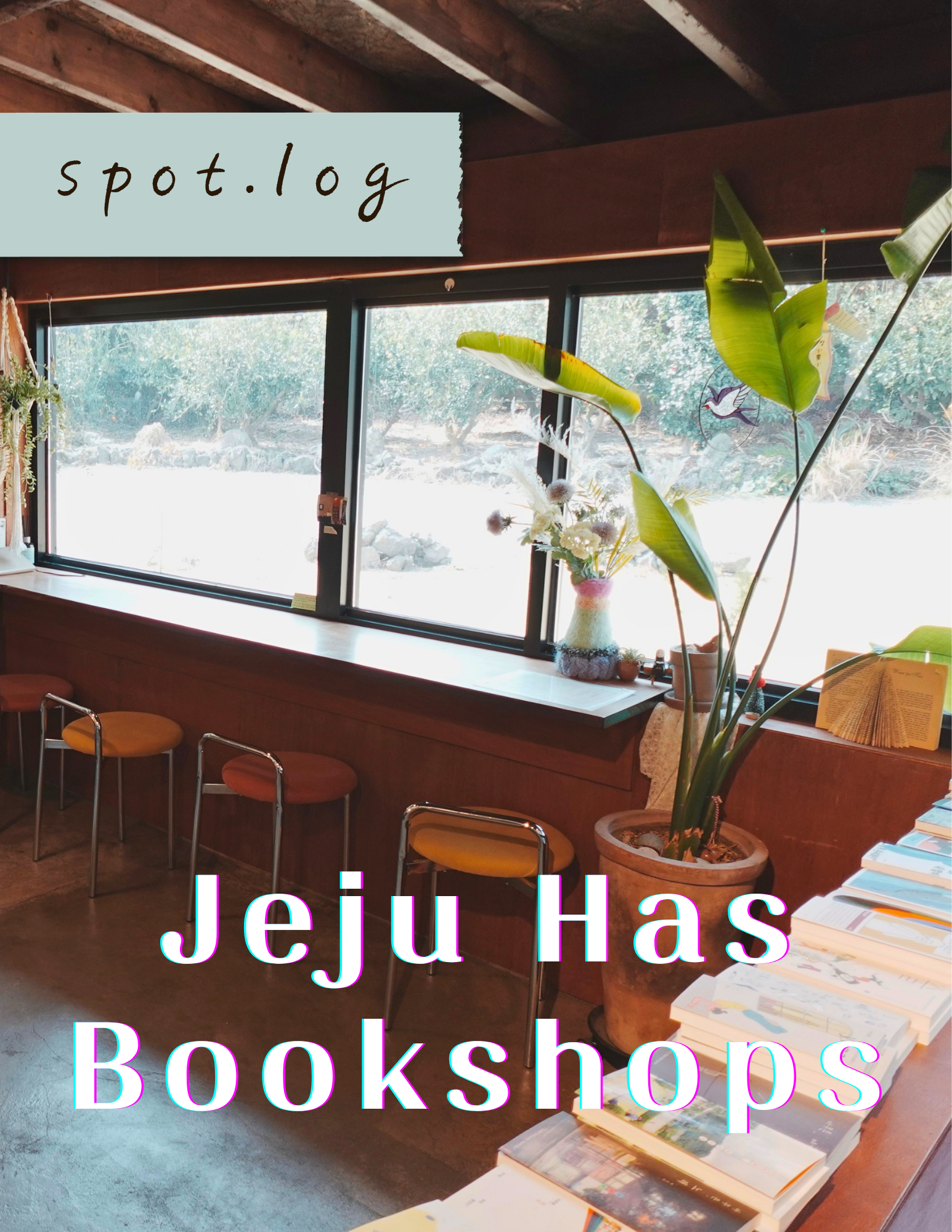
When people think of the most exotic travel destinations within Korea, Jeju Island is always near the top of the list. The island's natural landscape is striking enough on its own — volcanic rock formations, sweeping coastlines, and a topography unlike anywhere else on the peninsula — but what truly sets Jeju apart is its inaccessibility. You cannot simply drive there. You must fly or take a ferry, and that act of crossing over, however brief, changes the way you arrive.
Yet for many Koreans, Jeju is already familiar territory. Most have been at least once, some many times, and familiarity has a way of dulling the senses. The island remains beautiful, but the feeling of discovery fades. One remedy is to reframe the journey entirely — to travel not toward the scenery, but toward something else. In this edition of spot.log, that something else is books. Specifically, three independent bookshops tucked into different corners of Jeju, each one worth making a detour for.
For those who love reading, there are few pleasures quite like discovering a book in an unexpected place. And when that book has been hand-selected by someone who genuinely cares — not an algorithm, not a corporate buyer, but a real person with a point of view — the experience becomes something harder to name. A gift, perhaps. A conversation across shelves.
Where a Librarian's Instincts Do the Choosing — Saseo Chaekbyong
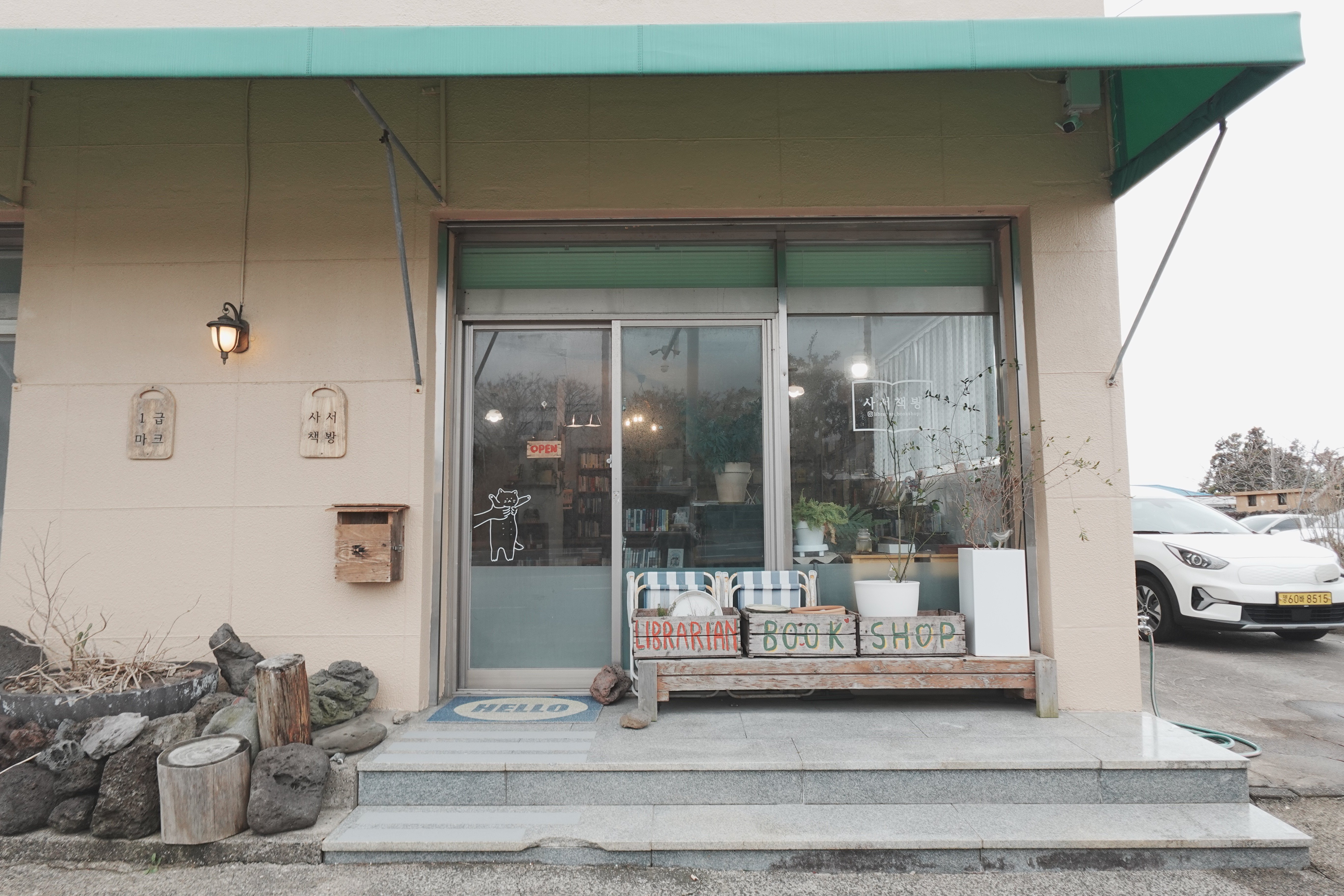

Saseo Chaekbyong [Librarian Bookstore] is an independent bookshop in Seogwipo, in the southern part of Jeju. Its full name is Saseo Chaekbyong & 1-geup Mark — a name that tells you something immediately: this shop is run by a former librarian, and that background is not incidental. It shapes everything about how books are selected and presented here.
The shop sits along a main road between Jungmun and Seogwipo, which makes it easier to find than many independent bookshops tend to be. It occupies the ground floor of Jinyang Villa, an older residential building, and there is something quietly satisfying about that — a bookshop living inside the fabric of ordinary life, not curated into a commercial district. Parking is available alongside the building.
From the outside, two impressions settle in at once. The first is a sense of integration: the aging apartment block and the small bookshop seem to belong together, as though reading were simply part of what people do in this neighborhood. The second is the unmistakable presence of Jeju itself — volcanic stone visible in the surroundings, a plainness and groundedness that the island wears naturally. Before you have even stepped inside, you already feel you have wandered somewhere genuinely local.
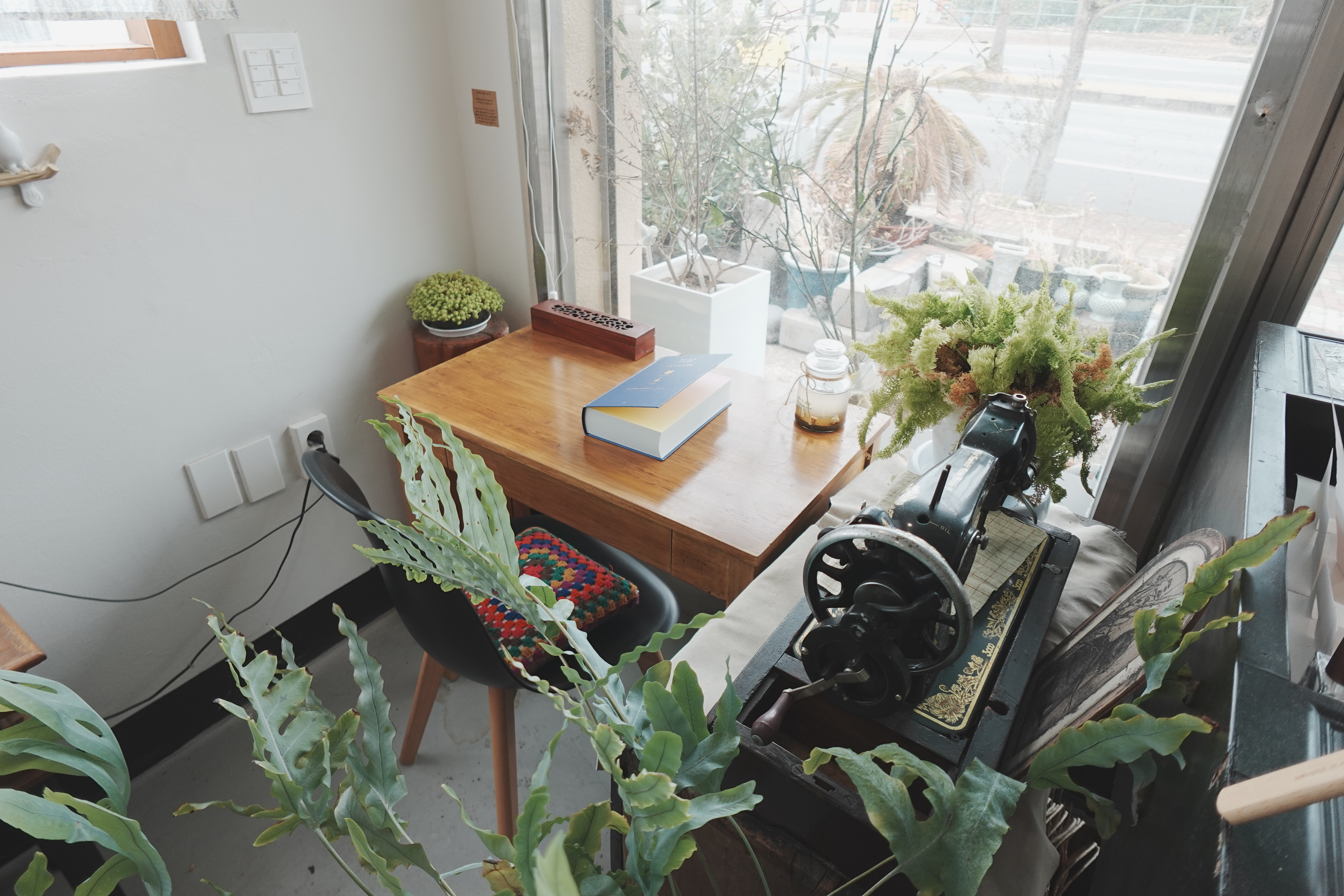
Inside, the effect deepens. The space was once a barbershop, and its bones are still visible — a certain retro quality that no amount of deliberate styling could manufacture. Wooden bookshelves, modest and warm, hold a carefully chosen selection of books alongside small objects that don't demand your attention but reward it when you give it.
The detail I found most affecting was the book card. When you purchase a book, you receive a small card for recording the dates you read it — a direct echo of the circulation slips once tucked into library books, the ones that silently told you who had held this volume before you. It is a minor thing, and yet it felt precisely right. Reading is, of all activities, the one least in need of digitizing, and this shop seems to understand that instinctively.
Saseo Chaekbyong is the kind of place that earns its place on any Jeju bookshop itinerary — not because it is grand, but because it is genuine.
Where the Island and the Page Meet — Sorisomun
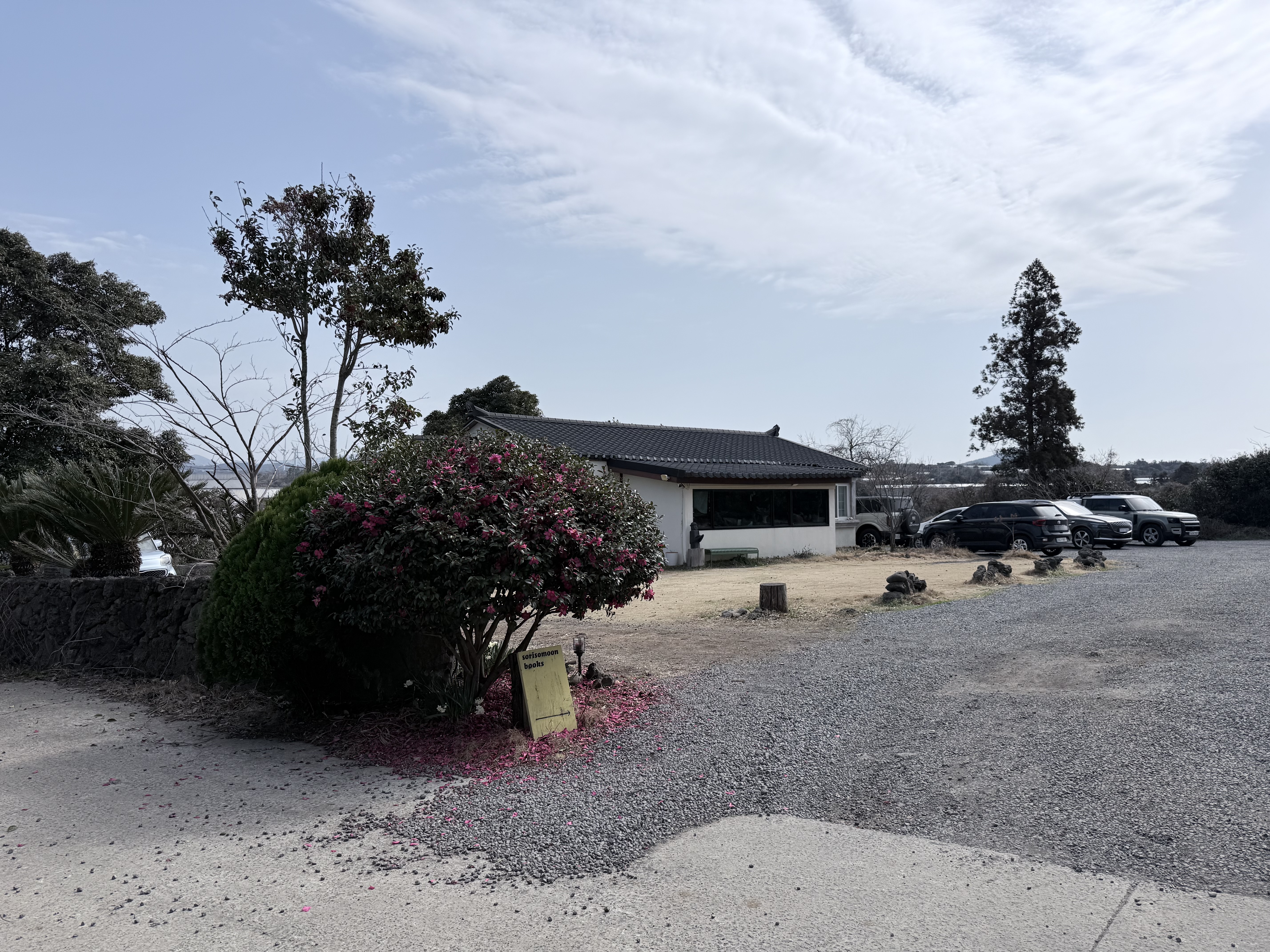
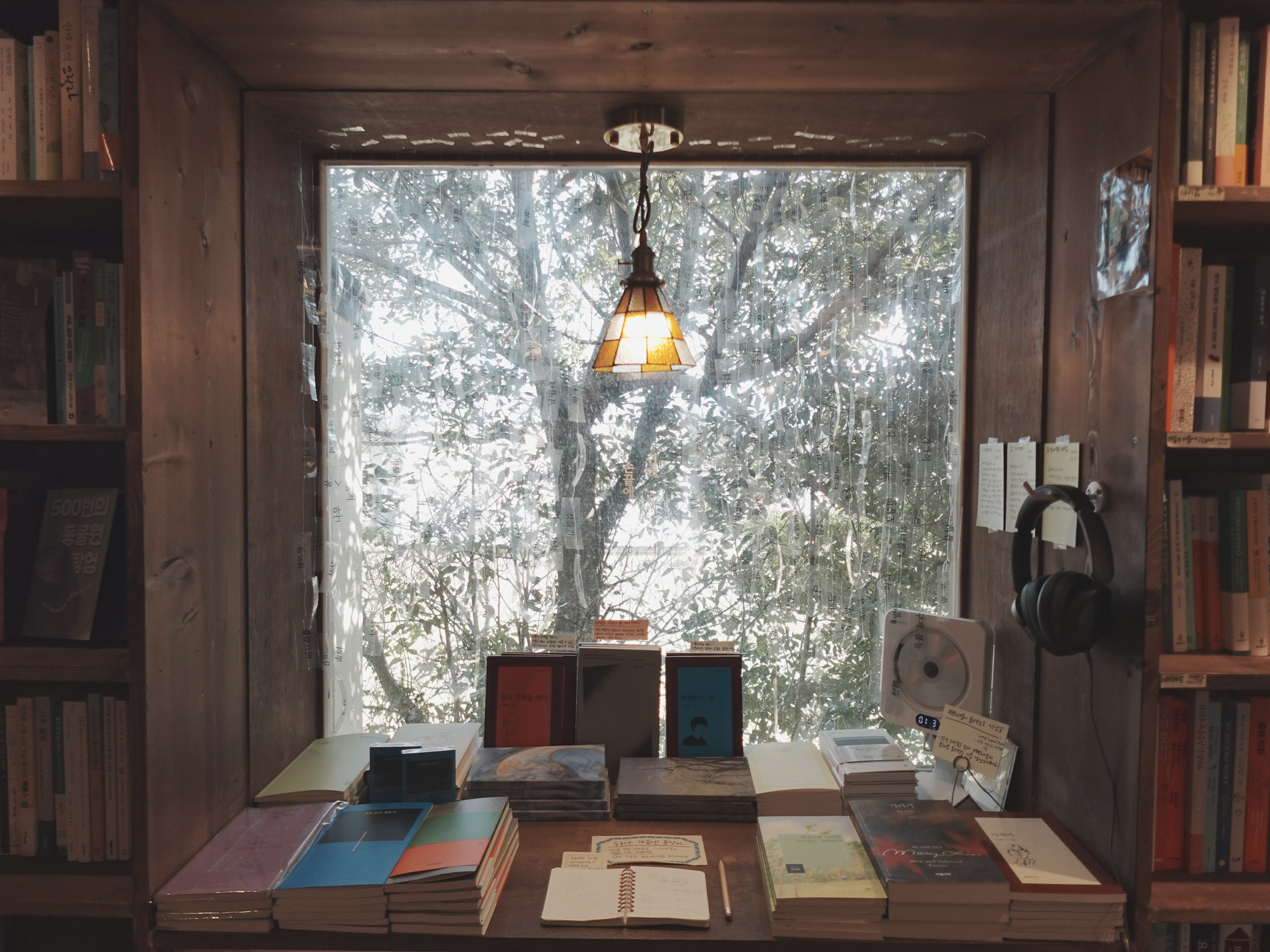
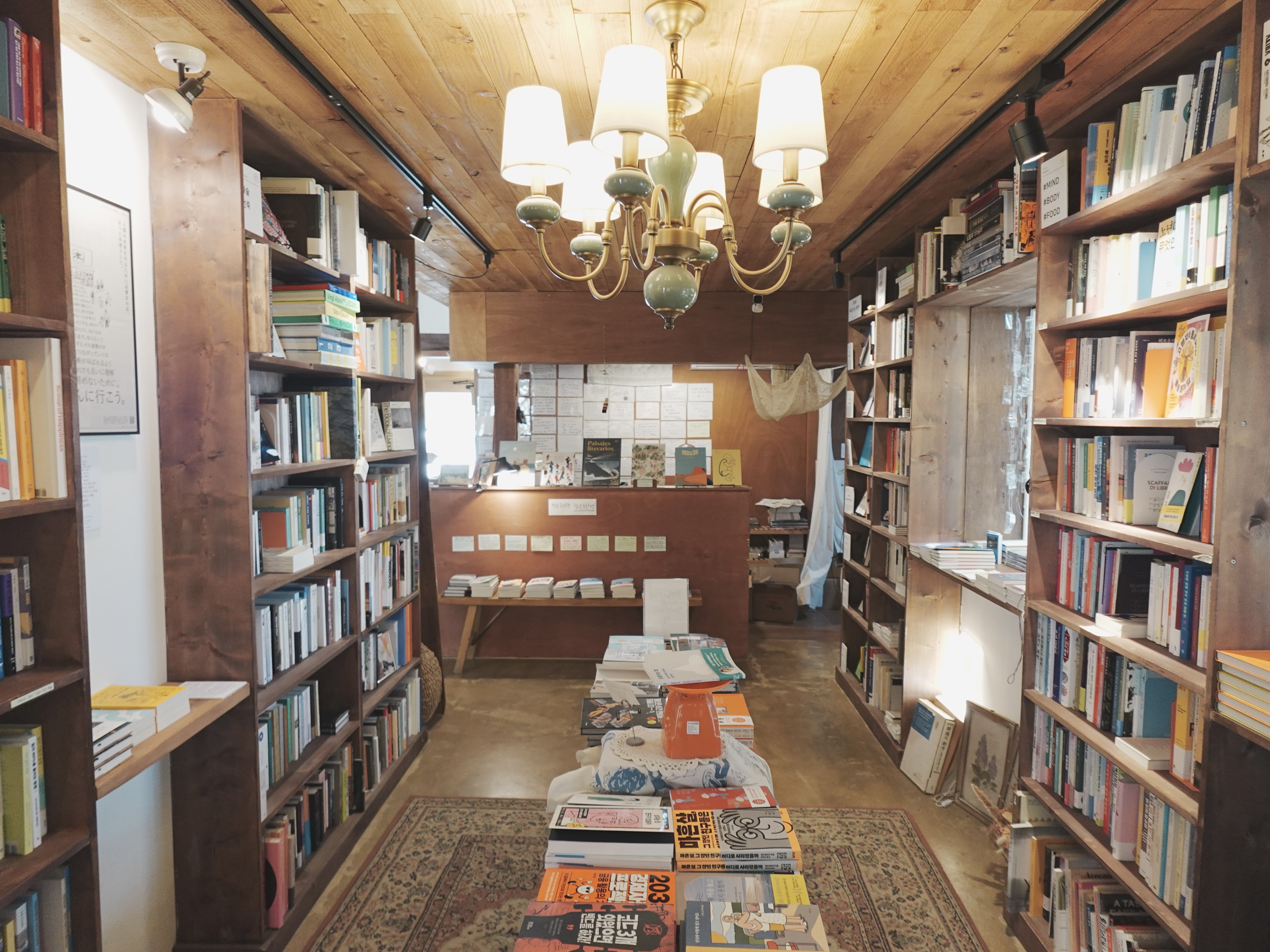
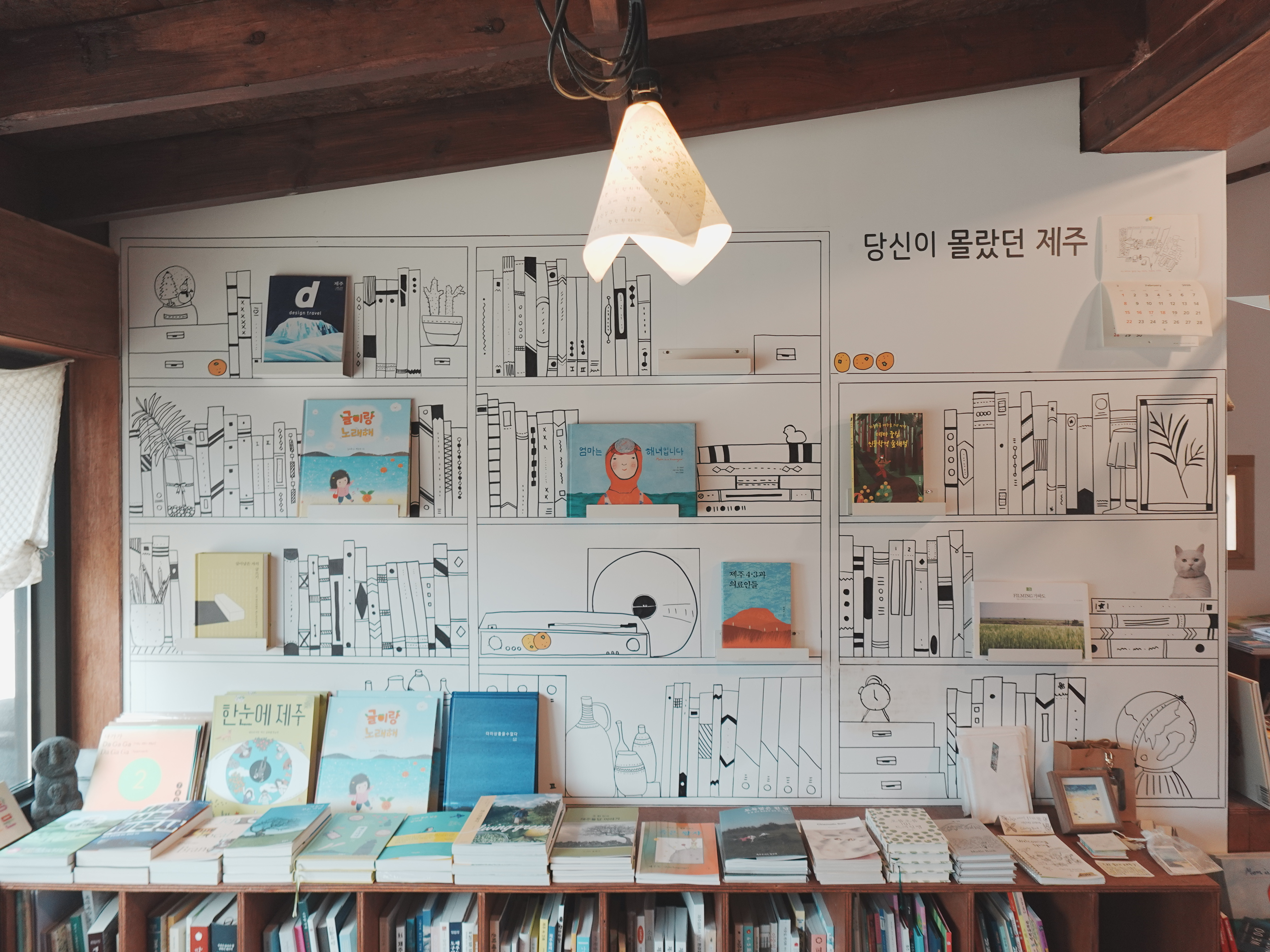
Bookstore Sorisomun is located in Hangyeong-myeon, on the western side of Jeju. The area around it is unhurried and open: the Jeoji and Majung volcanic cones are nearby, as are several small museums, including Podo Museum, which offers discounted admission to Sorisomun customers. It is the kind of neighborhood where an afternoon extends naturally, one place leading to another.
The shop's reputation precedes it. Sorisomun is the first Korean bookshop to appear in Belgian publisher Lannoo's 1001 Bookshops You Must Visit Before You Die, and visiting it, you understand why without needing to be told. The location is not merely picturesque — it is elemental. The grounds feel integrated into the natural environment in a way that takes some patience to achieve and cannot be faked. General travelers, not just bibliophiles, come here, and they come because the place itself justifies the trip.
The feature that stayed with me longest is the Blind Book section. Books are wrapped so that the contents are hidden. In place of a title or cover, each package carries only a cluster of short keywords — phrases like dense and moving, where spring light lingers, the only book you need on a journey, brief but long-lasting. You choose based on feeling, on instinct, on what the words suggest to you. Then you carry your wrapped book out into the afternoon without quite knowing what you have.
There is something generous about this arrangement. It asks the reader to trust — the shop, the selector, and their own intuition. When you unwrap it later, it is less like opening a purchase and more like receiving a letter you did not know was coming.
Sorisomun also maintains a section of books connected specifically to Jeju — literature and nonfiction that help a traveler read the island as well as walk it. The design of the interior reflects the same philosophy: humanistic and considered, the kind of space featured in D Design Travel, a Japanese publication that documents regional culture through design. It is easy to see why.
This is a rare bookshop: one that does not require you to be a reader already. It will meet you wherever you are.
A Neighborhood Bookshop, Quietly Holding Its Ground — Pachulsoyup Chaekbang
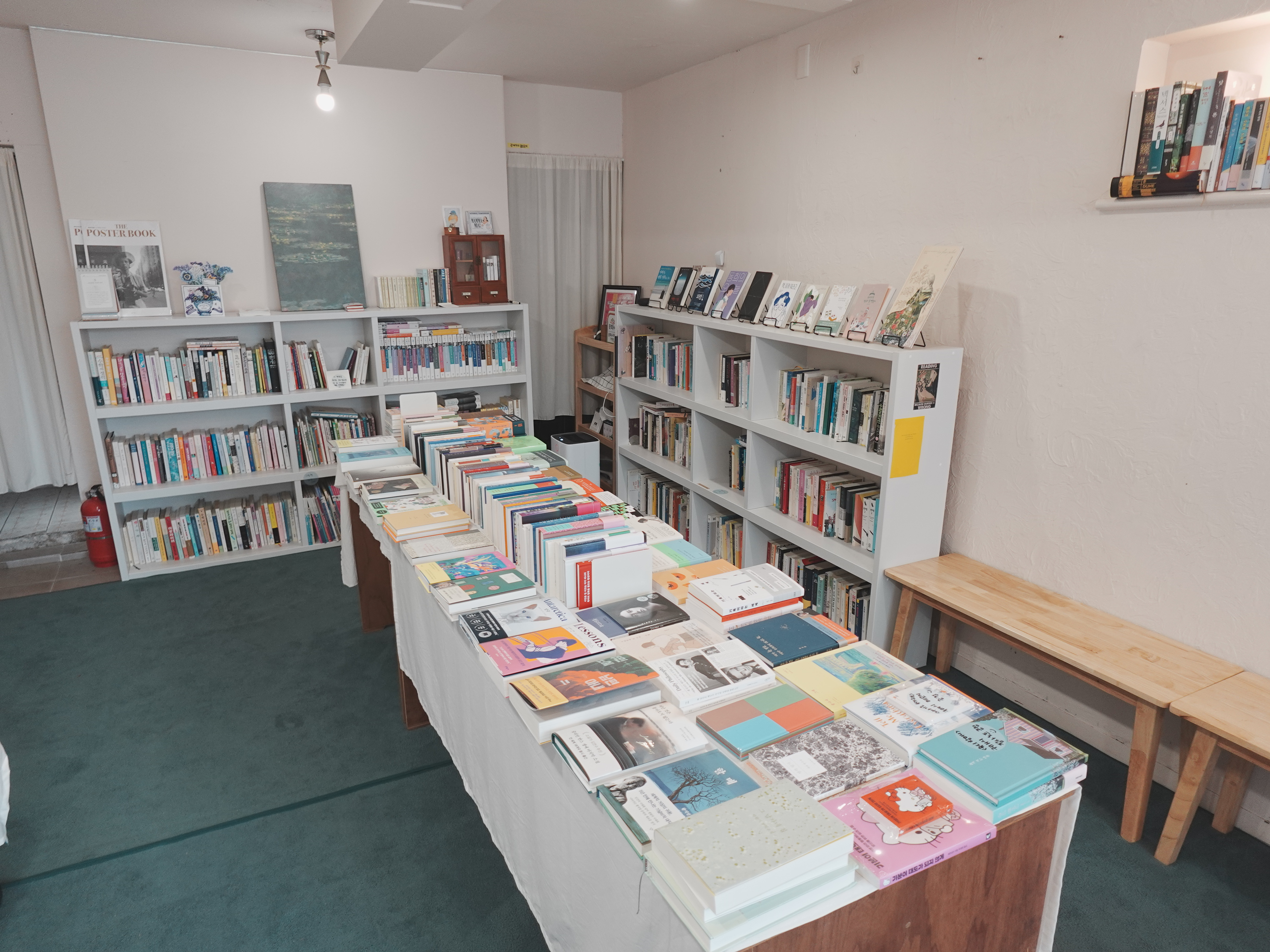
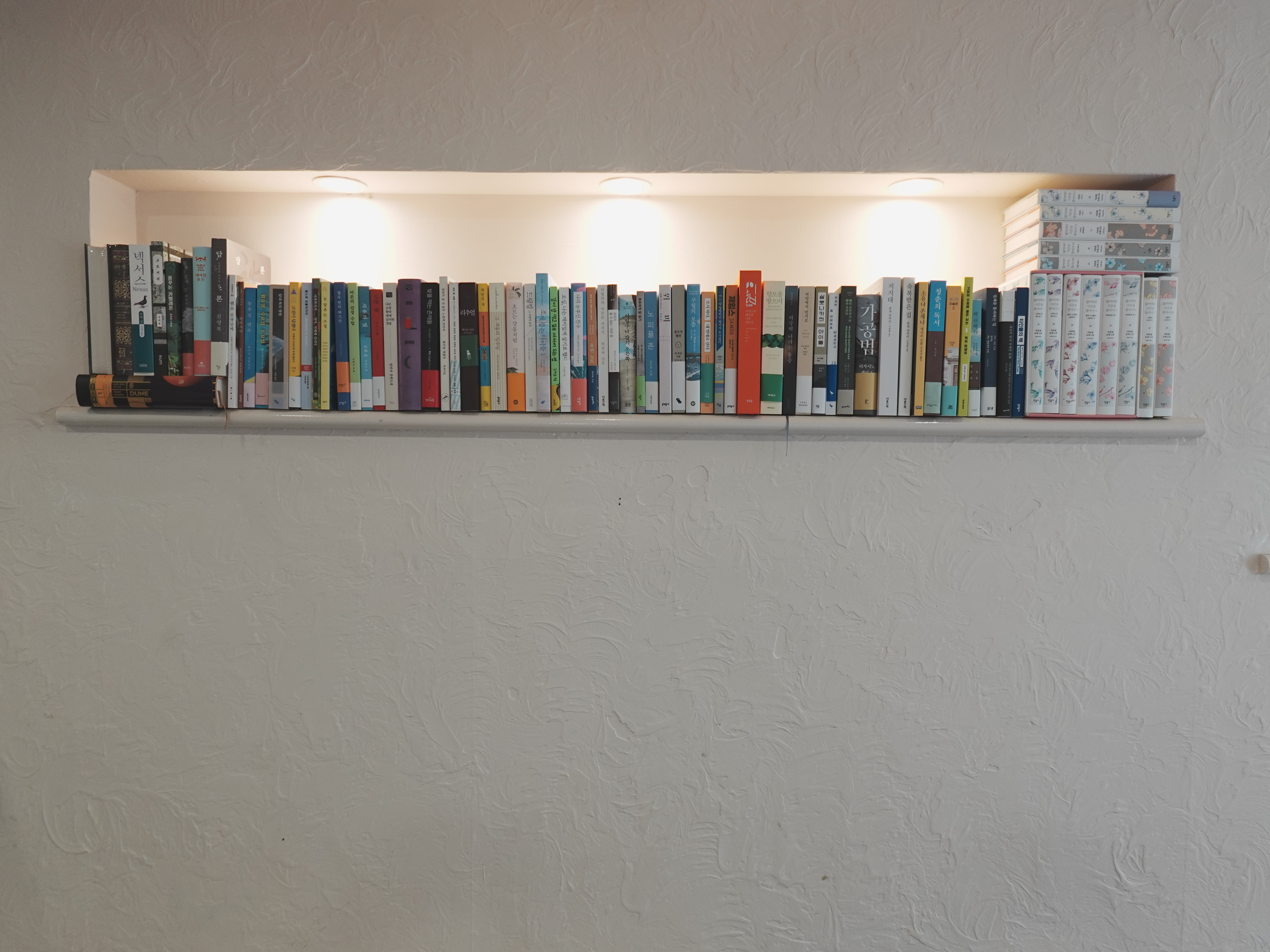
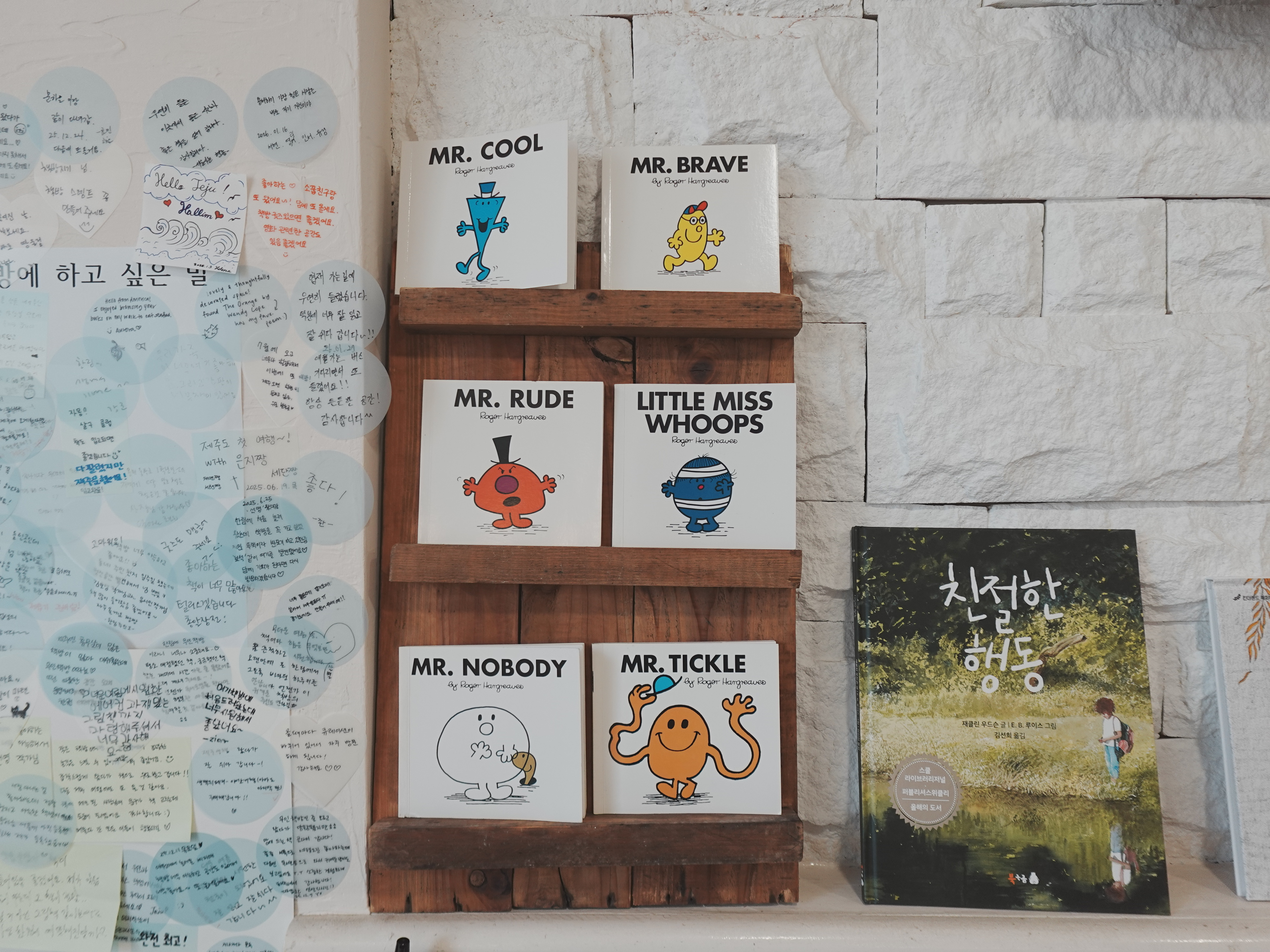

Pachulso yup Chaekbang — literally, the bookshop next to the police box — is an unstaffed bookshop in Hallim-eup, in the northwestern part of Jeju. It sits close to the local community center, in the middle of a working neighborhood. There are no design flourishes here to announce itself. It is simply part of the street.
Parking directly at the building isn't available, but public lots are plentiful nearby, and a bus stop is within easy walking distance. The shop is accessible, in the most practical sense of the word.
What announces itself instead is a notice on the wall. It explains that the person who runs this bookshop also works part-time elsewhere in order to keep it open. That sentence lingers. The commitment it describes — maintaining a space for books at personal cost, without spectacle — gives the shop a weight that no amount of interior design could provide. You are standing somewhere that someone chose to protect.
Inside, the atmosphere is spare and unhurried. The selection has been curated with real attention — you sense, browsing the shelves, that every title was placed there deliberately, that you are receiving a kind of quiet recommendation with each book you pick up.
The shop also carries used books, which is less common among independent bookshops of this kind. Used books ask something different of a reader than new ones do. They carry a prior life. On this visit, I found among the secondhand shelf a book I had been looking for, and the particular pleasure of that discovery — in a small, unassuming shop at the edge of a town in Jeju — is not easily replicated.
Pachulsoyup Chaekbang is not a destination for those seeking an experience. It is a destination for those who simply want to be near good books, in an honest place.
The Slowest Way to See Jeju
Jeju offers no shortage of reasons to visit. The landscape is genuinely dramatic — mountains, coast, lava fields, light that changes by the hour. None of that disappears when you add bookshops to the itinerary. If anything, moving between them at a reader's pace makes the island more visible, not less.
Independent bookshop culture rewards slowness. You cannot rush a shelf that asks you to pay attention. And Jeju — with its particular unhurriedness, its refusal to be entirely domesticated — turns out to be well suited to that kind of travel.
Wherever you go, walking into a good independent bookshop is one of the more reliable small pleasures a city or town can offer. But doing it in Jeju, with the volcanic rock and the open sky just outside the window, sharpens something. On your next trip to the island, consider building a morning or afternoon around these three — and see what the shelves have waiting for you.
About Author

faith.log
A journal that connects faith and everyday life. In each small piece of writing, we share the grace of God and the depth of life together.


