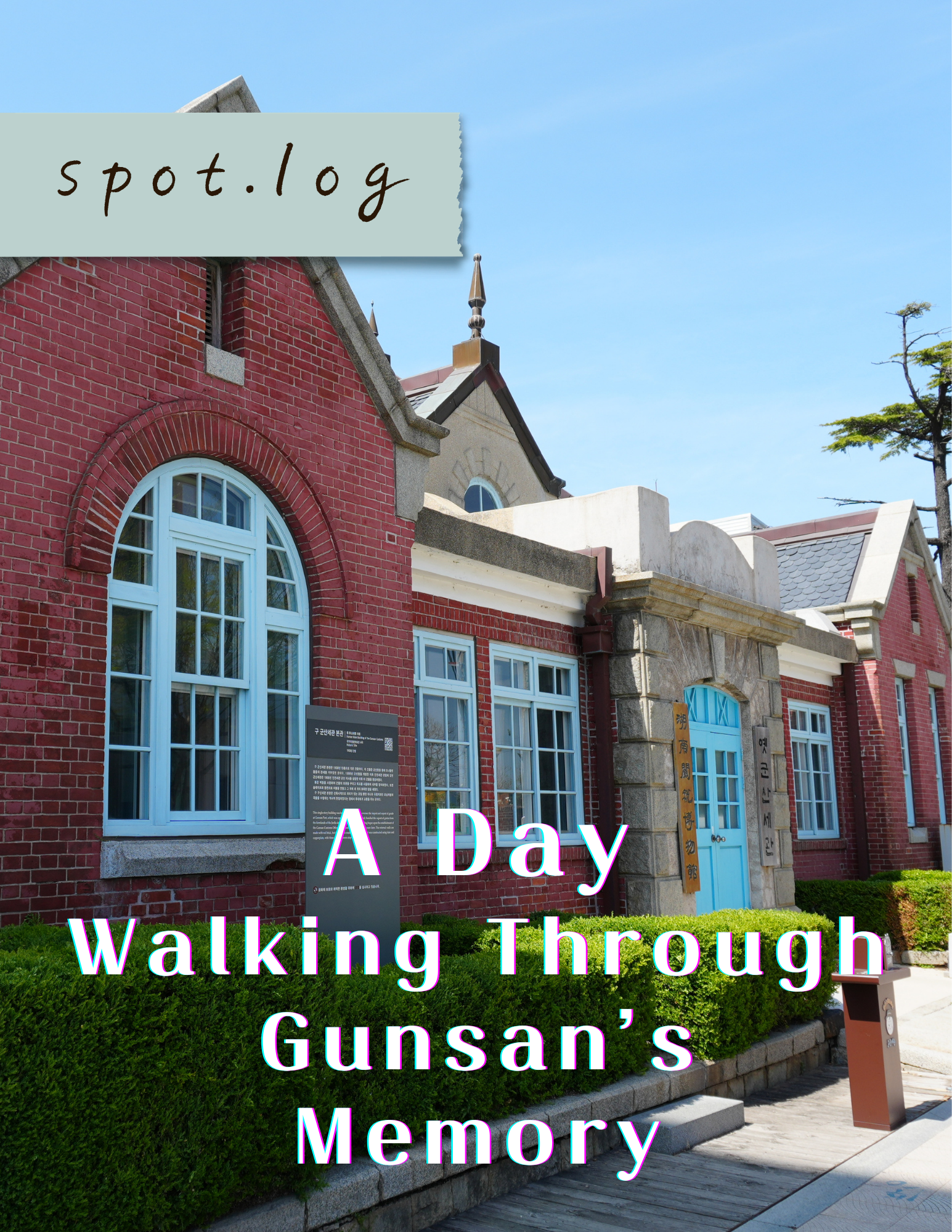
A Day Walking Through Gunsan's Memory
Most travel is an act of seeking the present — its beauty, its novelty, its photogenic surfaces. But Gunsan, a port city on Korea's western coast, rewards a different kind of visitor: one willing to walk not just through space, but through time.
The itinerary I'm describing here asks you to follow the city's memory — to look at what these places once were, what happened inside them, and what it means that they're still standing. Gunsan understood before the rest of us that history doesn't require a museum. It just requires a city willing to leave things standing.
In Gunsan, the past and the present share an address.
The House Outlives Its Owner — Sinheungdong Japanese House
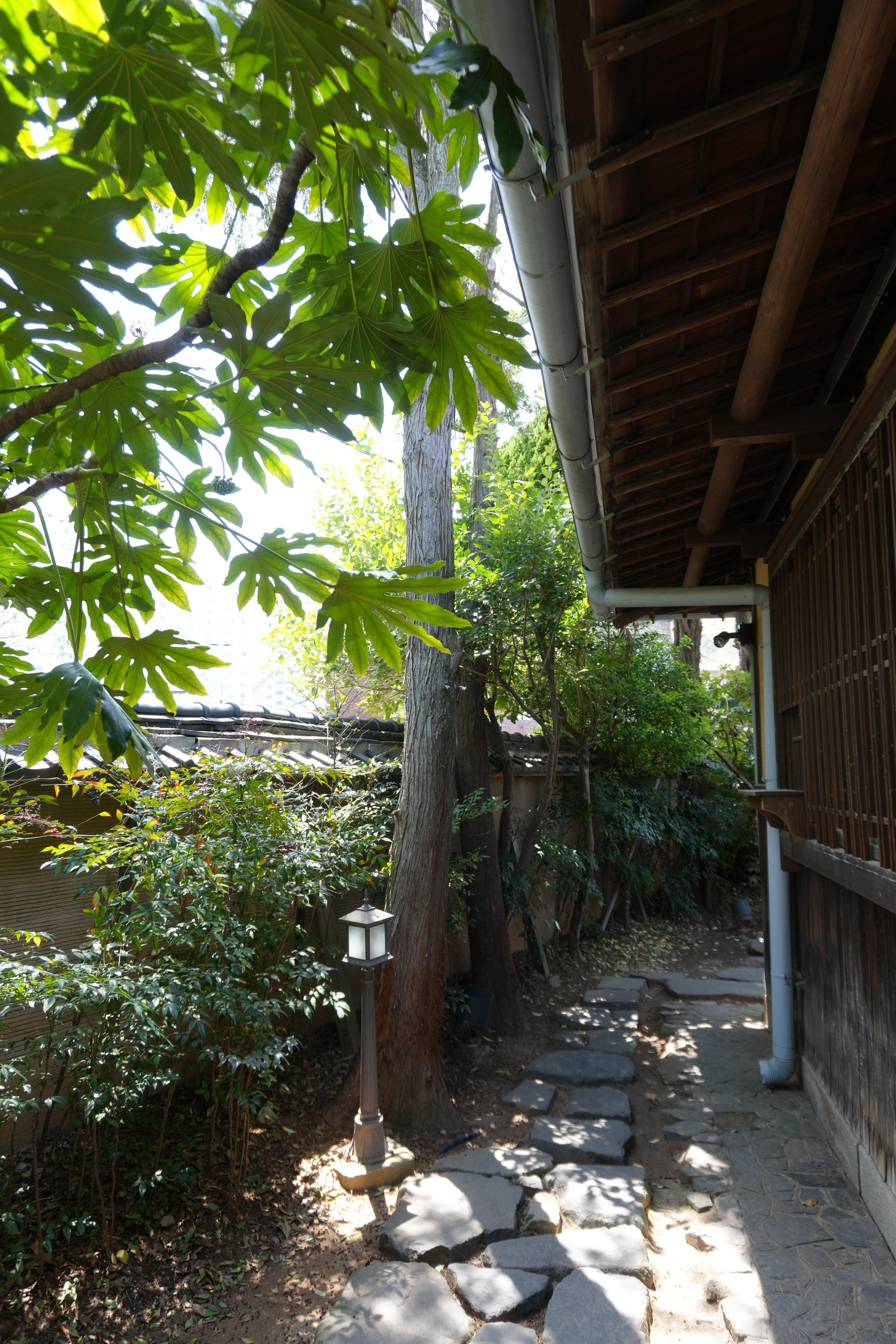
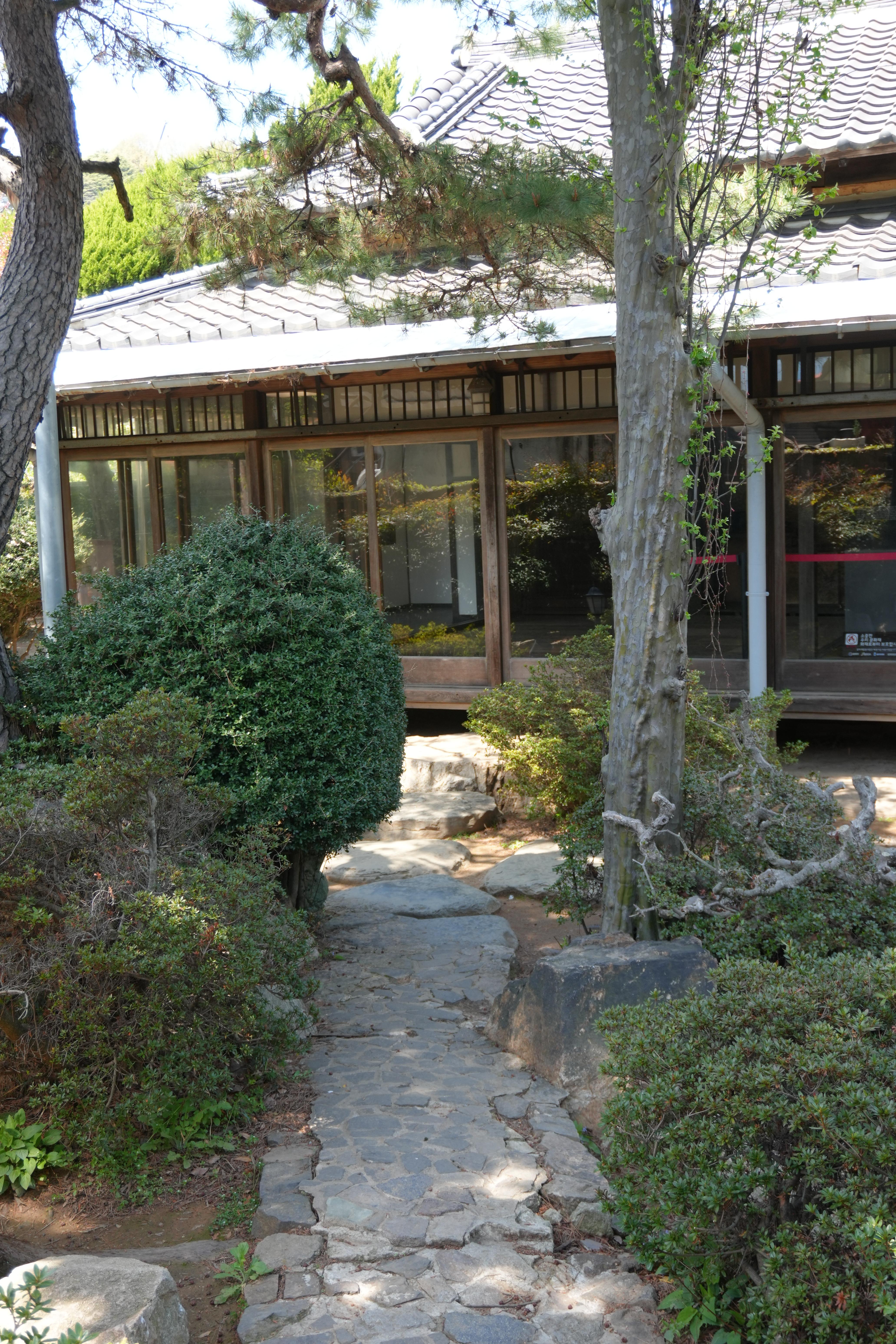
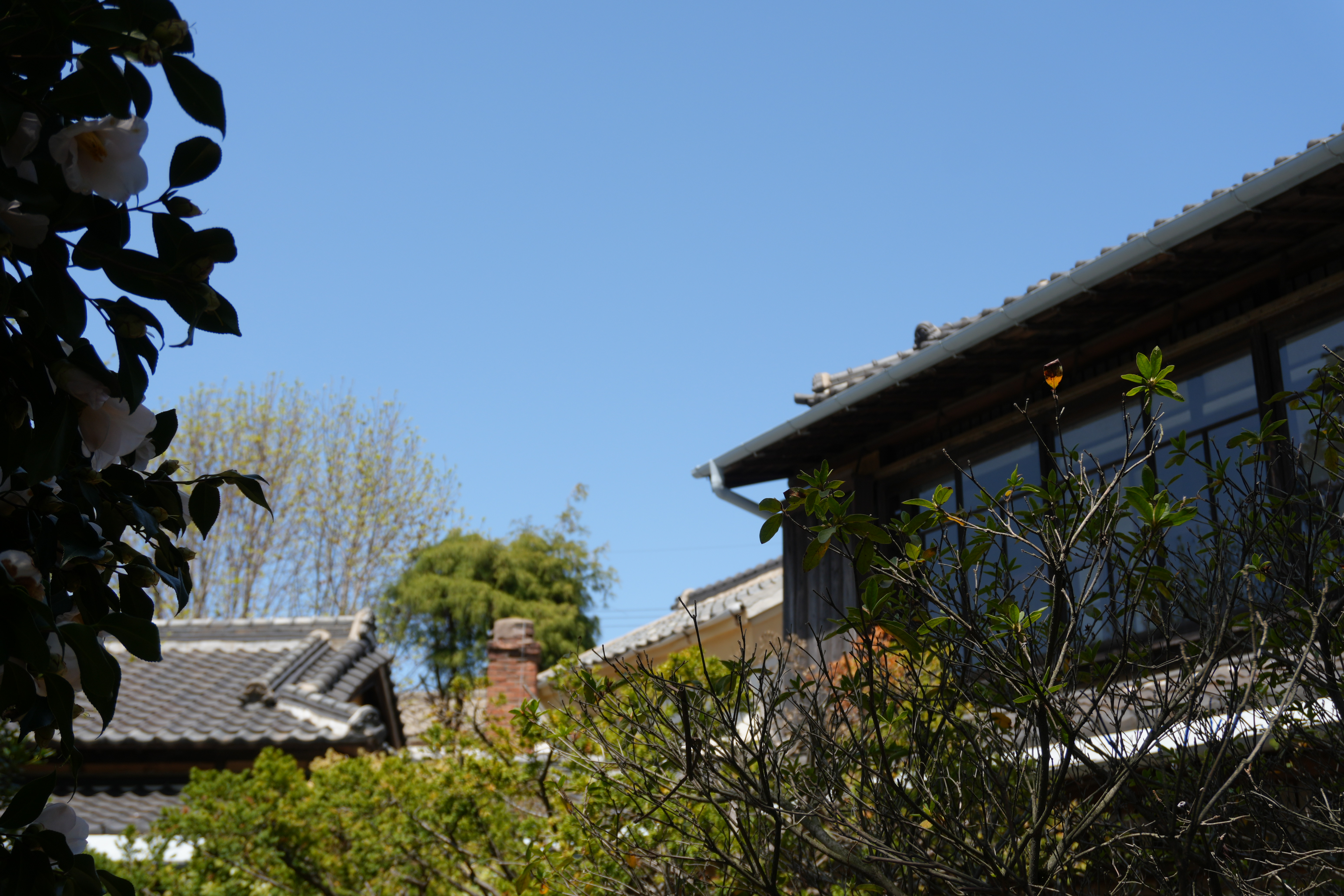
The Sinheungdong neighborhood is where Gunsan's layered past is most legible. Colonial-era buildings survive intact along its narrow lanes, and none stops you in your tracks quite like the Japanese house at its center — a two-building wooden compound built in 1925 by Hirotsu Keisaburo, a Japanese textile merchant who made his fortune here during Japan's colonial occupation of Korea.
The neighborhood was then the city's elite quarter, home to the wealthy class that had aligned itself with imperial power. The compound itself is arresting: two L-shaped structures joined at the corner, a Japanese garden tucked quietly between them, and an interior that divides along strikingly legible lines. The ground floor has ondol rooms — Korean-style radiant floor heating. The upper floor has tatami. The colonizer slept above, on Japanese ground. The colonized structure was pushed below.
The architecture is not subtle about what it encodes.
And yet the building endures. Hirotsu did not. When Korea was liberated in 1945, his assets were seized and the property passed to new ownership. Decades later, it became a heritage site and filming location — the atmospheric setting for several well-known Korean films. The house has absorbed colonial memory, liberation, abandonment, and tourism, all without changing its address. There is something almost unsettling about a structure so indifferent to the regimes it has served.
A Place That Reaches Back — Ssudam Psychology Bookshop
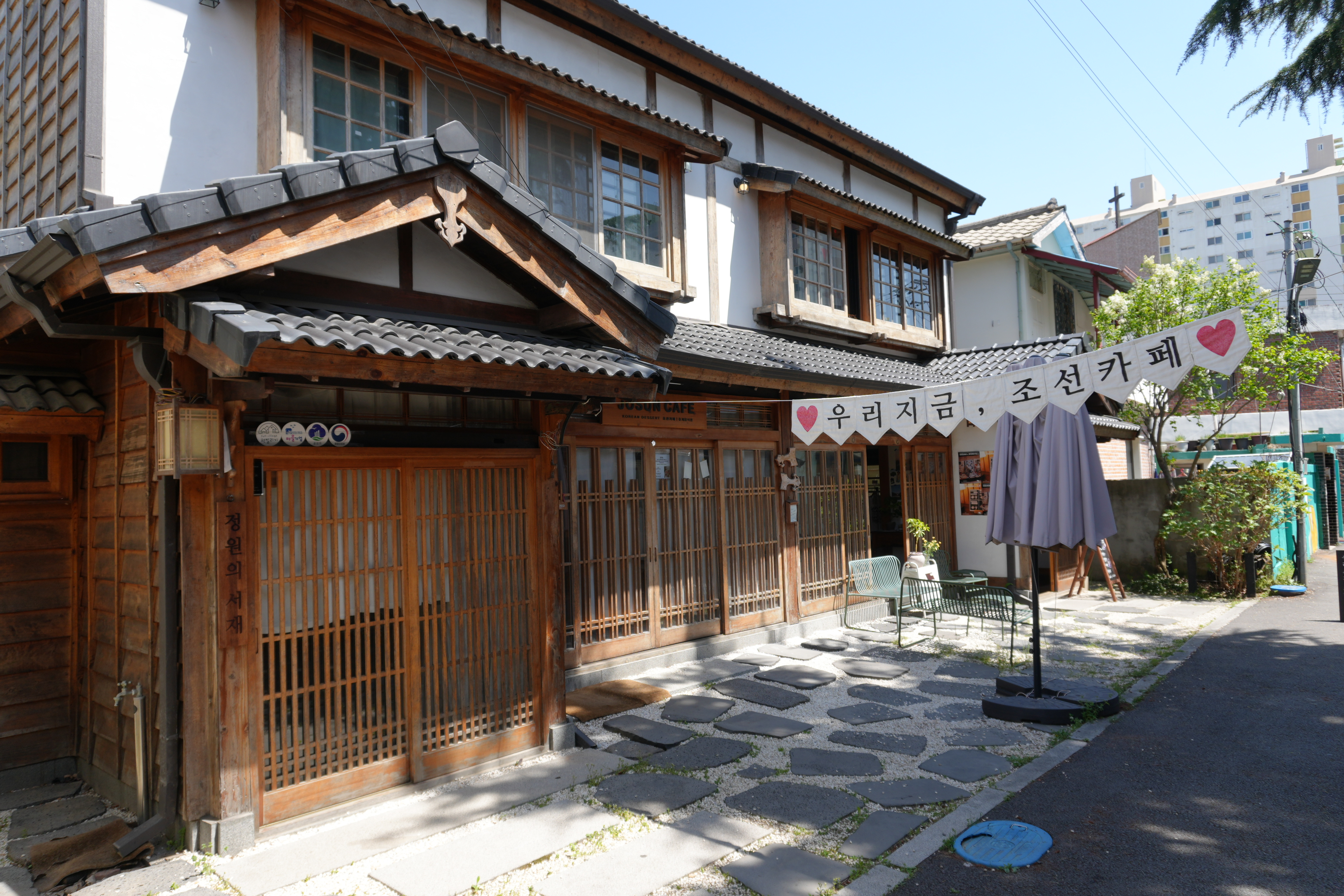
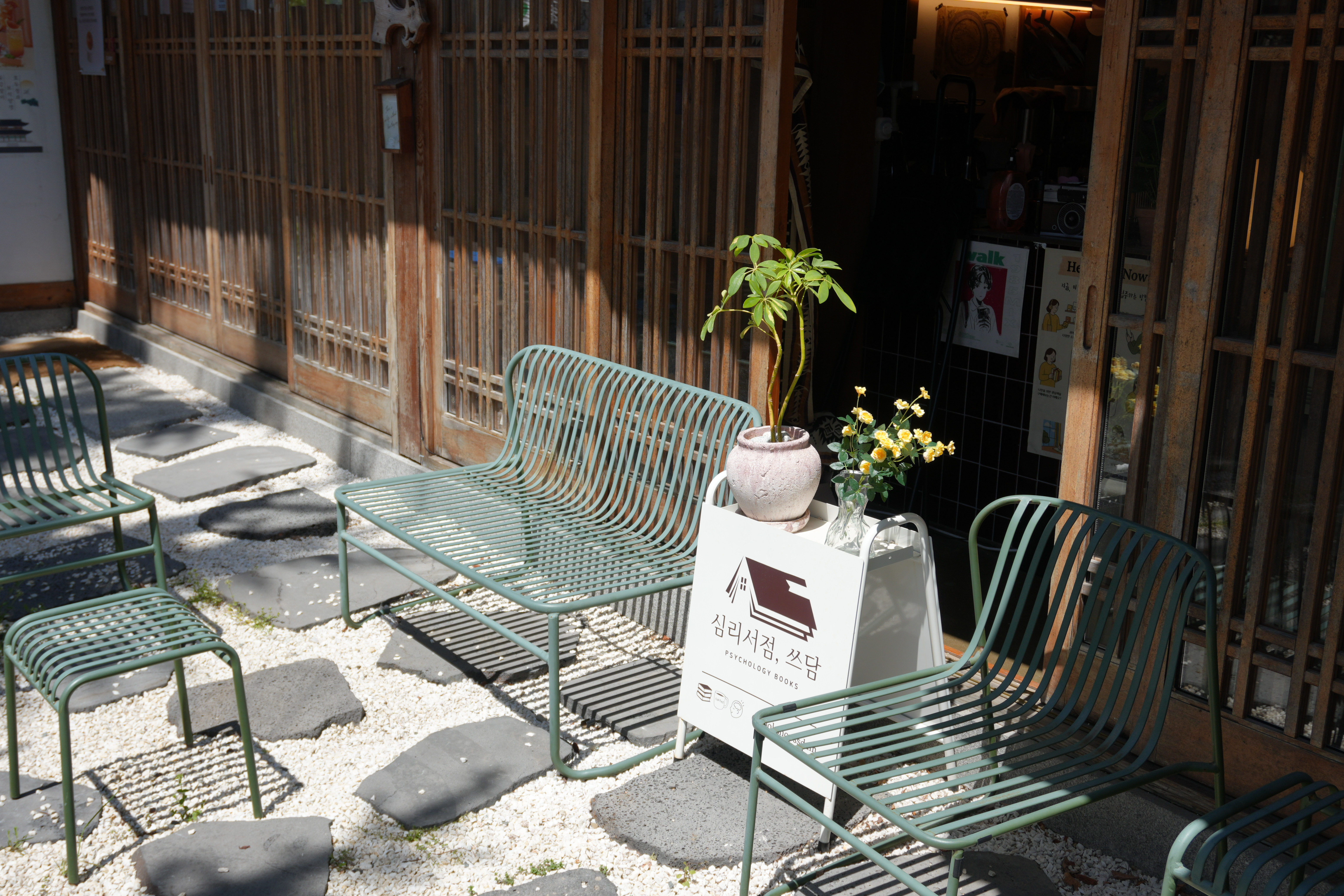
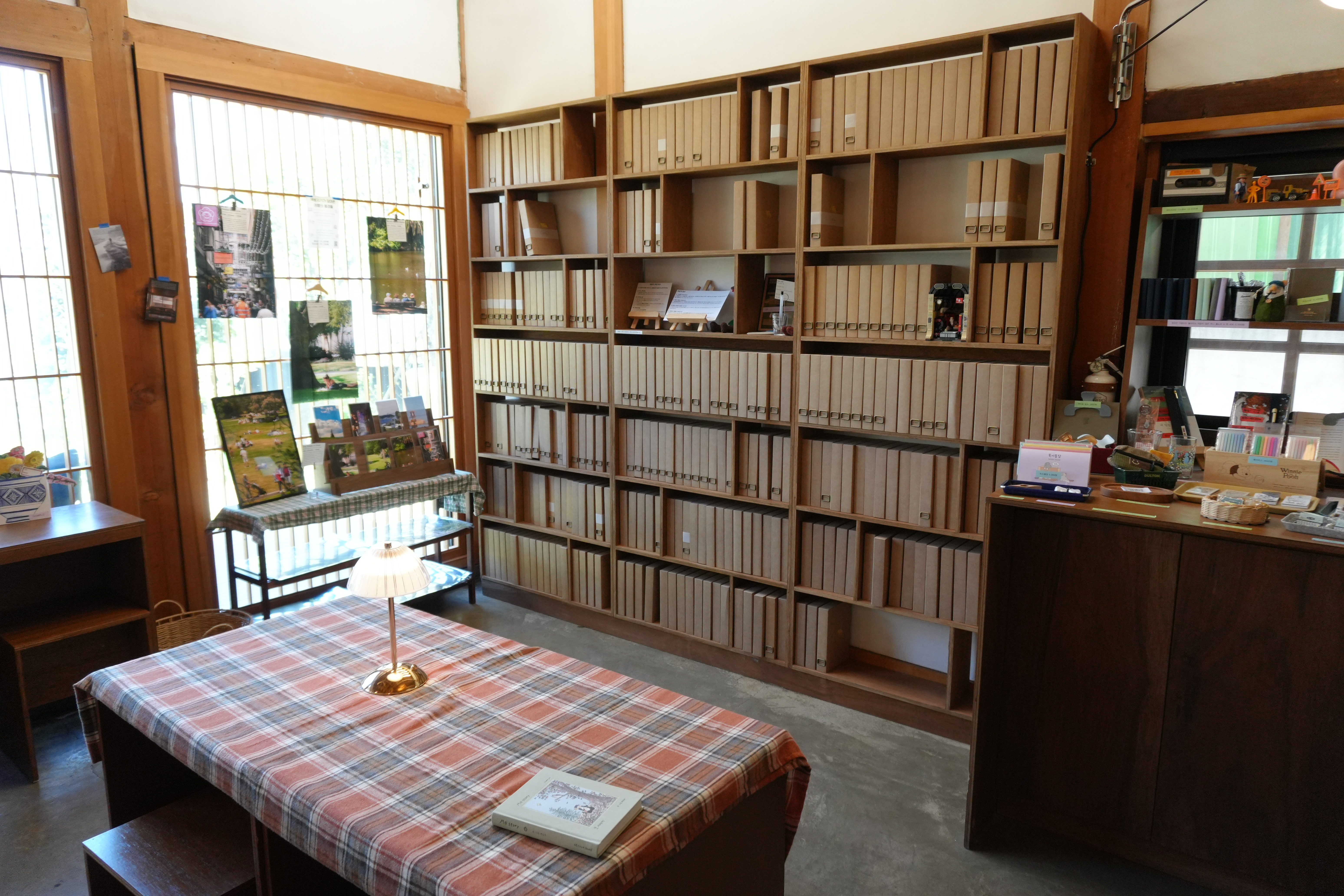
Three minutes on foot from the Japanese house, tucked into a side alley, is one of the more quietly remarkable independent bookshops I've encountered. Ssudam — the name comes from the Korean verb ssudadeumda, to stroke or soothe — is a psychology-specialist bookshop that also offers psychological assessments, counseling sessions, and reading groups.
The choice of location is worth sitting with. In an alley that still carries the weight of colonial memory, someone opened a shop whose entire purpose is the care of the interior life.
What distinguishes Ssudam from a wellness concept store is its conviction about curation. The books here are not selected by algorithm. The proprietor reads the moment — the cultural mood, the particular anxieties of now — and selects accordingly. That editorial judgment is itself offered as a form of comfort. In an era of infinite recommendation engines, a single human hand choosing what to put on the shelf carries a quiet authority.
The space earns it. Built in wood throughout, with low shelving, worn timber tables, and a garden on the ground floor and an open-sky terrace above, Ssudam has the texture of somewhere genuinely inhabited. The ground floor is composed and contemplative; the upper level feels closer to a friend's apartment — the kind where you'd stay longer than you planned.
Whether you come for the books, the assessments, or simply the room itself, the time spent here registers as rest.
A Beautiful Building With an Ugly History — The Old Gunsan Customs House
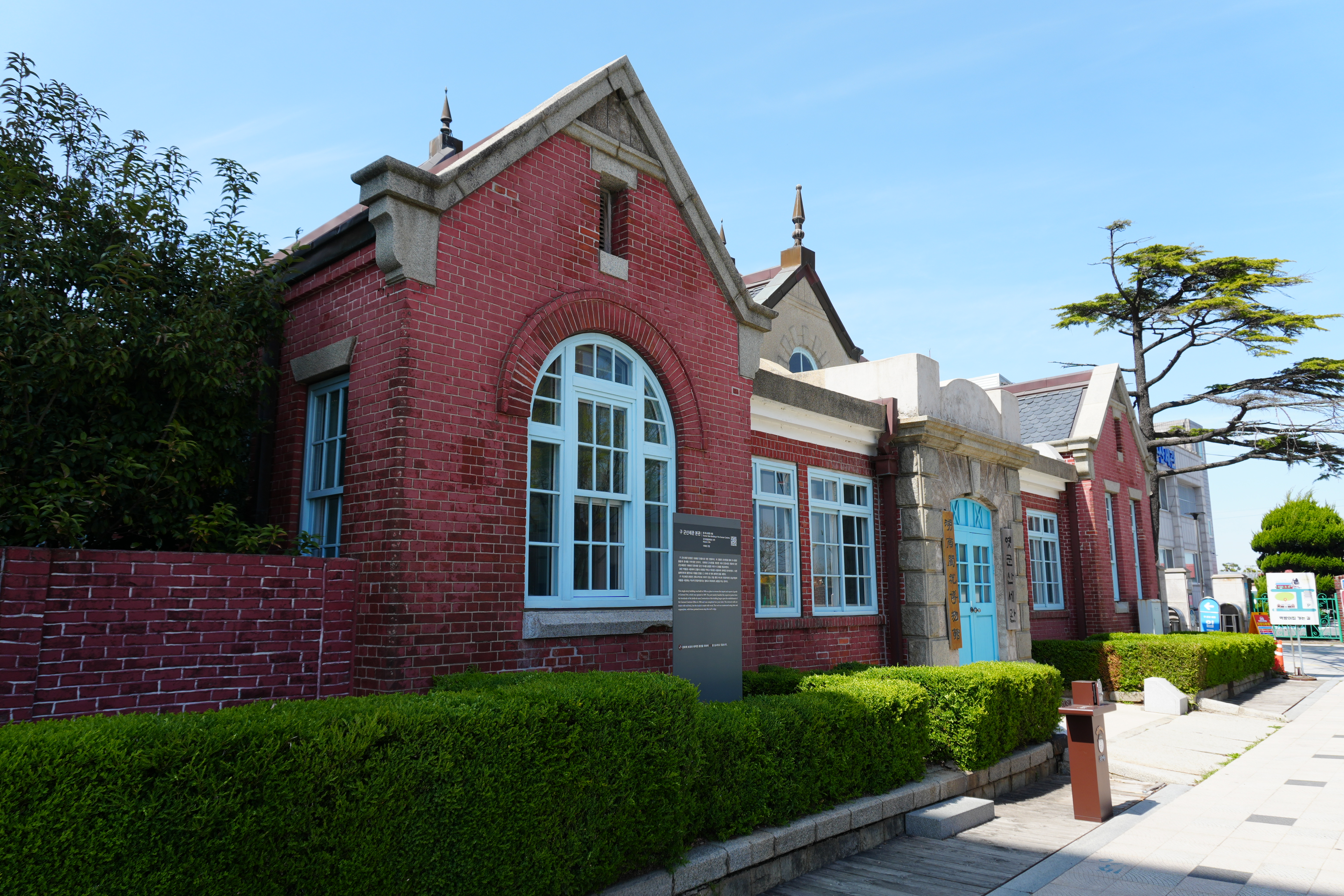
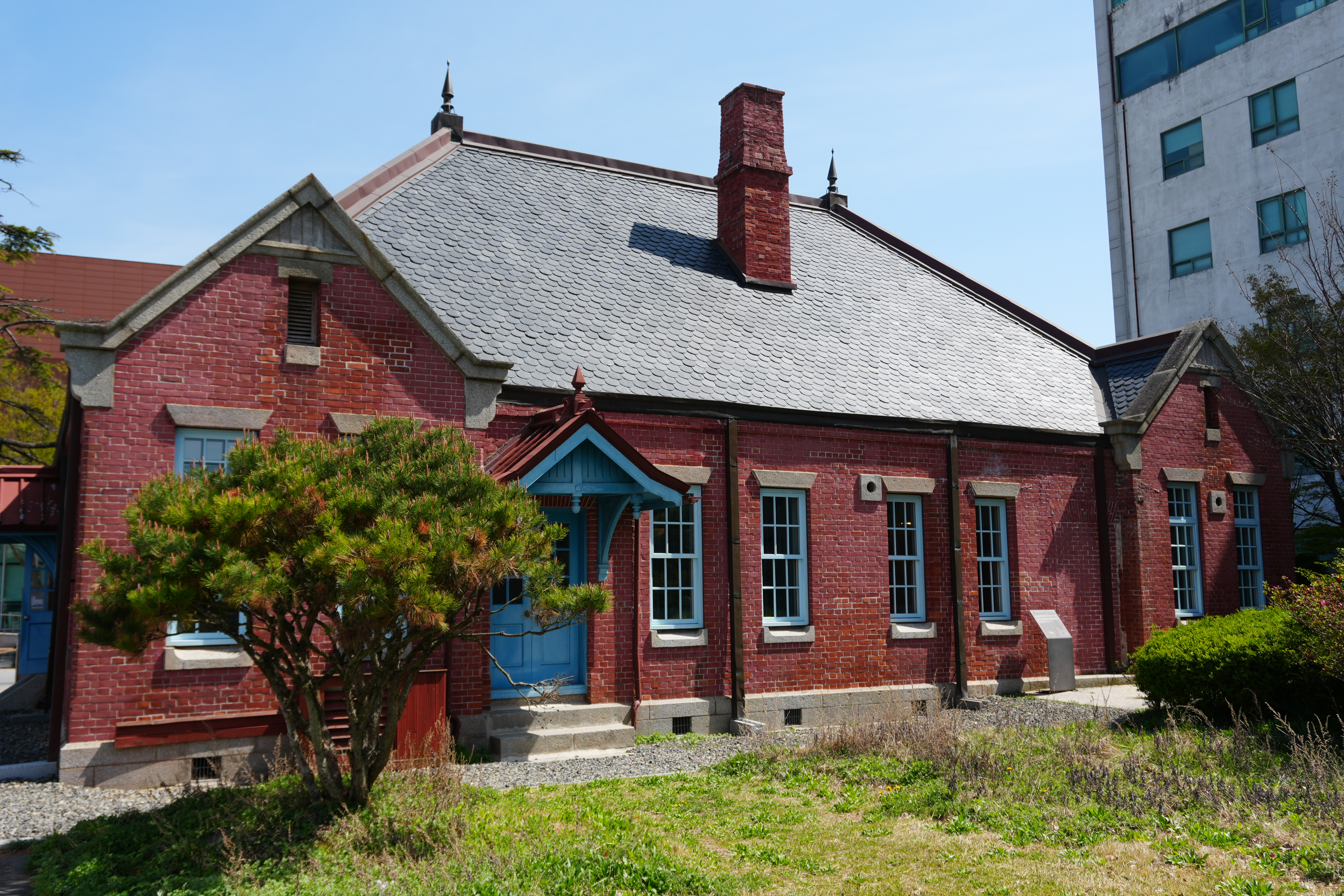
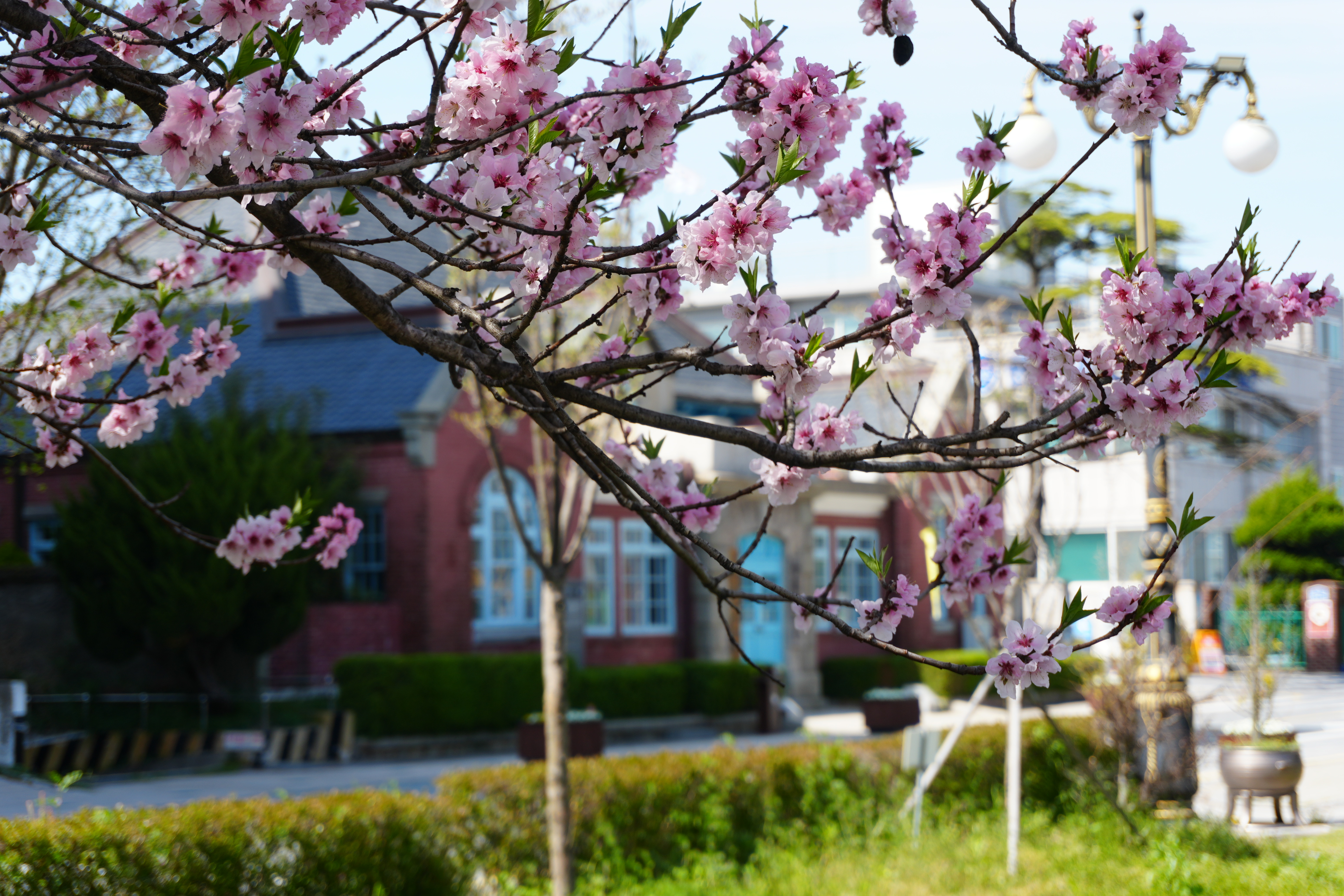
Ten minutes further on foot, the streetscape opens onto a building that simply should not exist in this context — a handsome Flemish-brick structure with Gothic rooflines and Romanesque windows, standing in a Korean port city as if misplaced from the Rhine valley.
The Old Gunsan Customs House was completed in 1908, commissioned by the Japanese imperial government and constructed from Belgian materials, possibly designed by a German or French architect. It is listed alongside Seoul Station and the Bank of Korea headquarters as one of the three surviving examples of Western Classical architecture in the country. The building is genuinely beautiful, and — standing here now — that beauty feels complicated.
The neighborhood's name offers a clue. This district is called Jangmi-dong (藏米洞): the place where rice was hidden, where it was stored. The name was not given as a neutral geographic marker. The rice stored and shipped from this port was Korean grain extracted under colonial agricultural policy — a systematic transfer of resources that caused significant food insecurity among the Korean population.
The customs house was the administrative infrastructure of that extraction. Its elegance was functional: imperial power liked to dress itself well.
Today the building operates as the Honam Customs Museum, housing some 1,400 artifacts related to Korea's customs history. The exhibit is straightforward, even modest. But the act of walking through it — knowing what this building administered — gives the displays a weight that any single artifact, on its own, would not carry. This is history you feel in the building more than in the cases.
From Warehouse to Commons — Jeongdam & Meokbangi and Friends
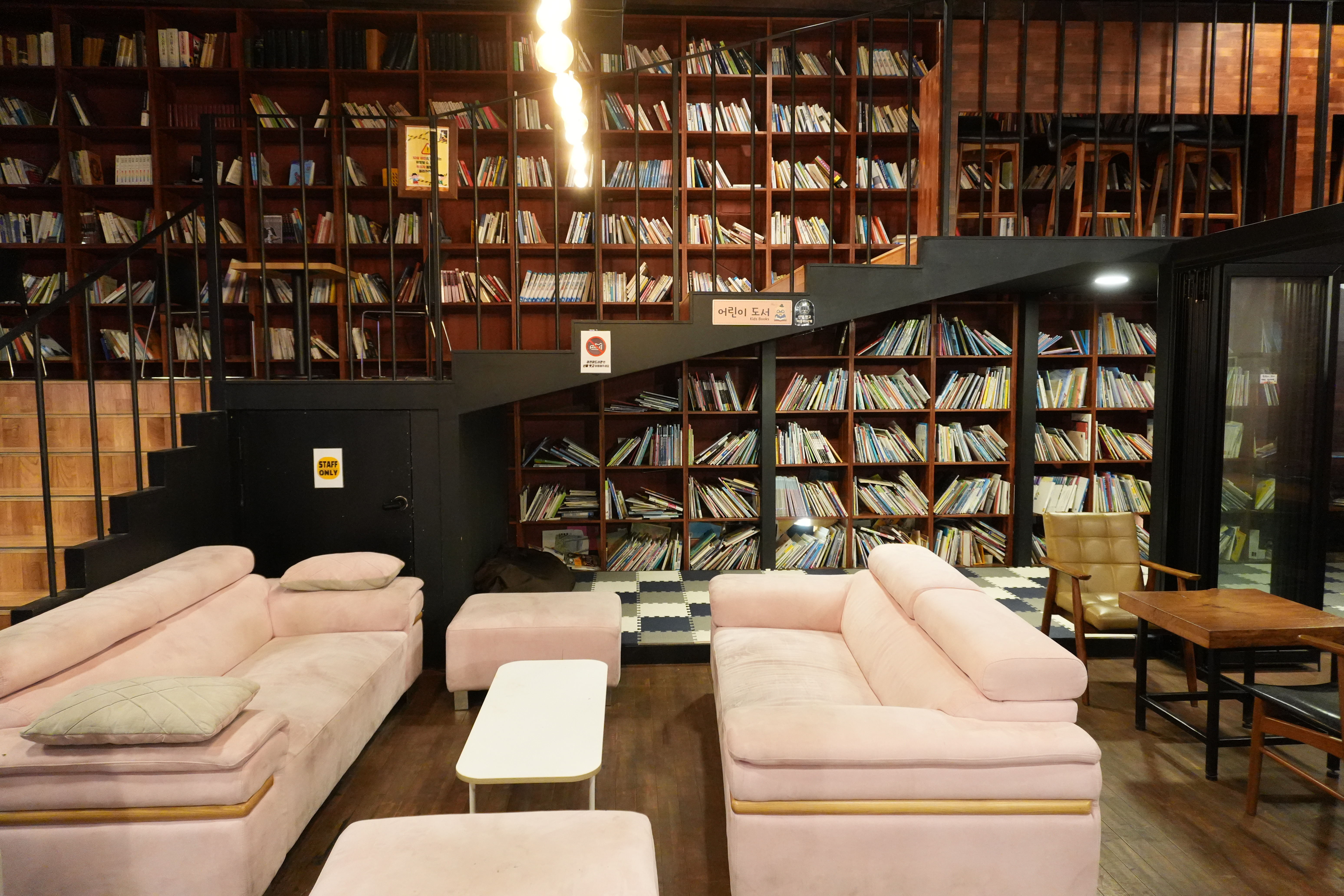
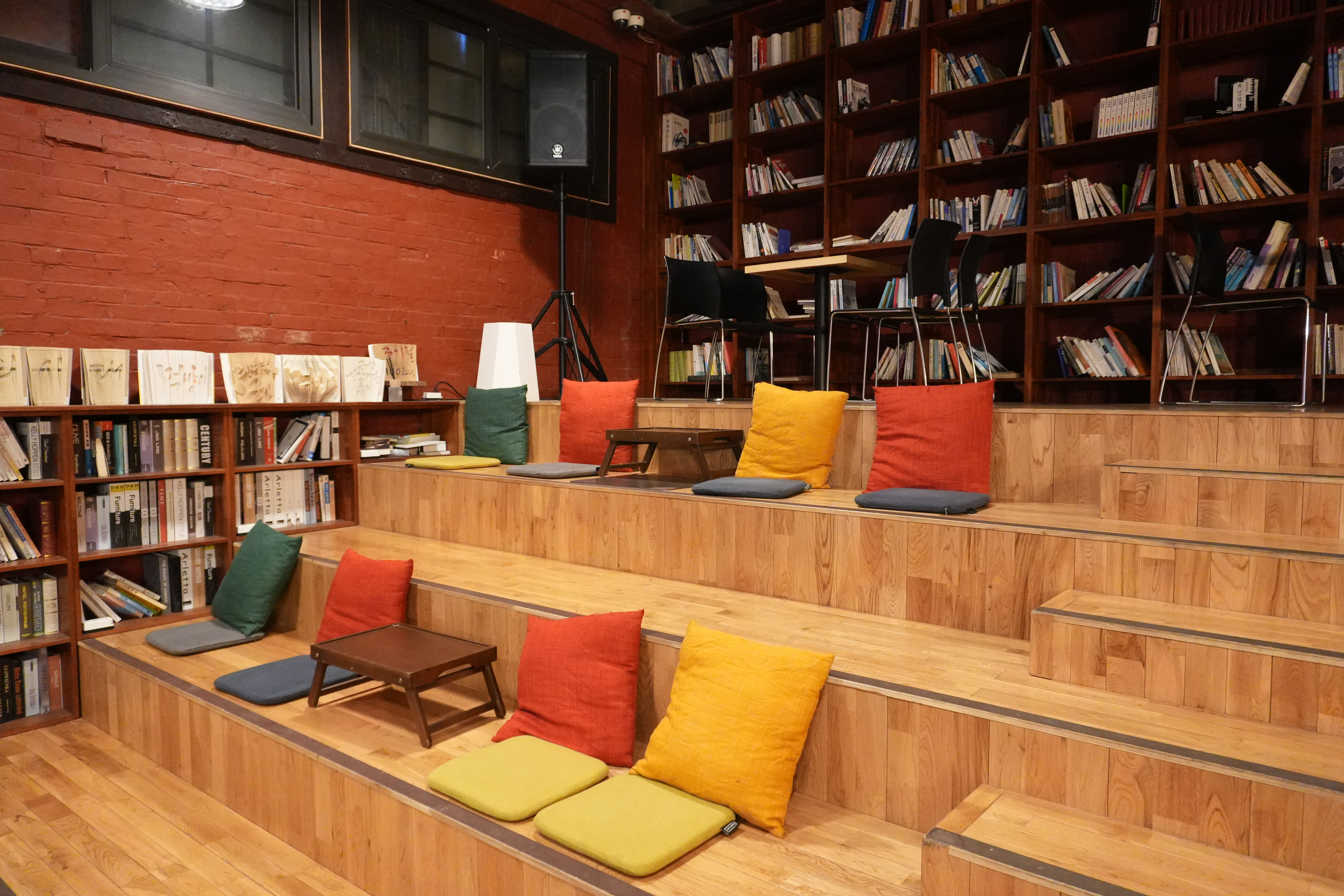
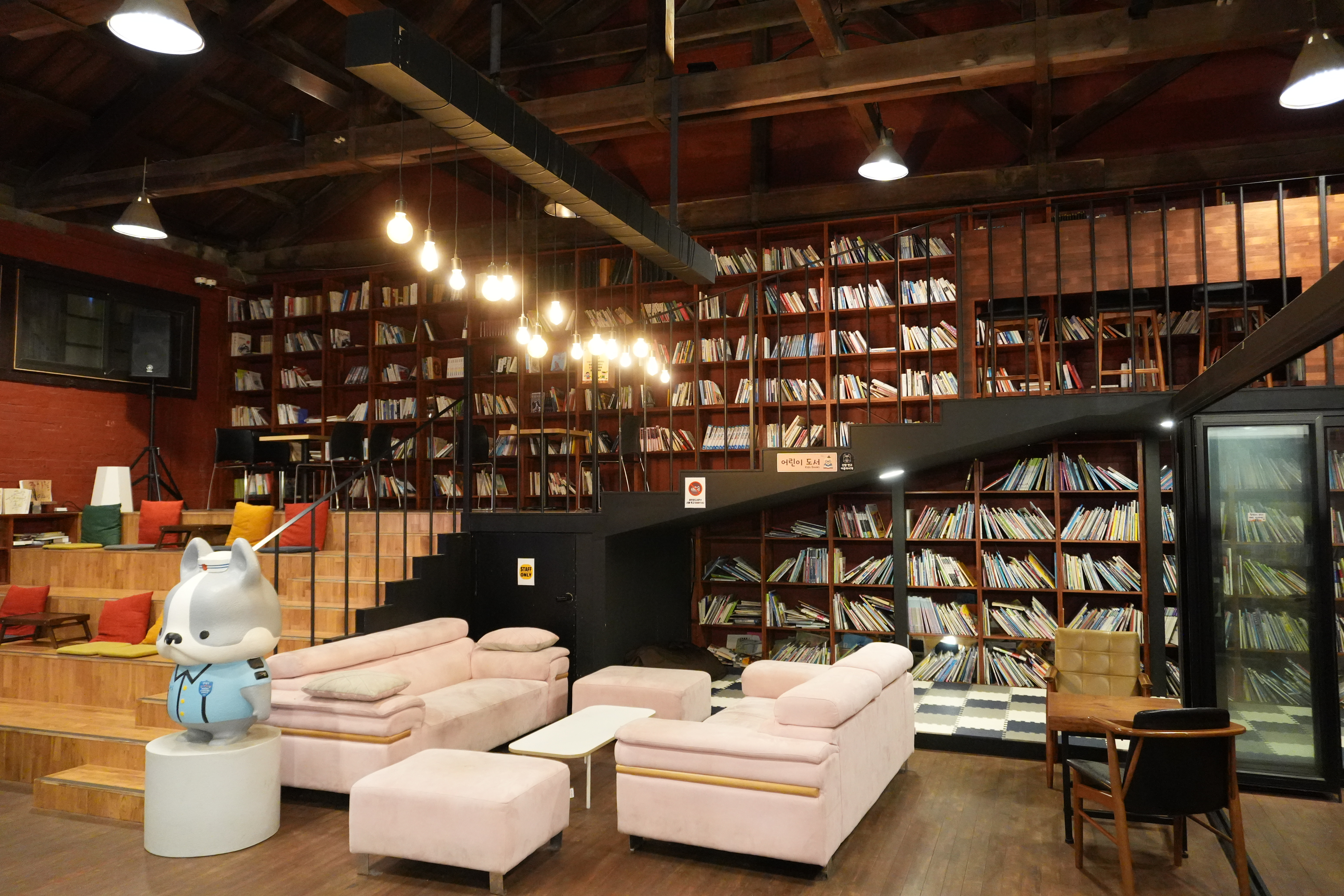
Behind the customs house, in what were once its storage warehouses — also built in 1908, also in red brick — is the compound now operating as Jeongdam Cultural Space and the café Meokbangi and Friends.
The concept is declared simply: the oldest building currently operating as a café in modern Korea. The warehouse bones are still there — high ceilings, thick walls, exposed brick — and the space leans into them without overcorrecting into nostalgia. Inside, one full wall is shelved floor to ceiling with books: children's titles on the ground level, adult reading above. Local craftspeople and small businesses from across Gunsan share the space.
I sat there for a while after finishing the day's walk, and the irony of it arrived slowly. The building where colonial grain was once stockpiled before shipment to Japan is now a place where children pull picture books off shelves, where local candle-makers and woodworkers sell their work, where families sit over coffee. The history hasn't been removed. It's been inhabited differently.
Gunsan Didn't Erase Its Past. It Built on Top of It.
The Japanese merchant's house is a heritage site now, but it still shows you exactly how power arranged itself in space. The bookshop in the colonial alley tends to the wounds that history leaves in people. The customs house stands as a witness — beautiful, incriminating, still standing. And the warehouse where stolen grain was held now holds books for children.
Not every city knows what to do with a past like this. Some cities tear it down. Some cities preserve it behind glass and call it done. Gunsan has done something harder: it kept the buildings and kept living in them, letting each generation add its own layer of meaning without erasing the ones beneath.
That kind of city asks something of its visitors too. Come not just to photograph but to read — the buildings, the street names, the distance between what a place was and what it has become.
This weekend, Gunsan is worth the train.
About Author

faith.log
A journal that connects faith and everyday life. In each small piece of writing, we share the grace of God and the depth of life together.


