The man who carried the lamp before the Reformation’s flame
At the close of the fourteenth century, the Roman Catholic Church stood at the height of its power. A single word from the Pope could determine the fate of kings, and the Bible remained sealed away from ordinary believers — considered too dangerous, too sacred for common hands. Into this darkness, John Wycliffe (1330–1384) stepped forward alone, holding the lamp of Scripture. Later Reformers would call him the “Morning Star of the Reformation,” and rightly so. From Jan Hus to Martin Luther to John Calvin, the theological foundations they built upon were ground that Wycliffe had first broken. In this column, I want to walk through three pillars of his theology — his doctrine of the Church, his view of Scripture, and his teaching on the Lord’s Supper — and ask what his voice still demands of us today.
1. The Church: Built on God’s Election, Not Human Institution

Wycliffe lived and wrote in a world of competing powers. At home in England, the Crown and the Papacy were locked in bitter conflict over the wealth and properties of the Church. Abroad, the Western Schism (1378–1417) had produced the scandalous spectacle of two men simultaneously claiming to be the one true Pope — the institutional Church undermining its own authority with every passing year. It was in this atmosphere of crisis that Wycliffe began asking the most fundamental question of all: what actually is the Church?
In two major treatises, On Divine Dominion and On Civil Dominion, he laid out his answer with striking clarity. God alone is the supreme sovereign. All earthly authority — whether civil or ecclesiastical — exists only as a stewardship entrusted by divine grace, not as a possession to be owned. A clergy living in open sin, he argued, forfeits any legitimate claim to temporal wealth or power. God has given civil rulers dominion over earthly affairs, and the Church authority over spiritual ones — and never the other way around. This was a direct challenge to Rome’s centuries-long reach into the political and economic life of Europe.
His most defining ecclesiological statement came in his 1378 treatise On the Church. There, Wycliffe defined the true Church as “the congregation of those chosen by the grace of God’s predestination” — the invisible company of the elect. This had profound implications. Membership in an institutional church offered no guarantee of salvation. No office — not Pope, not Cardinal, not Bishop — could secure one’s place among the truly redeemed. This invisible Church had equally radical implications for the ministry itself. What made a true minister was not ordination, but a life of godliness and faithfulness to God’s Word. For Wycliffe, the Church’s true center was never a person or a system. It was God himself.
This ecclesiology led naturally to a confrontation with the papacy. In his 1379 treatise On the Power of the Pope, Wycliffe flatly denied the divine institution of the papal office, and declared that any pope who failed to follow Christ in simplicity and poverty was nothing less than the Antichrist. Wycliffe was the first person in church history to use that label for the Bishop of Rome. Calvin would later do the same, offering a pointed critique of the papacy in Institutes of the Christian Religion Book IV, Chapter 5. What Wycliffe ignited in Oxford would travel through Jan Hus and eventually set all of Europe ablaze.
2. Scripture: The Highest Authority Above All Others
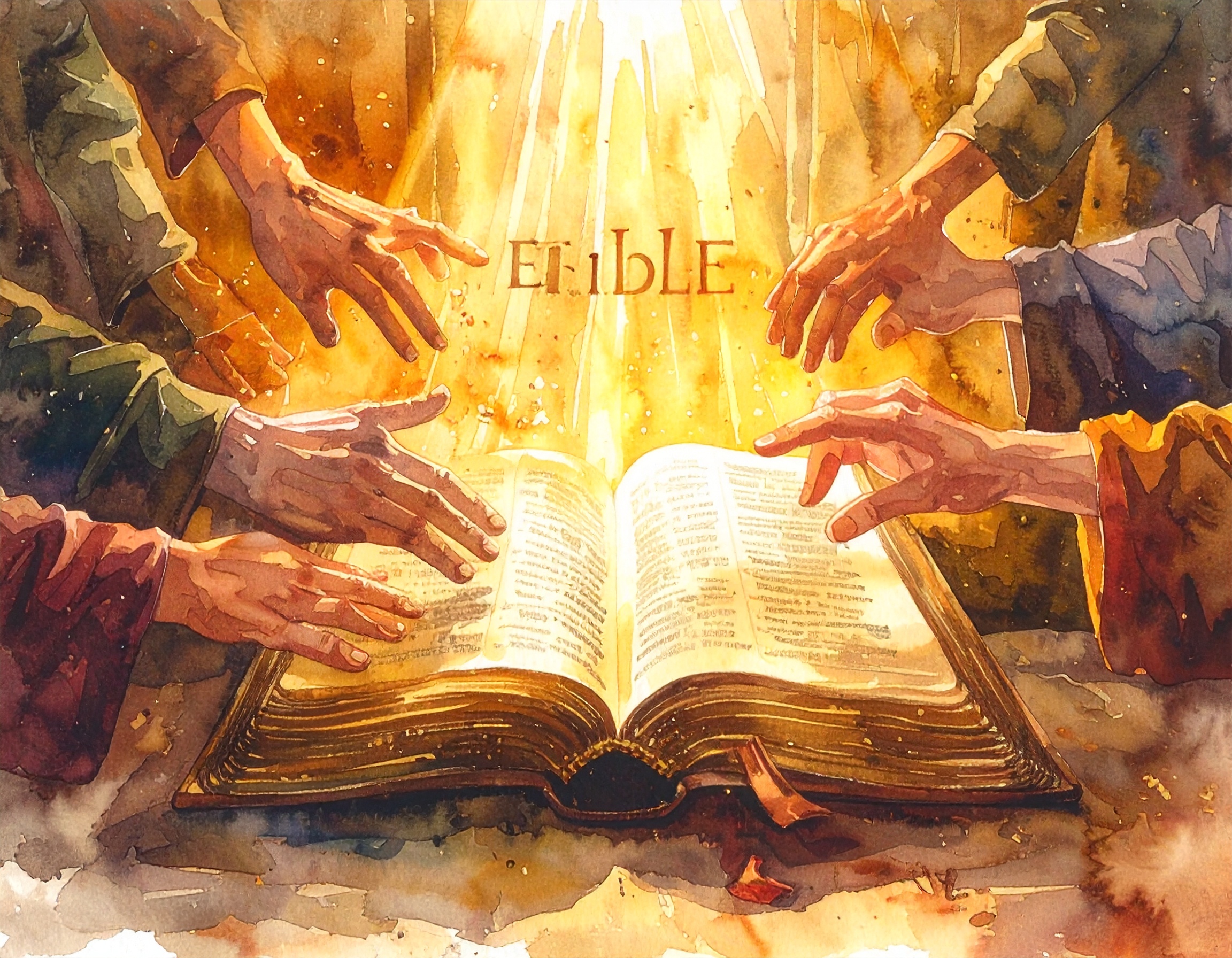
Wycliffe’s doctrine of the Church did not stand on its own. It was grounded in something deeper — an unshakeable conviction about the absolute authority of Holy Scripture. For Wycliffe, the Bible ranked above church tradition, above papal decree, above any council or commentary. Scripture alone could identify the true Church. Scripture alone contained the essential message the Church was bound to proclaim.
In his 1378 work On the Truth of Sacred Scripture, he wrote with the confidence of a man who had staked everything on this conviction: “Scripture is the supreme authority for every Christian, the standard of faith, and the measure of all human perfection.” This declaration anticipates what would become the Reformation’s defining principle — Sola Scriptura. Church tradition, conciliar declarations, papal bulls, theological commentaries — all of it, he insisted, must be tested against the touchstone of Scripture.
But Wycliffe was never content to let a conviction remain merely academic. He believed the authority of Scripture could not be the exclusive property of the clergy. Laypeople had the right to read and possess the Bible, and the Bible ought to be read and interpreted in the language of the people. In a church that actively prohibited lay Bible-reading and condemned vernacular translation as heresy, this was nothing short of revolutionary.
He lived out this conviction at great personal cost. Beginning in August 1380, Wycliffe undertook the translation of the Latin Vulgate into English. He completed the New Testament in 1382. After his death, his disciples finished the Old Testament in 1384. Rome condemned the translation as heretical and burned whatever copies it could find — but the Word survived, passed hand to hand in manuscript copies that no papal edict could fully suppress. Wycliffe’s passion for putting Scripture into ordinary hands outlasted him by centuries.
3. The Lord’s Supper: A Sacrament of the Word, Not of Magic
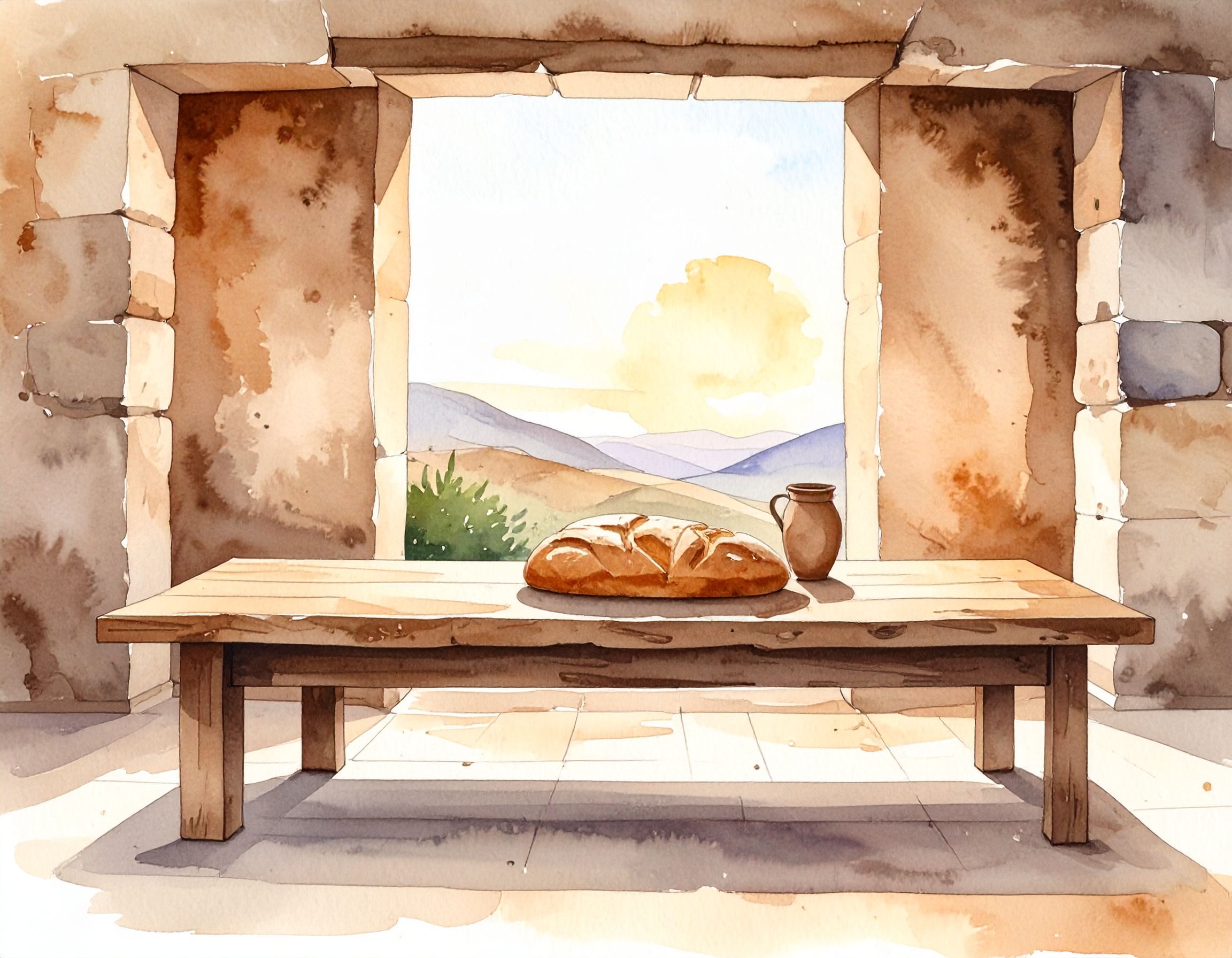
Wycliffe’s reforming instincts extended to the sacraments as well. In his 1380 treatise On the Eucharist, he mounted a direct assault on the doctrine of transubstantiation — one of Rome’s most jealously guarded dogmas. The teaching, briefly stated, holds that when the priest elevates the bread and wine during the Mass, their very substance is transformed into the actual body and blood of Christ. The implications were enormous: without priestly mediation, there could be no access to the means of grace. The doctrine effectively made the clergy the gatekeepers of salvation, and Rome used it accordingly.
Wycliffe called the doctrine out as both unscriptural and superstitious. Christ’s body and blood are present in the Supper, he maintained — but sacramentally, spiritually, and effectually, not materially or physically. In his own words:
“When we look upon the host, we must believe that it is not the body of Christ itself, but that the body of Christ is sacramentally concealed within it. This union has its power through God’s blessing and authority, and so the bread and wine are not destroyed.”
The fallout was immediate. Many of his supporters found this position impossible to accept and walked away. In 1382, a synod convened by the Dominican order in London officially condemned ten of Wycliffe’s propositions, including his eucharistic theology, as heretical. He never recanted. The loss of friends and the weight of official condemnation — neither could make him surrender what he had found in Scripture.
What Wycliffe Is Still Asking Us
Looking back across Wycliffe’s theology, one thread runs unbroken through all of it: the insistence that every human authority and tradition must stand before the judgment of God’s Word. In his ecclesiology, his doctrine of Scripture, his sacramental theology — the question was always the same. What does the Bible say?
His world and ours are separated by seven centuries, but the weight of that question has not diminished. Teaching that departs from Scripture still finds its way into the Church today, dressed in the respectable clothing of tradition and authority. Wycliffe’s insight — that no title or office guarantees the truth of what someone teaches — was not merely relevant to fourteenth-century Oxford. It speaks directly to us.
Wycliffe did not simply give up personal comfort for his convictions. He put his life on the line. And the root of that courage was his unshakeable trust in the Word of God. As we close this edition of root.log, I want to leave you with the questions his theology quietly but firmly presses upon us: Is what we believe grounded in Scripture? Has the tradition we follow been tested against the Word? Seven hundred years later, Wycliffe is still asking.
About Author

faith.log
A journal that connects faith and everyday life. In each small piece of writing, we share the grace of God and the depth of life together.


