Rooted in Scholarship and in Life: John Calvin, Part II — From Strasbourg to His Final Days in Geneva
In the previous root.log column, this writer traced John Calvin's life through his first ministry in Geneva. This installment picks up the story from there, following how Calvin labored, over the rest of his life, to root the Reformed faith both in rigorous scholarship and in the everyday life of the church. We rightly remember Calvin as the theologian who gave Reformed doctrine its clearest and most systematic expression. What we often forget is that he was, first and last, a pastor, one who spent his life working that theology out in the congregation and the city, and building the structures that would allow it to endure.
Calvin Yielded to the Call Once More Before the Example of Jonah
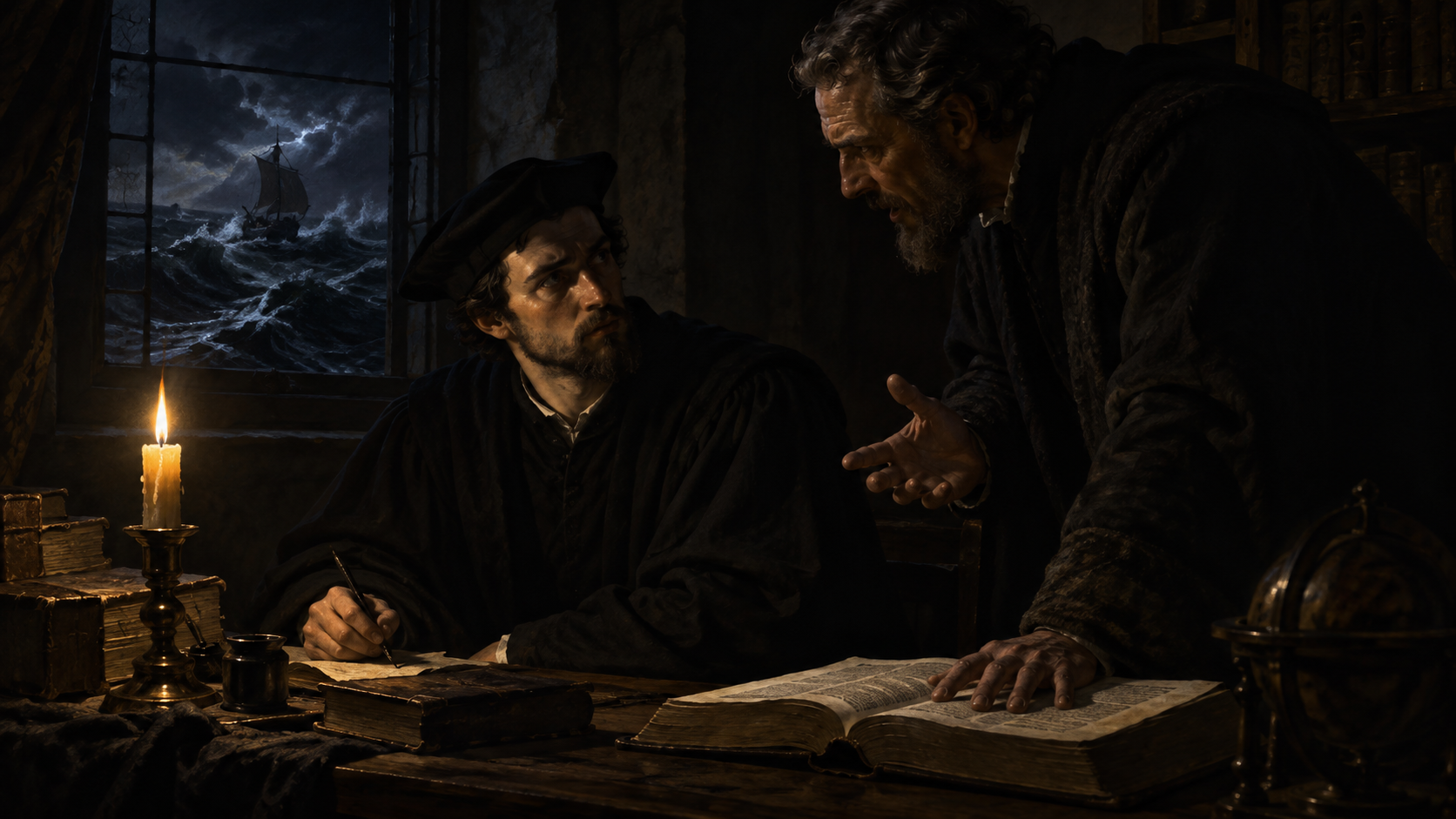
In April 1538, Calvin and Farel were expelled from Geneva, and his first ministry there came to an abrupt end. After passing through Bern and Zurich, Calvin settled in Basel. There, Martin Bucer, who was leading the Reformation in Strasbourg, extended an invitation. Calvin declined more than once. By temperament he wanted nothing more than a quiet life of study and writing, serving the Reformation through scholarship, and the wound of seeing his Genevan work cut short by outside forces had not yet healed. Bucer, much as Farel had done before him, pressed Calvin hard with the example of Jonah, the prophet who fled from the call of God. Years later, in the preface to his Commentary on the Psalms, Calvin recalled the moment:
"That most excellent servant of Christ, Martin Bucer, employing a similar kind of remonstrance and protestation as that to which Farel had recourse before, drew me back to a new station. Alarmed by the example of Jonas which he set before me, I still continued in the work of teaching.”
Three Years in Strasbourg Made Calvin a Pastor
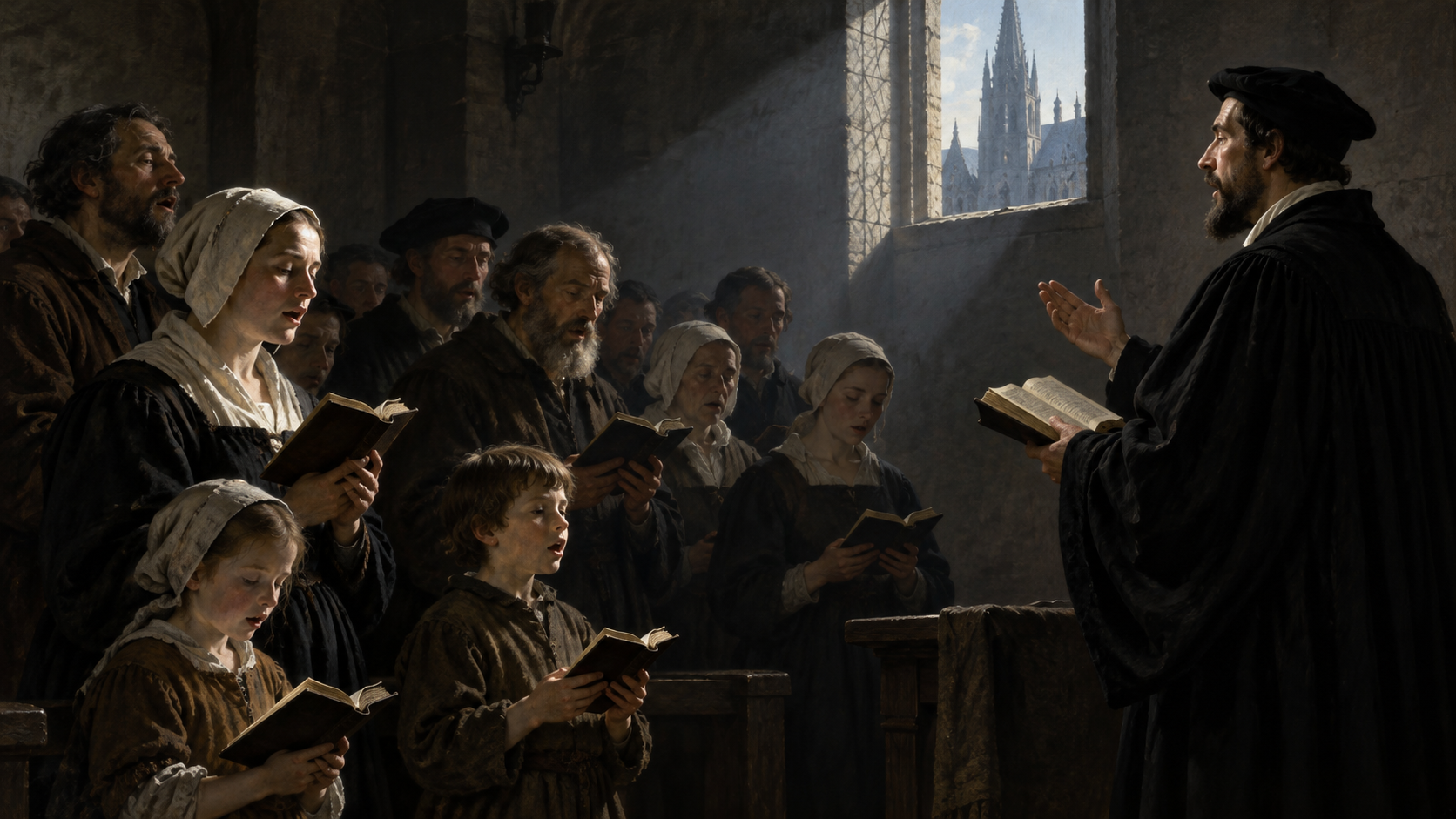
Beginning in September 1538, Calvin served for three years as pastor of a congregation of French refugees who had fled religious persecution to Strasbourg. From 1539 he also taught the New Testament at the gymnasium founded by Johannes Sturm. For the first time, Calvin bore full pastoral responsibility for a single flock. He compiled a French metrical psalter so the congregation could sing together, ordered the liturgy of worship, and personally examined the faith of his people before they came to the Lord's Table. The reforms he had been unable to carry out in Geneva, he first put into practice in this small refugee church.
In August 1540, at the urging of Bucer and Farel, Calvin married Idelette de Bure. A widow from Liège, in what is now Belgium, Idelette and her late husband, Jean Stordeur, had been Anabaptists before embracing the Reformed faith through Calvin's teaching. Farel officiated the wedding. Until her death in 1549, Idelette was Calvin's faithful companion, and the stability of their home gave new strength to his scholarly work. In Strasbourg he published the second Latin edition of the Institutes of the Christian Religion (1539) and his first biblical commentary, the Commentary on Romans (1540), and he brought out a French translation of the Institutes (1541).
A Single Letter Turned the Heart of Geneva
While Calvin poured himself into pastoral work and writing in Strasbourg, Geneva's situation grew steadily worse. The faction led by Jean Philippe, which had driven Calvin out, concluded a treaty with Bern in 1539 that was deeply unfavorable to Geneva. The following year the faction collapsed, and its negotiators were condemned for treason. Leaders sympathetic to Calvin returned to power and began asking him to come back.
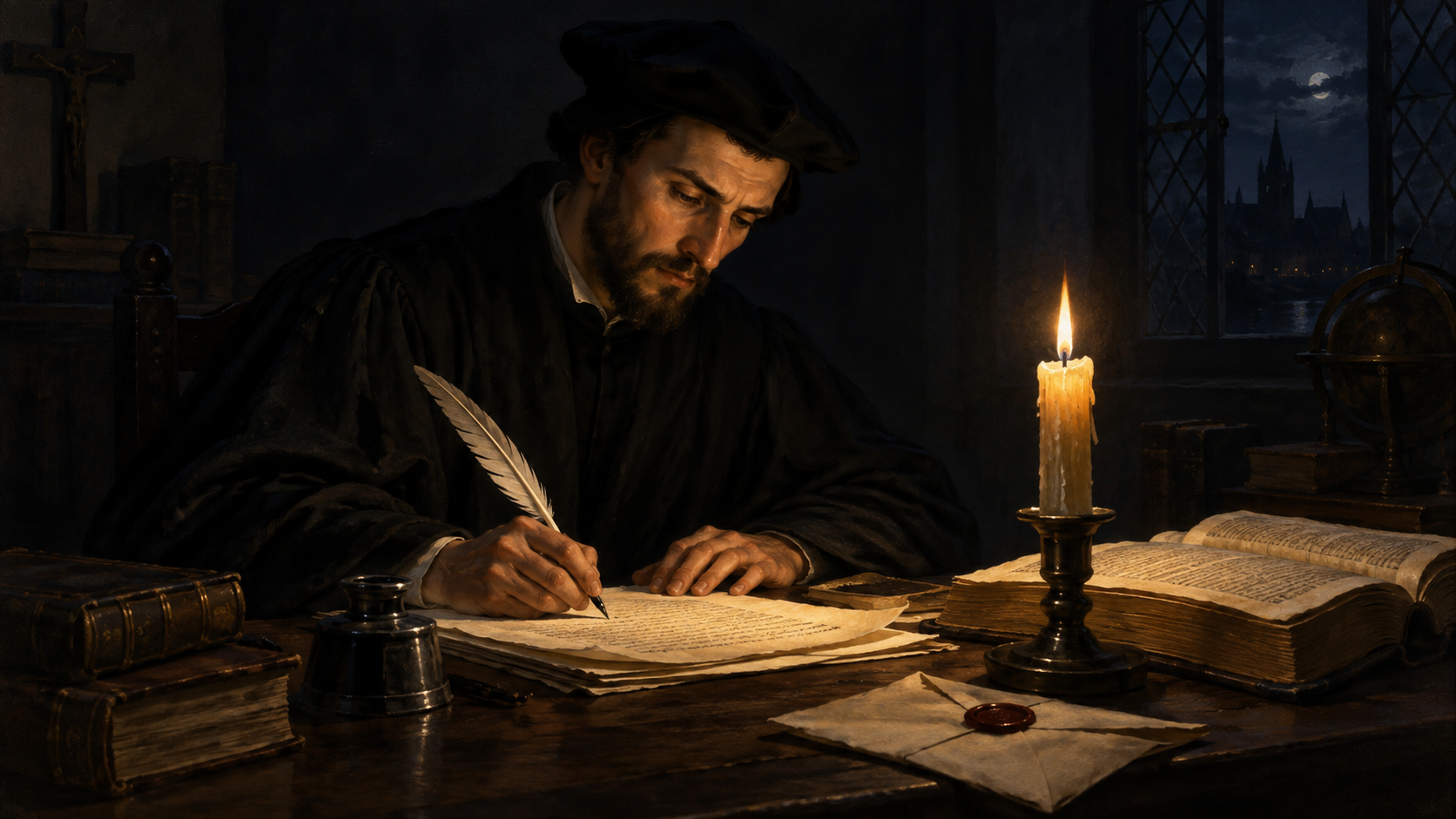
At the same time, Geneva faced another crisis. In March 1539, Cardinal Jacopo Sadoleto wrote an open letter to the citizens of Geneva urging them to return to the Roman Church. No one in the city was equal to the task of answering him, so the council turned to Calvin. He refused their invitation to return but accepted the request to respond, and in his Reply to Sadoleto he answered the cardinal point by point. As word of the reply's brilliance spread among the citizens, Calvin gained far more support among Geneva's leaders than he had three years earlier. The city asked him to return again and again. Content and happy in Strasbourg, Calvin declined each time.
Once more Farel wrote, in the strongest terms, urging him to go back, and Bucer added his own counsel. At last Calvin agreed to return for a limited period, and in September 1541 he arrived back in Geneva. That "limited period" lasted twenty-three years, until the day of his death.
Calvin Built Geneva's Reformation on the Ecclesiastical Ordinances
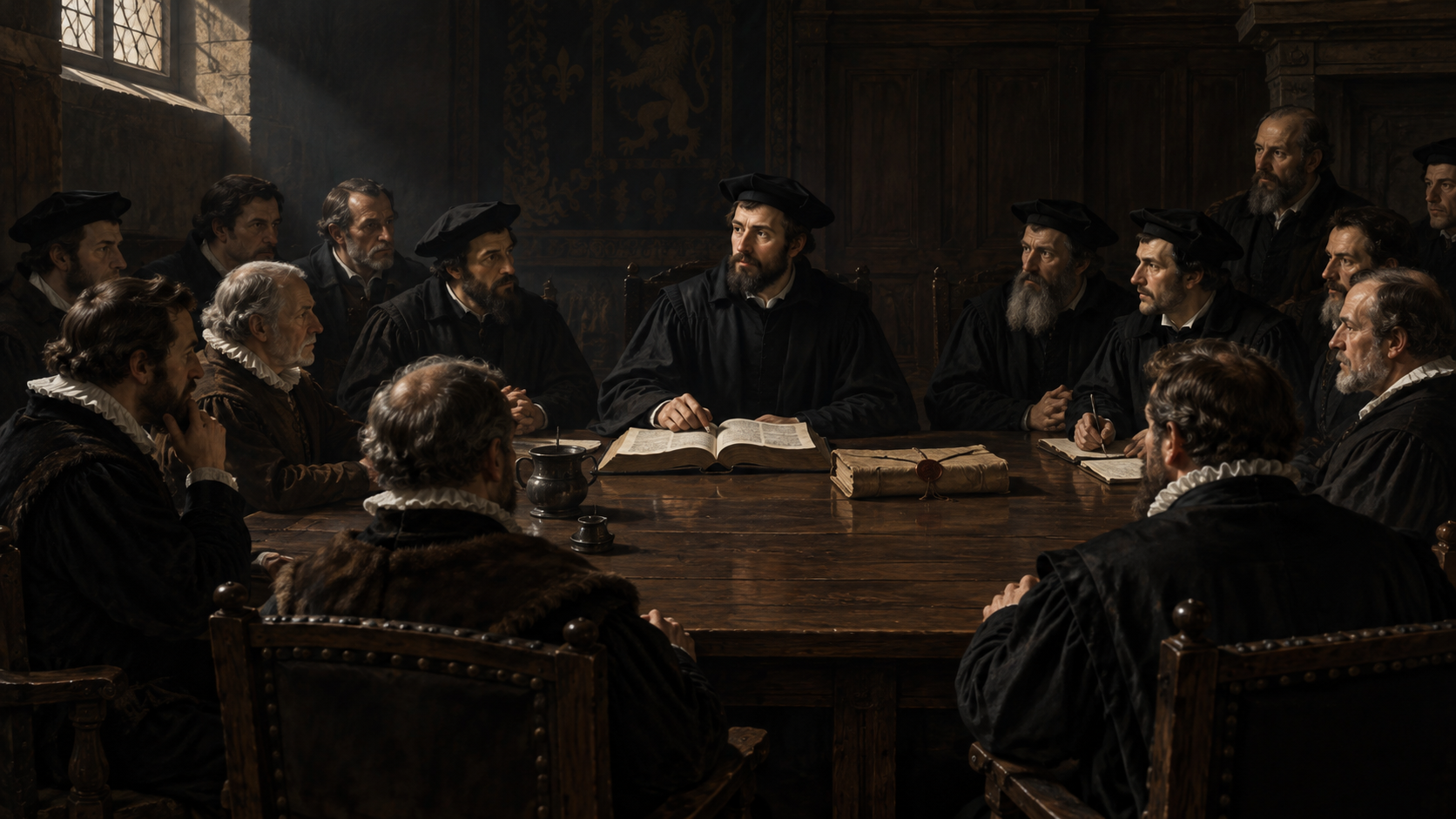
The three years in Strasbourg had matured Calvin as a minister. During his first stay in Geneva he had been Farel's assistant; now he returned as a spiritual leader capable of directing the work of reform himself. He longed to see Geneva become a holy city governed by the Word of God. Having tasted failure once, he understood that lasting reform required, above all, a sound institutional foundation. He therefore drafted the Ecclesiastical Ordinances, a church constitution far more concrete than the articles he had proposed in 1537, and secured the city council's approval in November 1541.
The Ordinances declared that Christ had established four offices in His church (pastors, doctors, elders, and deacons) and set out the duties of each. The pastors met weekly in an assembly known as the Congrégation to study and discuss Scripture together and to examine candidates for the ministry. The doctors taught sound doctrine to the faithful and oversaw the schools. The deacons cared for the poor and administered the hospital.
The heart of Calvin's system, however, was the eldership, the office from which the Presbyterian session descends. Twelve laymen were chosen: two from the Small Council, four from the Council of Sixty, and six from the Council of Two Hundred. Together with the pastors they formed the Consistory, which met every Thursday to handle matters of church discipline. The Consistory could excommunicate the unrepentant and refer serious crimes to the civil authorities.
The road was far from smooth. Over whether the power of excommunication belonged to the church or to the city council, Calvin endured a long struggle with the faction gathered around Ami Perrin. Only in January 1555, when the council recognized the Consistory's independent right to excommunicate, was the question finally settled. Throughout those years, believers persecuted for their faith streamed into Geneva, some seeking freedom of worship, others hoping to learn from a model of reform. John Knox, the Scottish Reformer, wrote in a letter of 1556 that Geneva was:
"The most perfect school of Christ that ever was in the earth since the days of the Apostles. In other places, I confess Christ to be truly preached; but manners and religion so sincerely reformed, I have not yet seen in any other place.”
The Geneva Academy Carried the Reformed Faith Across Europe
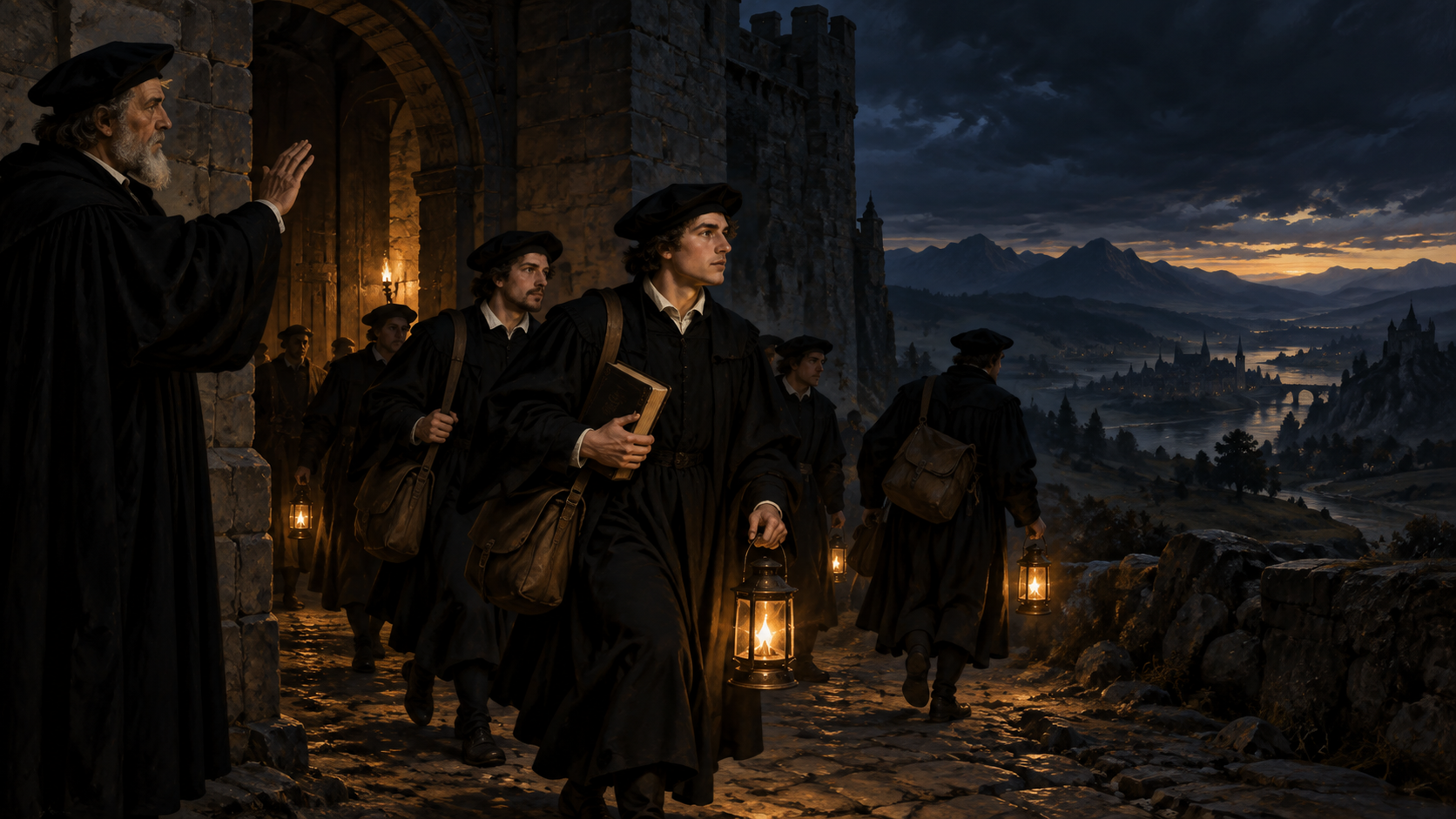
In 1559, Calvin was at last granted citizenship of Geneva. For more than twenty years he had served the city as a foreigner. Yet his heart remained with the reformation of his native France. That same year he founded the Geneva Academy, the forerunner of today's University of Geneva, to train the French Protestants who had come to the city in search of religious freedom. Modeling the Academy on the educational approach he had seen in Strasbourg, Calvin opened its doors to 162 students in its first year alone. Theodore Beza was elected its first rector, and Calvin taught theology alongside the faculty. The Academy became the center of a distinctly Reformed theological education, set apart from the Lutheran tradition, and it sent pastors out not only to France but also to the Netherlands, England, Scotland, Germany, and Italy.
Calvin's influence reached across Europe within his own lifetime. In France, the first national synod of the Huguenot churches, meeting in Paris in 1559, adopted the French Confession, based on a draft by Calvin. In Scotland, John Knox, who had learned under Calvin while pastoring the English refugee congregation in Geneva, led the Scottish Parliament to adopt the Scots Confession in 1560. In the Low Countries, corresponding to present-day Belgium and the Netherlands, Guido de Brès wrote the Belgic Confession in 1561. In the Electoral Palatinate of Germany, the Heidelberg Catechism was composed in 1563, and that same year the Church of England adopted the Thirty-Nine Articles, which bear the marks of Reformed theology. In Switzerland, the Consensus Tigurinus of 1549, in which Calvin and Heinrich Bullinger of Zurich reached agreement on the Lord's Supper, bound Geneva and Zurich together in a single Reformed tradition.
Calvin Served the Word to the End in a Frail Body
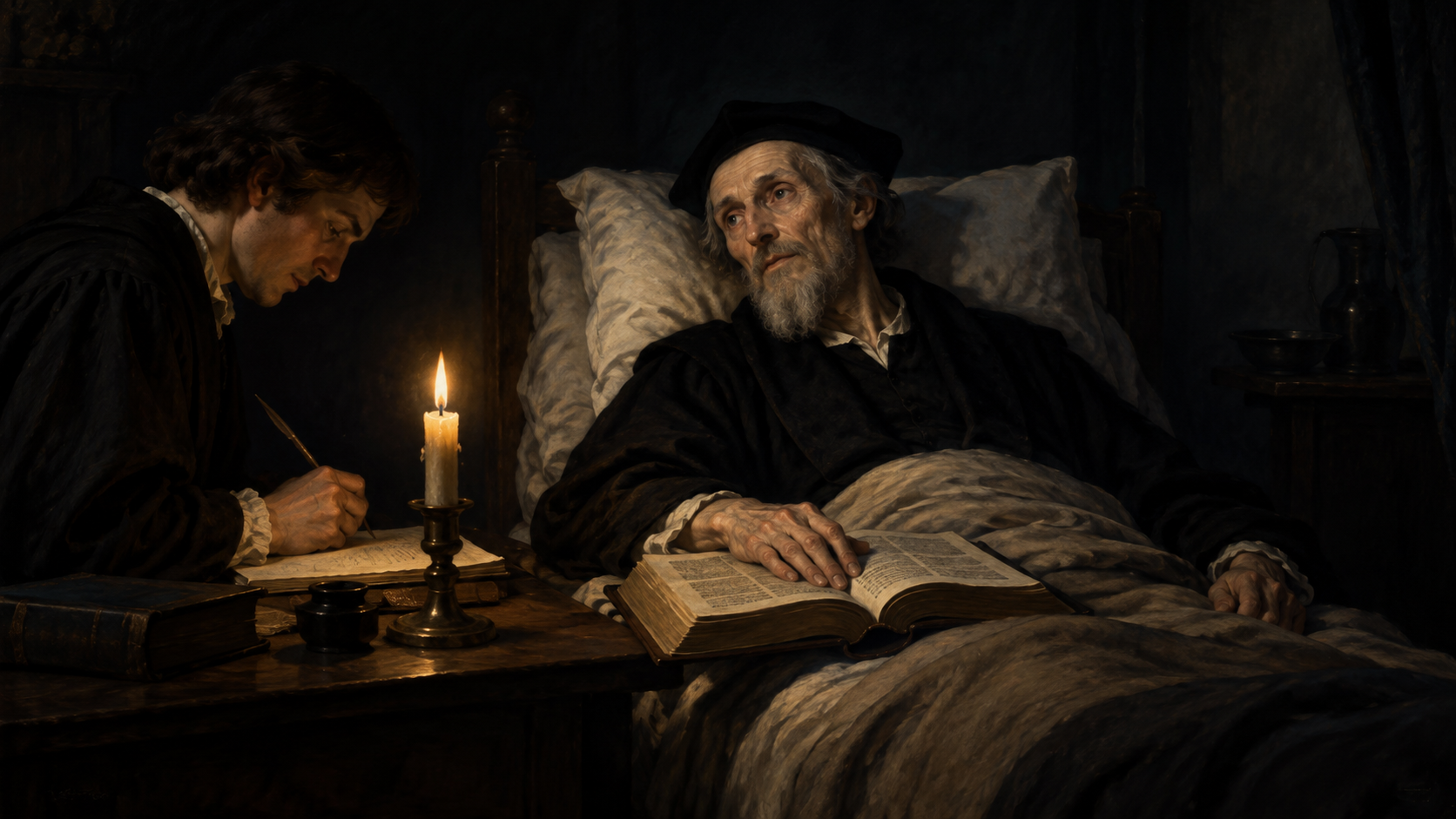
Calvin was a man of fragile health. He suffered from migraines, gout, kidney stones, and pulmonary tuberculosis, among other ailments, and he regarded himself as someone who could not survive a single day without the help of God. Even so, he preached twice every Sunday and every weekday on alternating weeks, never let his theological lectures lapse, and produced commentaries on most of the books of the Old and New Testaments. He revised the Institutes again and again, completing the definitive edition in 1559, and through countless treatises and letters he served churches and reformers throughout Europe.
As death drew near, Calvin feared that his followers might venerate him as a saint or turn his grave into a place of pilgrimage, so he asked to be buried in an unmarked grave. According to Beza's account, even in severe pain he repeated the words of Psalm 39:9, resting quietly in the will of God. On May 27, 1564, at the age of fifty-four, he entered the presence of the Lord.
"I am silent before you; I won't say a word, for my punishment is from you." (Psalm 39:9, NLT)
Obedience to the Call Made Calvin Who He Was
Following the course of Calvin's life, one striking fact emerges: he did not walk the path of reform according to his own designs. As a gifted scholar, Calvin wanted to serve the Reformation through learning, and that desire was indeed fulfilled through the Institutes and his many commentaries and treatises. But planting churches and leading reform on the ground, in Geneva and in Strasbourg, was never the path he would have chosen. He refused that call more than once. Yet when God summoned him through co-laborers like Farel and Bucer, Calvin ultimately bowed in obedience.
In the Institutes, Calvin describes the call to ministry as both a secret, inward call known to the minister's own conscience and an outward call confirmed by the church. His life is a living illustration of that teaching. God led Calvin not only through his personal desires and plans, but also through the voices of the church and the brothers who surrounded him.
We, too, strive to use the gifts God has given us in His service, and that is surely pleasing to Him. But Calvin's life shows how dangerous it is to assume that only what we do well, or only what we want to do, can be the calling God has entrusted to us. When God sets a new task before us, even one we never planned for, what matters is that we obey as Calvin did, living coram Deo, before the face of God. Calvin's emblem shows a hand offering up a heart, inscribed with his confession: Cor meum tibi offero, Domine, prompte et sincere, "My heart I offer to You, Lord, promptly and sincerely." Those who never forget that the chief end of life is the glory of God will know, as Calvin did, the privilege of carrying out whatever work God entrusts to them.
“Sola Scriptura, Sola Fide, Sola Gratia, Solus Christus, Soli Deo Gloria.”
About Author

faith.log
A journal that connects faith and everyday life. In each small piece of writing, we share the grace of God and the depth of life together.


