
Society is formed by individuals and communities, each carrying out distinct roles. Religion, too, exists as one such community within society and has exercised a particular influence throughout history. For this reason, reflecting on the role Christianity has played within Korean society is not merely an exercise in historical recollection. It is an act of discernment—one that helps us examine what we must hold fast to today and where we are called to move forward. Only by rightly understanding the path Christianity has walked can we clearly recognize the responsibilities that now lie before us.
From this perspective, the Korea Christian History and Culture Museum, located in Eunpyeong-gu, Seoul, emerges as a space of considerable significance. Opened on August 12, 2025, the center was established to collect, preserve, exhibit, educate, and conduct research on the historical and cultural legacy of Korean Christianity. True to its founding purpose, the center currently offers a range of permanent and special exhibitions that invite visitors to consider the complex relationship between Christianity and Korean society.
Tracing Christianity’s Footsteps in Korean Society - Moments When Faith Was Beautiful
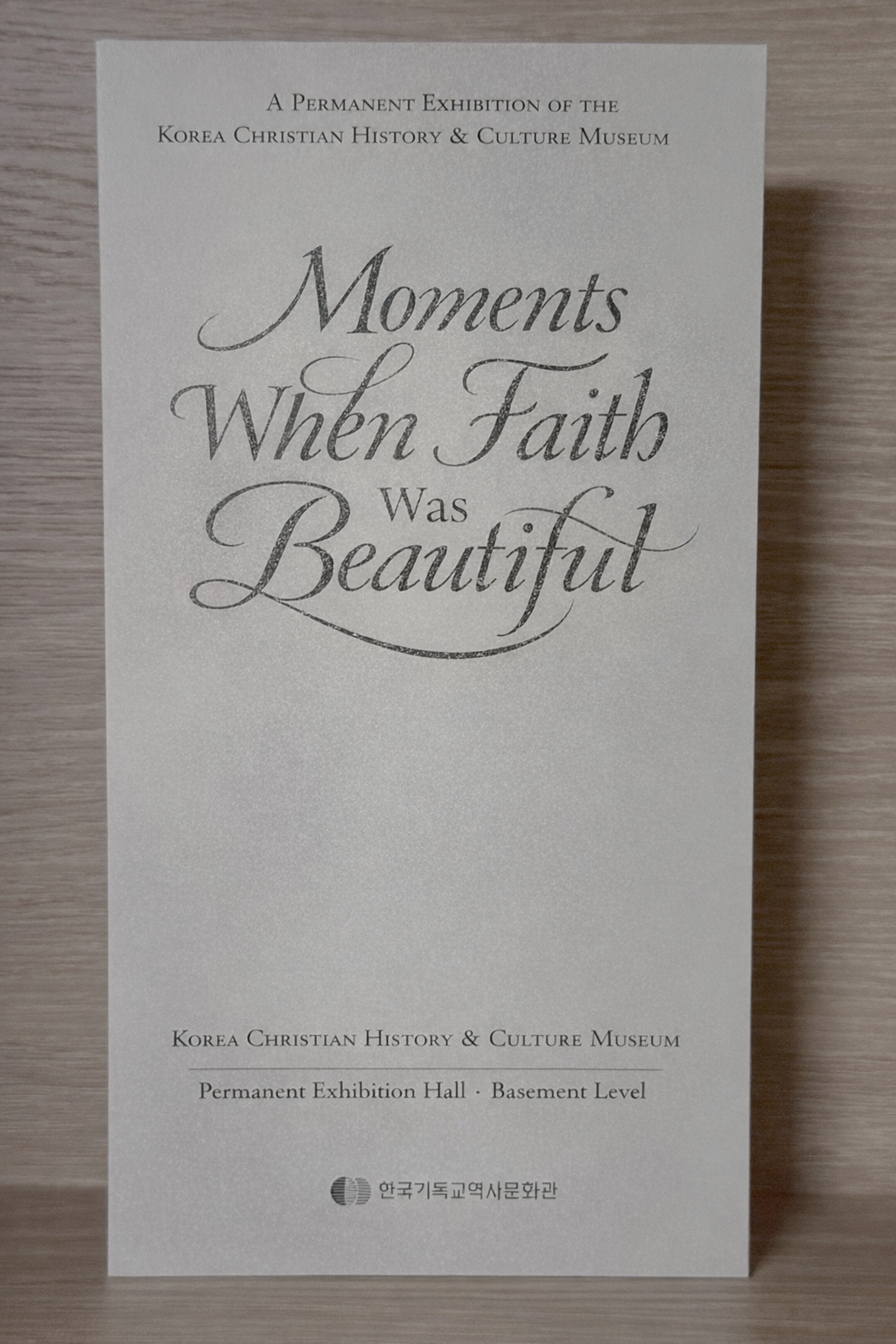
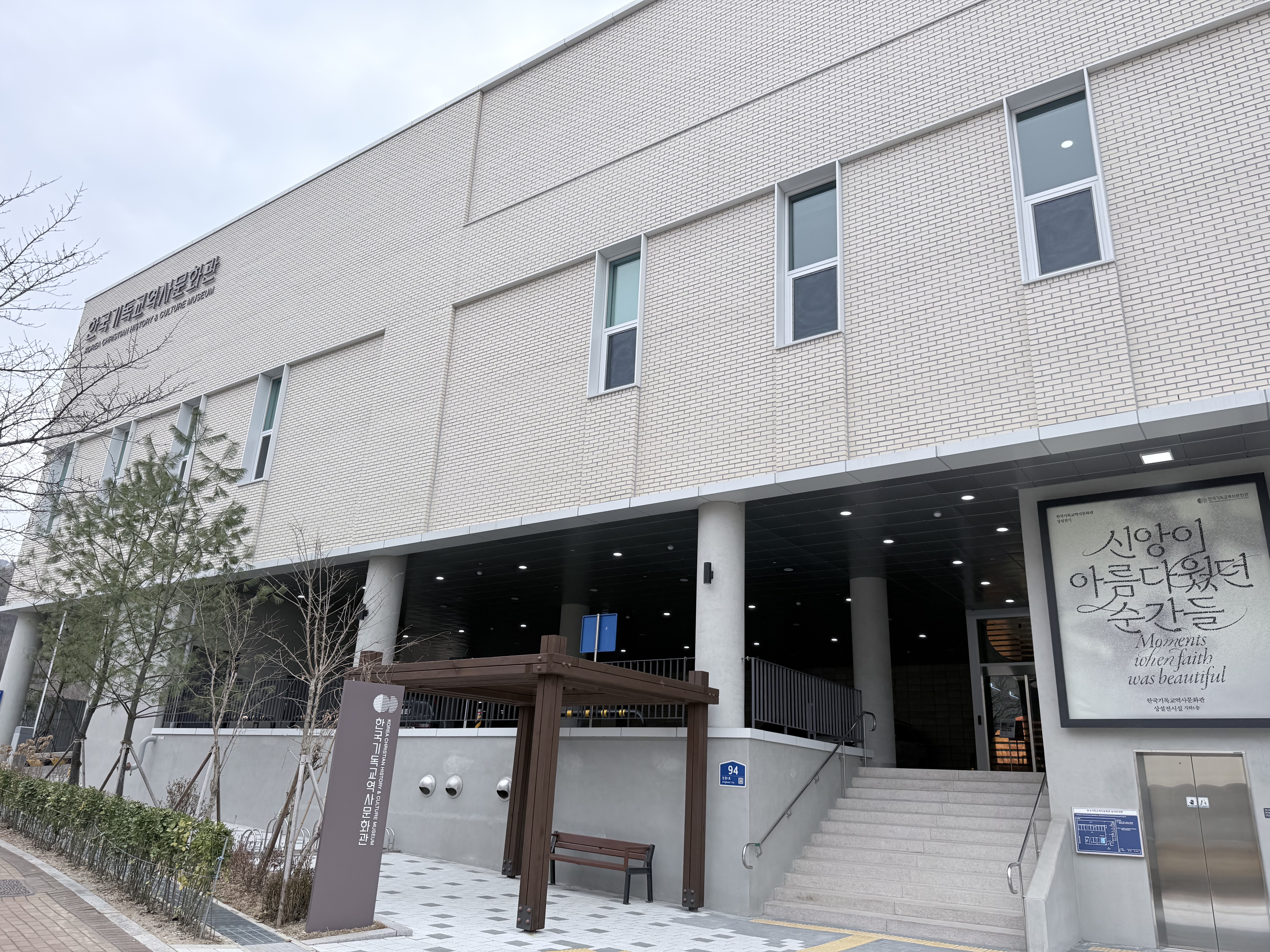
The permanent exhibition hall, located on the basement level, hosts an exhibition titled Moments When Faith Was Beautiful. This exhibition most clearly embodies the mission of the center. By situating the history of Korean Christianity within the broader narrative of modern and contemporary Korean history, it allows visitors to examine how Christianity functioned within society during each era.
From the early missionary period through the Japanese colonial era, the years of liberation and the Korean War, the age of industrialization and democratization, and into the present day, the exhibition presents the roles and responsibilities Christianity assumed within society. Through historical footage, documents, and artifacts, it offers a layered account of how faith intersected with social realities. For younger generations unfamiliar with these periods, such materials provide valuable historical clarity and context.
What stands out most is that the exhibition does not present Christianity’s influence in an uncritically celebratory manner. Alongside moments of genuine moral courage and social contribution, it also acknowledges clear limitations and failures. History, after all, is not meant to be idealized but examined. This balanced approach encourages visitors to discern what should be inherited and what must be guarded against. A faith unwilling to confront its own past errors is prone to repeating them.
There are, however, moments of tension within the exhibition’s narrative. In emphasizing social unity and ecclesial cooperation, the strengths of the ecumenical movement are highlighted, while insufficient attention is given to the risk such movements may pose to doctrinal clarity and confessional integrity. Respectful dialogue with other traditions and denominations is undeniably important. Yet when such engagement blurs the theological boundaries shaped by Reformed conviction, it threatens to weaken Christianity’s very identity. This is an area that requires careful discernment on the part of the viewer.
Despite this concern, the exhibition remains a meaningful invitation to reflect on how Christianity ought to engage social vulnerability in an increasingly pluralistic and complex society. It prompts serious reflection on how believers are called to embody Christ’s mandate to be salt and light in the world.
Reconsidering True Rest - An Ordinary Weekend
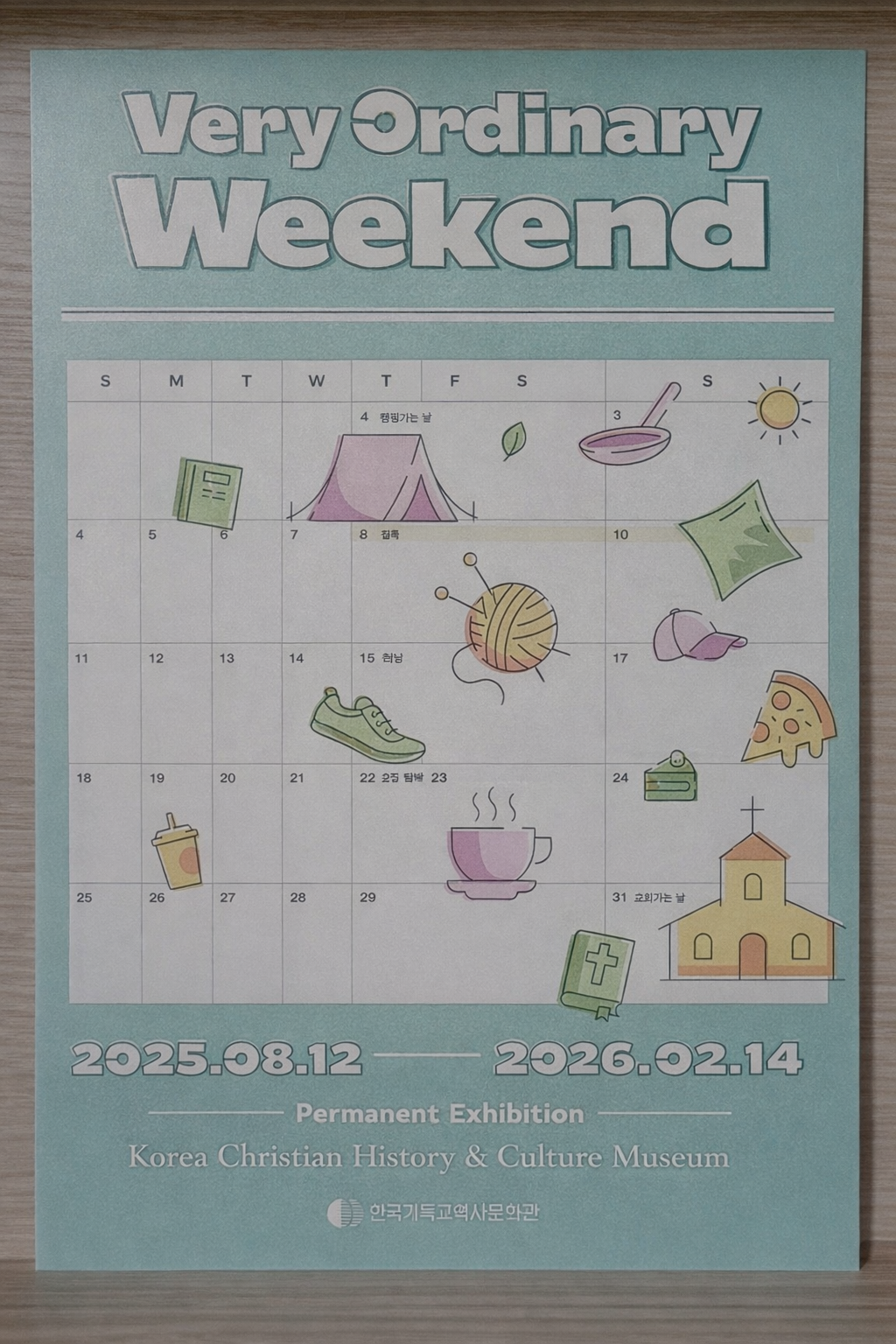
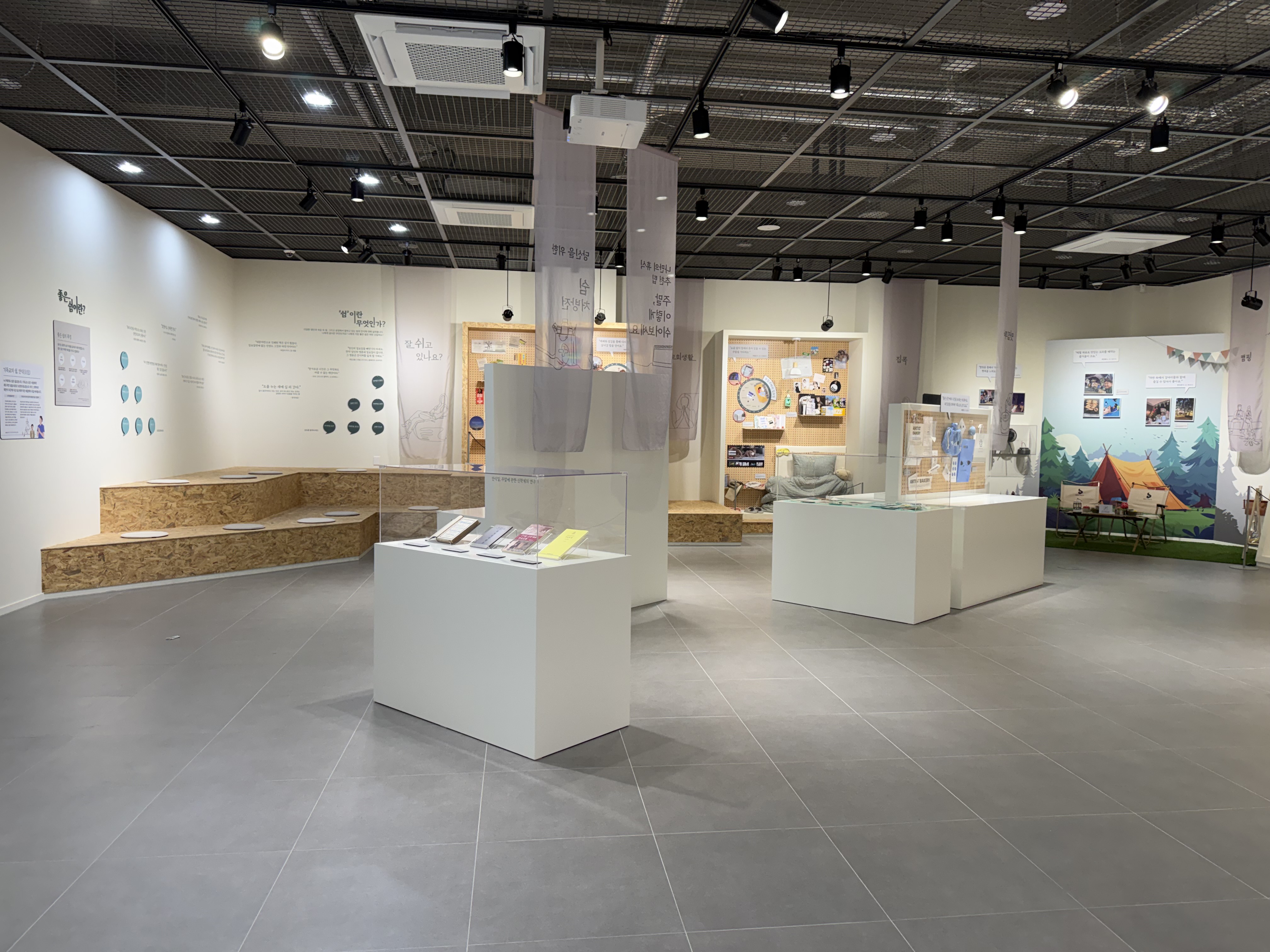
On the second floor, the special exhibition An Ordinary Weekend explores the theme of rest through the lens of contemporary life. Drawing on the 2025 cultural keyword “ABOHA” (an abbreviation for “an ordinary day”), the exhibition connects everyday rhythms with the biblical concept of Sabbath rest.
Modern society is often described as a “fatigue society,” marked by relentless competition and performance-driven expectations. Many experience deep physical and emotional exhaustion. For Christians—particularly those whose weekdays are consumed by labor and whose weekends are filled with church obligations—the question of how to understand rest from a theological standpoint is far from trivial.
Korean Christianity has long been characterized by passionate worship, evangelistic zeal, revival meetings, and early morning prayer. Yet comparatively little reflection has been given to how such devotion relates to the Sabbath principle established within God’s created order. Moreover, the widespread practice of Sunday rest in modern society owes its origins to Christian theology. This historical reality calls believers to reconsider how rest ought to be practiced faithfully today.
Through visual narratives of how different individuals spend their weekends, the exhibition raises fundamental questions about the nature of true rest. It challenges visitors to move beyond rest as mere consumption or leisure and to reflect on a Sabbath rhythm in which worship and daily life are not compartmentalized. Rather than setting church involvement and personal restoration in opposition, the exhibition encourages reflection on how both can coexist within God’s design.
By resisting both the secular model of rest and the unexamined patterns often assumed within traditional church culture, An Ordinary Weekend points toward a recovery of Sabbath as God intended it—a gift rather than a burden. In a society marked by constant fatigue, this message resonates deeply with contemporary Christians.
Considering the Christian’s Calling in Society
Walking through both the permanent and special exhibitions, one is compelled to ask anew what it means to live faithfully as a Christian in today’s world. The permanent exhibition invites a broad, historical reflection on the church’s public responsibility, while the special exhibition turns the lens inward, prompting a reconsideration of one’s personal rhythms and habits. The way these two perspectives—macro and micro—are woven together is one of the center’s greatest strengths.
Visiting the Korea Christian History and Culture Museum offers more than historical knowledge. It provides space to reflect quietly on what kind of Christian life God calls us to live within society, and how faith is meant to shape not only personal belief but the entirety of life. Such reflection, especially in the stillness of a weekend, may prove both timely and necessary.
About Author

faith.log
A journal that connects faith and everyday life. In each small piece of writing, we share the grace of God and the depth of life together.


