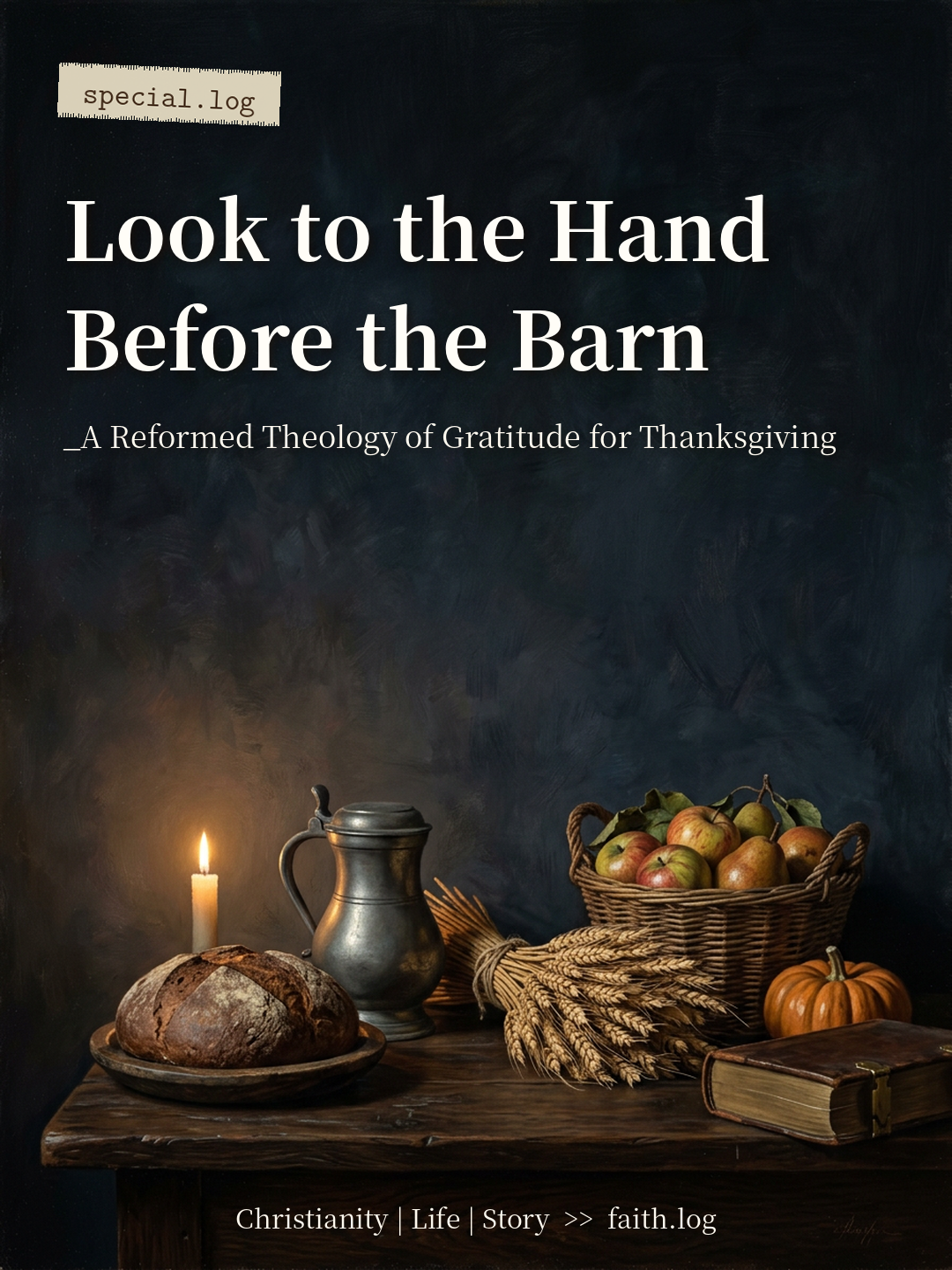
Gratitude Is a Confession of Origin, Not a Scorecard

Every November, many Christians pull out a list. Good health. A job that held steady through another round of layoffs. Kids who grew. Plans that worked out. Writing down what we are thankful for is a good habit, and I don’t want to discourage anyone from it. But I have learned to be wary of how quickly that list turns into a performance review. When the year has been fruitful, the list runs long. When the year has been lean, the list runs short. Gratitude of that kind is not really aimed at God. It is aimed at the yield.
In Romans 1, Paul diagnoses the fallen human condition, and near the root of it he places this: people knew God, yet they did not glorify him as God or give him thanks (Romans 1:21). Scripture does not treat ingratitude as a breach of etiquette. A heart that refuses to give thanks is a heart that refuses to let God be God. That is why the Reformed tradition has never treated gratitude as a mood. It is a confession. Before it asks how much we received, it asks from whom.
Nothing in Our Hands Was Not First Given

Paul put a pointed question to a Corinthian church that had grown proud of its gifts:
“What do you have that God hasn’t given you? And if everything you have is from God, why boast as though it were not a gift?” (1 Corinthians 4:7, NLT)
A farmer plows, plants, and weeds, but he cannot make it rain. The sweat is his. The sun, the rain, and the mysterious power that makes a seed become a stalk are not. Our harvests work the same way, even if most of us have never pulled a weed for a living. The talent that earned the paycheck, the health that let us show up, the door that opened at the right moment, the hours we were given to finish the work: all of it was received.
The Heidelberg Catechism, in its answer to Question 27, describes God’s providence as his almighty and ever-present power by which he upholds heaven and earth and governs all things, so that rain and drought, fruitful years and lean ones, health and sickness, plenty and want come to us not by chance but by his fatherly hand. I know of few sentences more fitting for Thanksgiving. Our barns were not filled by luck, and they were not filled by effort alone. They were filled by a Father’s hand.
Calvin makes a striking point in Book 3, Chapter 10 of the Institutes: God did not create food merely to keep us alive, but also for our delight. The color and fragrance of a flower and the taste of ripe fruit go well beyond what survival requires. Our God is not stingy. Gratitude begins with eyes that can see that generosity for what it is.
Thanksgiving in a Lean Year Comes from the Same Hand
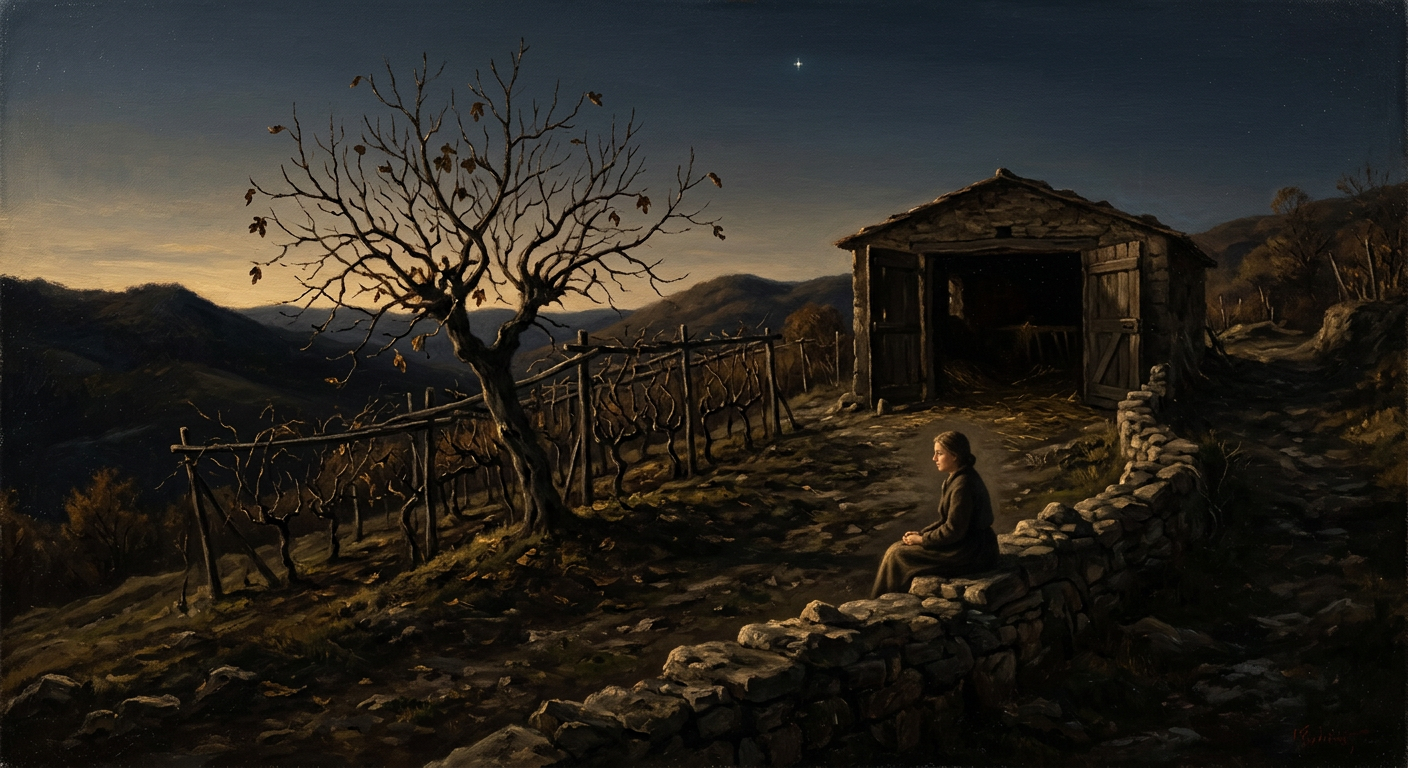
Not every reader is coming to the table after a good year. Some lost a job. Some spent the year in and out of hospitals. Some will look at an empty chair this Thanksgiving. For them, a cheerful “just count your blessings” is not comfort. It is one more weight to carry.
Question 28 of the Heidelberg Catechism names what we gain from knowing God’s providence: patience when things go against us, thankfulness when things go well, and steady confidence in our faithful Father for whatever lies ahead. Notice that the Catechism places patience and gratitude under the same providence. Thanksgiving in a fruitful year and endurance in a hard one are not two different faiths. They are two faces of the same trust in the same Father.
The prophet Habakkuk sings that even if the fig tree does not blossom, the vines bear no grapes, and the stalls stand empty, he will still rejoice in the Lord (Habakkuk 3:17-18). That is not optimism. Optimism believes circumstances will improve. Faith believes in the One who rules the circumstances. Reformed gratitude rests not on outcomes but on the covenant. That is why it can stand even in front of an empty barn.
Gratitude Is Not the Price of Salvation but the Response to It
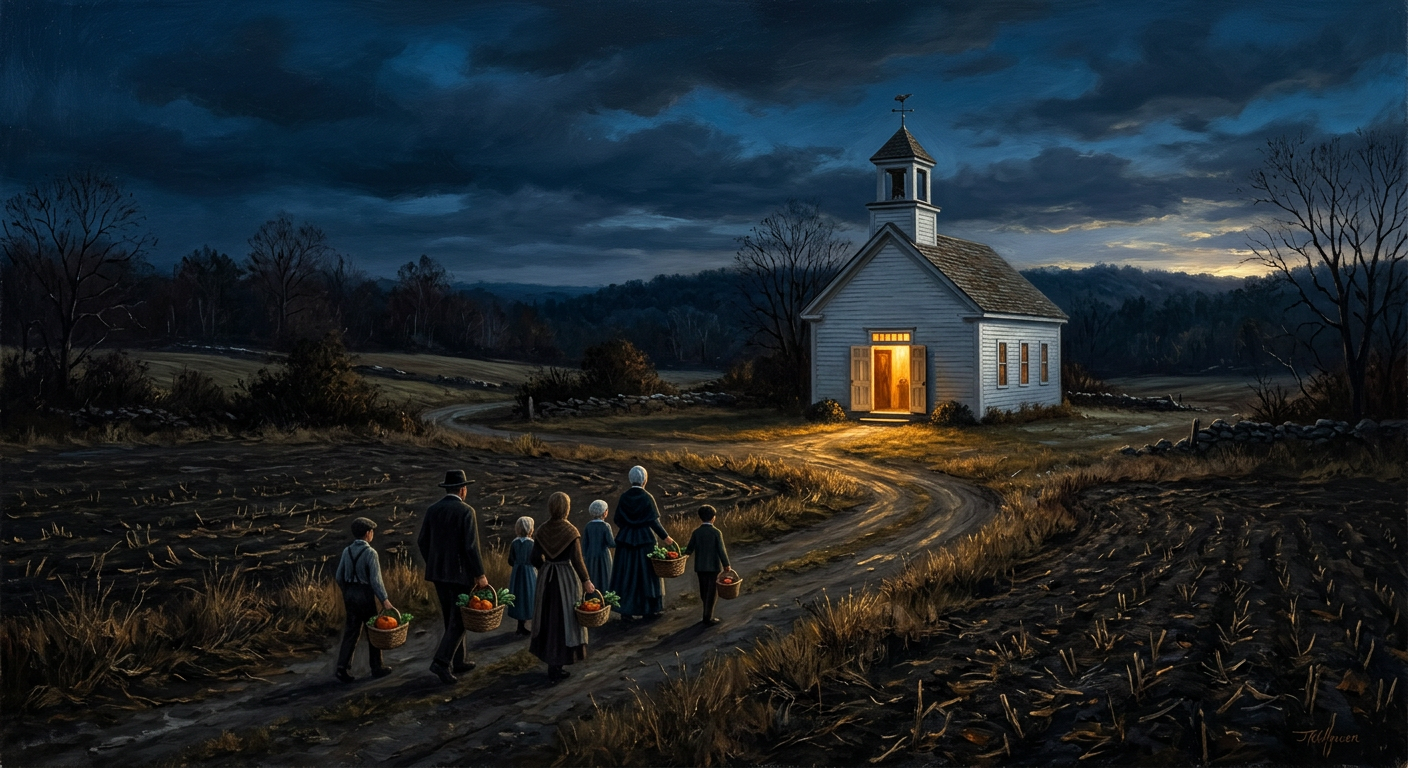
The Heidelberg Catechism is built in three movements: our misery, our deliverance in Christ, and our gratitude. The logic of that structure is unmistakable. Obedience and good works are not conditions we meet to earn salvation. They are the grateful response of people who have already been saved. The Catechism even teaches the Ten Commandments and the Lord’s Prayer under the heading of gratitude.
Reverse that order and gratitude becomes a transaction. Most of us have heard some version of the “seed offering” pitch: give generously now, and God will multiply it back to you. I believe that kind of teaching turns thanksgiving into an investment strategy and judges God by his rate of return. We do not give thanks in order to receive more. We give thanks because we have already received.
And the greatest thing we have received is not in the barn at all. God did not spare his own Son but gave him up for us all (Romans 8:32). The first item on any Christian’s Thanksgiving list is not this year’s harvest. It is Christ himself. When that gratitude stands at the center, everything else on the list finds its proper place. Solus Christus is not only a doctrine of salvation. It is the shape of a thankful life.
Thanksgiving Is Set by Providence, Not by the Calendar
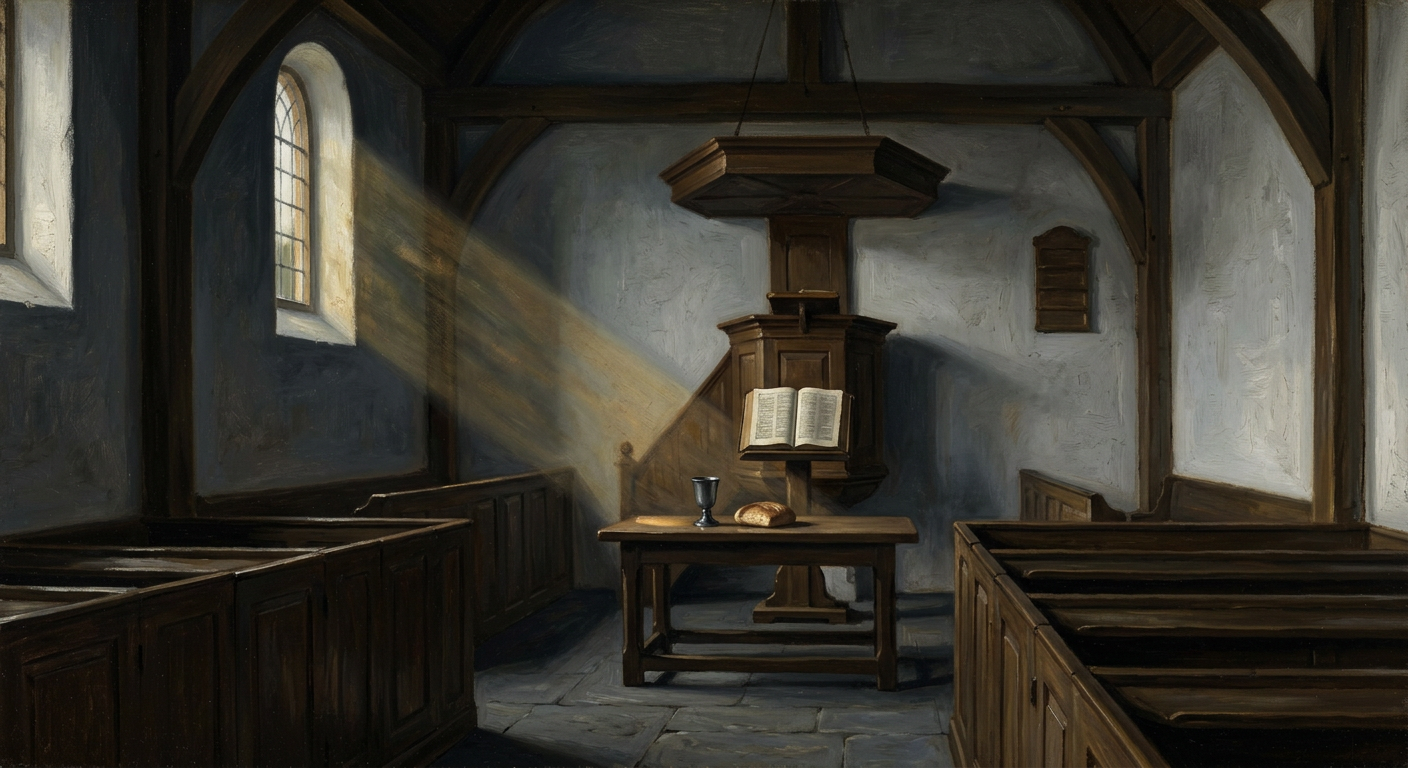
The Reformed tradition has always been careful about holy days. The Westminster Assembly’s Directory for the Publick Worship of God states that under the gospel, the only day Scripture commands us to keep holy is the Lord’s Day. Yet the same Directory affirms that when God’s providence calls for it, it is right for the church to set apart a day for public fasting or public thanksgiving.
Our New England forebears took that principle seriously. They proclaimed days of thanksgiving and days of humiliation as particular providences demanded, long before Lincoln fixed a national holiday in 1863. That history corrects how we should see the day. Thanksgiving is not a feast the Bible commands. It is a day to look back over a year of God’s providence and give him thanks together, coram Deo. It would be a loss to let it shrink into a long weekend of travel, turkey, and football.
More than that, in Reformed piety every Lord’s Day is already a day of thanksgiving. Each week we hear the Word and come to the Lord’s Table, the means of grace where we remember the body and blood of Christ. The old name for the Supper, the Eucharist, comes from the Greek word for thanksgiving. B. A. Gerrish titled his study of Calvin’s sacramental theology Grace and Gratitude, and those two words belong together every Sunday, not only one Thursday in November. Thanksgiving Day is simply one of fifty-two thanksgivings, sung a little louder.
Gratitude Does Not Stop at Our Own Table
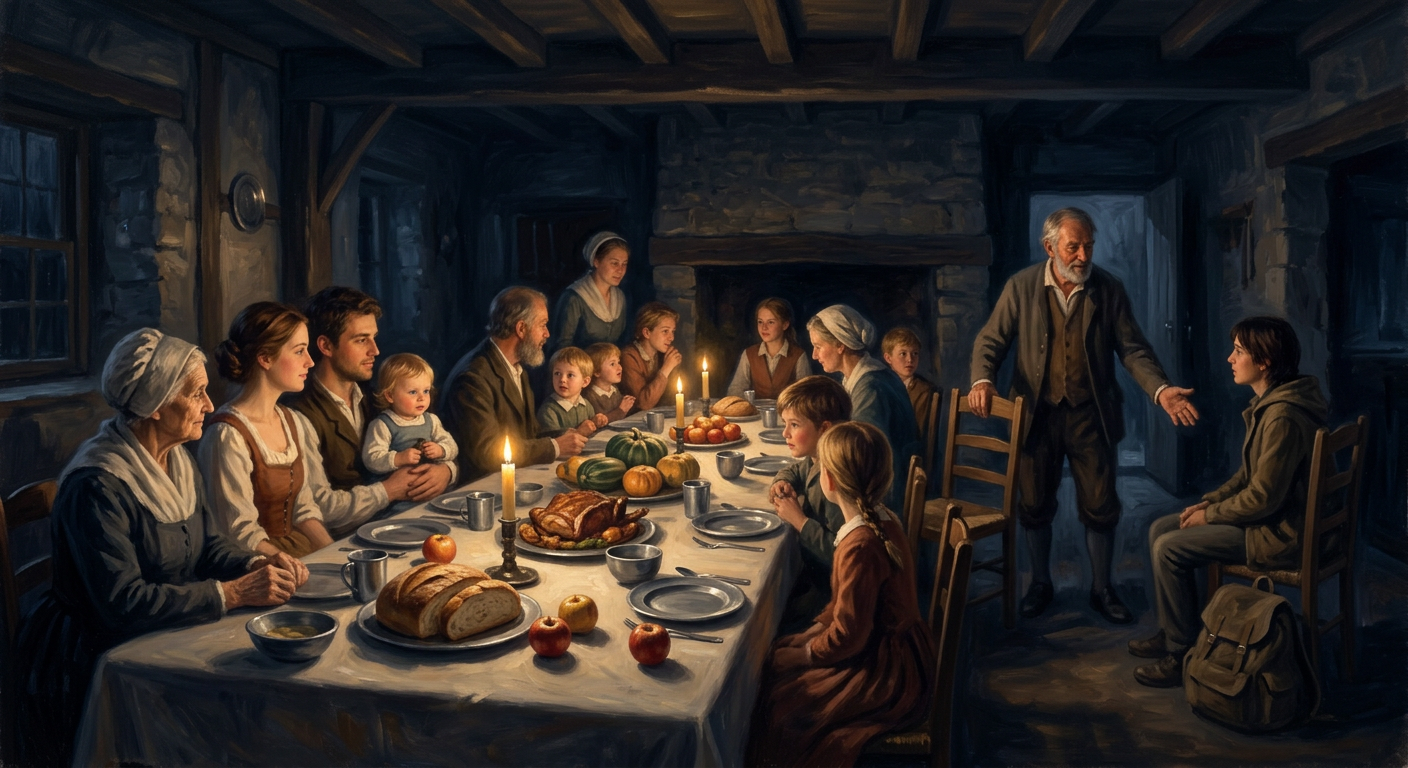
Israel’s Festival of Shelters came after the grain and the grapes were gathered in. God commanded that it be celebrated not only with sons, daughters, and servants, but with the Levite, the foreigner, the orphan, and the widow (Deuteronomy 16:13-14). Biblical thanksgiving was never a private meal. It was a table with room on it.
In Book 3, Chapter 7 of the Institutes, Calvin teaches that every gift we have been given is held in stewardship and is meant to be used for the good of our neighbor. If what we have is not ours, then we are not free to decide on our own where it goes. Gratitude begins on the lips, but it is completed in the hands.
So it is worth asking who is missing from the table this year. The coworker spending the holiday alone. The international student who has nowhere to go. The newcomer who just started attending your church. The member walking through a lean year. This Thanksgiving, I would encourage you to write down two things: one reason to give thanks, and one name to invite.
Gratitude Is Not a Holiday but the Grammar of Every Day That Follows

If we look at the barn first, our gratitude will rise and fall with the harvest. If we look at the Hand first, it will hold steady. Whoever knows that plenty and want, health and sickness, all come from the same fatherly hand will never run out of reasons to give thanks, whatever kind of year it has been.
“Always be joyful. Never stop praying. Be thankful in all circumstances, for this is God’s will for you who belong to Christ Jesus.” (1 Thessalonians 5:16-18, NLT)
Paul did not tell us to give thanks for all circumstances. He told us to give thanks in them. My prayer is that this Thanksgiving will not end as a year-end tally, but become the grammar for every day that follows.
About Author

faith.log
A journal that connects faith and everyday life. In each small piece of writing, we share the grace of God and the depth of life together.
'EN Edition' 카테고리의 다른 글
| The Reformation Began with a Single Word: Repent (0) | 2026.10.31 |
|---|---|
| start.log | Let Us Begin Again ⓪ A Place to Examine Our Faith (0) | 2026.01.01 |
| root.log | The Morning Star of the Reformation: The Life of John Wycliffe (1) | 2025.12.30 |
| desk.log | An App That Enhances Focus <Portal – Escape into Nature> (0) | 2025.12.20 |
| step.log | Walking the History of Korean Christian Mission in Seoul (0) | 2025.12.15 |


