[September 2026 Culture Notes] Ink and Color at the Turn of Autumn
September has a way of resetting the clock. The worst of the heat finally breaks, mornings carry a crispness that wasn't there a week ago, and bookstores start stacking the tables with everything meant to be read once school is back in session. It's a fitting month for anyone who spent August putting things off. This time around, the four stops on this list trace a single thread: they all begin with the book, in one form or another, before branching out into color, movement, and architecture. From an art book fair inside the National Library to a family festival that turns reading into a full-body activity, from a Berlin painter's love letter to luck in Hongdae to a century-late tribute to a Spanish architect in Gangnam, this month asks readers to follow the page wherever it leads.
1. Where Readers Become Creators — Seoul Publishers Table
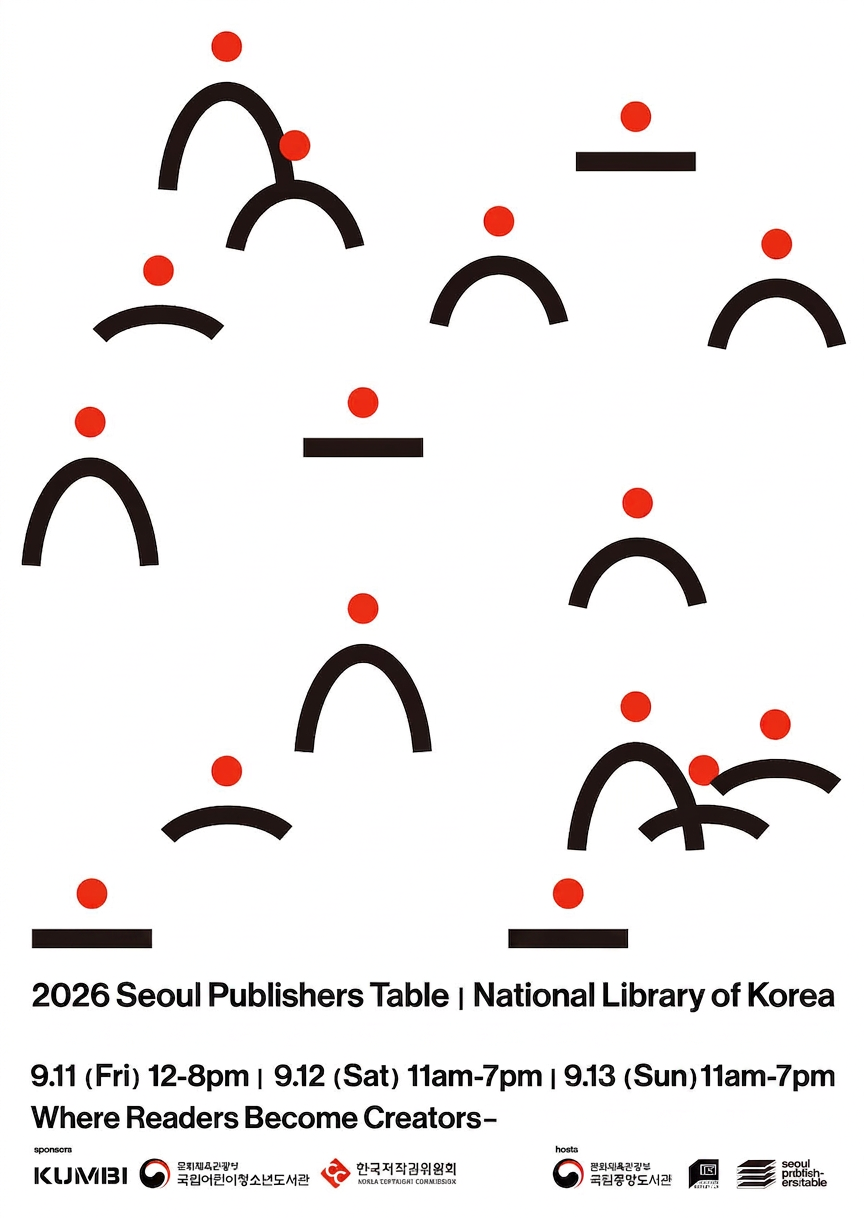
Anyone who still thinks of a book as ink on paper and nothing more should make a point of stopping by this one. The Seoul Publishers Table has spent years building a reputation as the fair where the line between designer and publisher blurs, where the texture of a cover or the grain of the paper counts for as much as the sentence printed on it. This is not a trade show in the conventional sense. It's closer to a room full of people who have decided that the physical object of a book is itself worth arguing over.
This year's line, borrowed for the occasion, is "Where Readers Become Creators" — an apt summary of what the three days actually deliver. Talks and seminars from working graphic designers and independent publishers run throughout, pulling back the curtain on a side of the industry most readers never see. Held inside the National Library of Korea, the fair carries an odd but effective tension: the institutional gravity of the building against the loose, experimental energy of the small-press tables filling it.
For anyone whose fall semester just started and is looking for an excuse to wander, this is as good a reason as any to come home with one strange, well-made book.
<Event Details>
- Venue: International Conference Hall, National Library of Korea (Seocho-gu, Seoul)
- Dates: September 11–13, 2026 (Fri–Sun)
- Hours: Fri 12–8pm | Sat 11am–7pm | Sun 11am–7pm
2. A Day Where Reading Gets Physical — 2026 Dongdaemun-gu Book Festival

The following Saturday, the plaza in front of Dongdaemun District Office trades quiet page-turning for something considerably louder. Timed to Korea's September "Month of Reading," this year's festival runs under the banner "Open the Book, Run the Body" — a deliberate break from the idea that reading has to mean sitting still.
The lineup backs up the slogan. There's "Reading Fitness," which pairs a passage with a physical challenge, and "Reading with Your Body," where kids act out folktales instead of just hearing them. It's an unusual pitch for anyone raised on the idea that books belong indoors and in silence, but for a family looking to burn an afternoon, it's hard to beat. Admission is free.
If the Publishers Table shows what the book looks like from the maker's side, this is the same story told from the reader's side, specifically the smallest readers. Two very different September events, same city, same object at the center of both.
<Event Details>
- Venue: Miraegwangjang Plaza & Multipurpose Hall, Dongdaemun-gu Office
- Date: September 12, 2026 (Sat)
- Hours: 12–5pm (Multipurpose Hall: 1–5pm)
3. Six Rooms in Search of Good Luck — Filipp Jenike: "Lucky, Lucky? Lucky!"
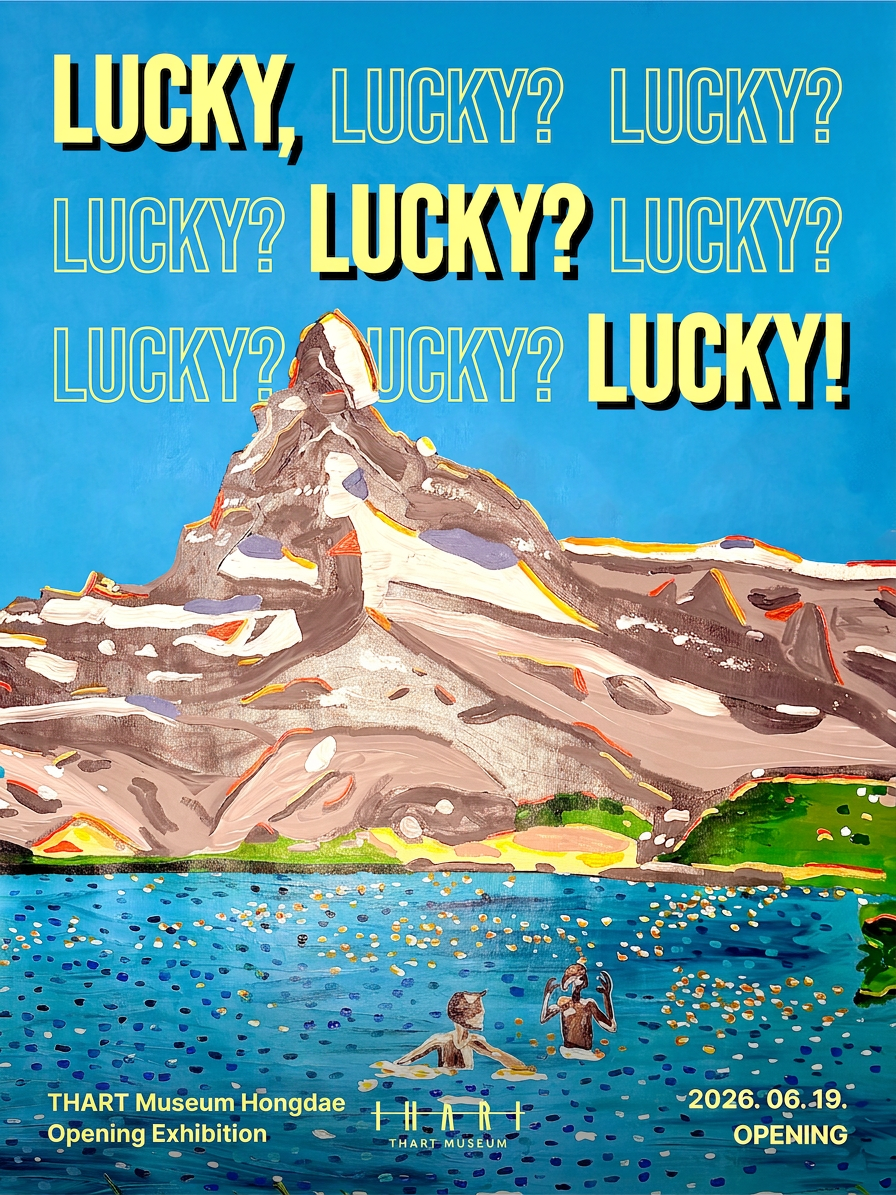
This one closes on September 19, which means the window to catch it is narrowing fast. Spread across six floors of THART Museum in Hongdae, from basement to rooftop, the show is German artist Filipp Jenike's first solo exhibition in Korea — 115 original works and a run of limited-edition pieces from an artist who never went through formal art school and, by his own account, more or less stumbled into painting. He studied law and business, once had ambitions of playing professional basketball, and has said more than once that missing that particular dream turned out to be the lucky break that led him to a paintbrush instead.
The exhibition is built as a six-chapter journey, and it plays the part. Visitors are handed a "Jenikae PASSPORT" at the entrance, the kind of gimmick that shouldn't work but does, and the space commits to the bit floor by floor. One level channels the neon glow of clubs in Berlin and Lisbon and bars in Bangkok. Another, the so-called "Lucky Room," invites visitors to pin thread across a map and trace their own personal route of good fortune. Collect enough stamps along the way and there's a small prize waiting at the end.
It's not a subtle show, and it isn't trying to be. What Jenike offers instead is color without academic restraint and a structure that turns looking into participating. Worth the trip before the doors close.
<Exhibition Details>
- Venue: THART Museum Hongdae (Mapo-gu, Seoul)
- Dates: June 19 – September 19, 2026
- Hours: 10:30am–7pm (last admission 6pm)
4. A Hundred Years of Curves, Finally Complete — "Gaudí: Back to the Origins"

Over in Sinsa House in Gangnam, an exhibition honoring Antoni Gaudí runs through the end of October. The timing is deliberate on two counts: 2026 marks exactly one hundred years since the architect's death, and it's also the year the Sagrada Família's central Tower of Jesus Christ, his unfinished masterwork, was finally completed. This is the official world tour exhibition, and the Seoul stop arrives with a track record behind it, having already drawn more than 330,000 visitors across its runs in Tokyo and Osaka.
The building itself deserves some credit here. Sinsa House, a converted multi-unit residence reworked by architect Seung H-Sang, follows what's often called an "aesthetics of poverty" — an approach that resists covering over the marks of age rather than erasing them. It turns out to be an unexpectedly good match for Gaudí, a man who spent his career choosing curves over straight lines and organic form over anything artificial. Inside, roughly thirty original pieces and artifacts sit alongside forty-two officially licensed replicas, organized across seven immersive themes built around architecture, nature, structure, and symbolism. A media-art room recreating the rooftop and rippling light of Casa Batlló goes further still, using 3D reconstruction to complete, for the first time, projects Gaudí left behind only as sketches and models.
An audio guide narrated by actor Ryu Seung-ryong is available free via QR code on-site, which makes the whole thing accessible even for visitors who've never given architecture a second thought. A century after his death, one architect's unfinished vision is being completed in digital form in the middle of Seoul, and it's the kind of thing worth sitting with for longer than an hour.
<Exhibition Details>
- Venue: Sinsa House (Gangnam-gu, Seoul)
- Dates: August 1 – October 31, 2026
- Hours: 10am–8pm daily
Closing Thoughts
September tends to feel like a second beginning. The semester starts, the weather turns, and the shelves fill up with something new. Each of the four stops above marks that beginning in its own way: in the hands of the people who make books, in the laughter of kids who'd rather run than sit still, in a map of luck traced out in thread and pin, and in the unfinished curves a Spanish architect left behind a hundred years ago and someone, finally, has completed. As the heat lifts and the air turns cooler, this is as good a month as any to wander a little further than usual.
About Author

faith.log
A journal that connects faith and everyday life. In each small piece of writing, we share the grace of God and the depth of life together.


