Gratitude Begins in the Heart, Not in Our Circumstances
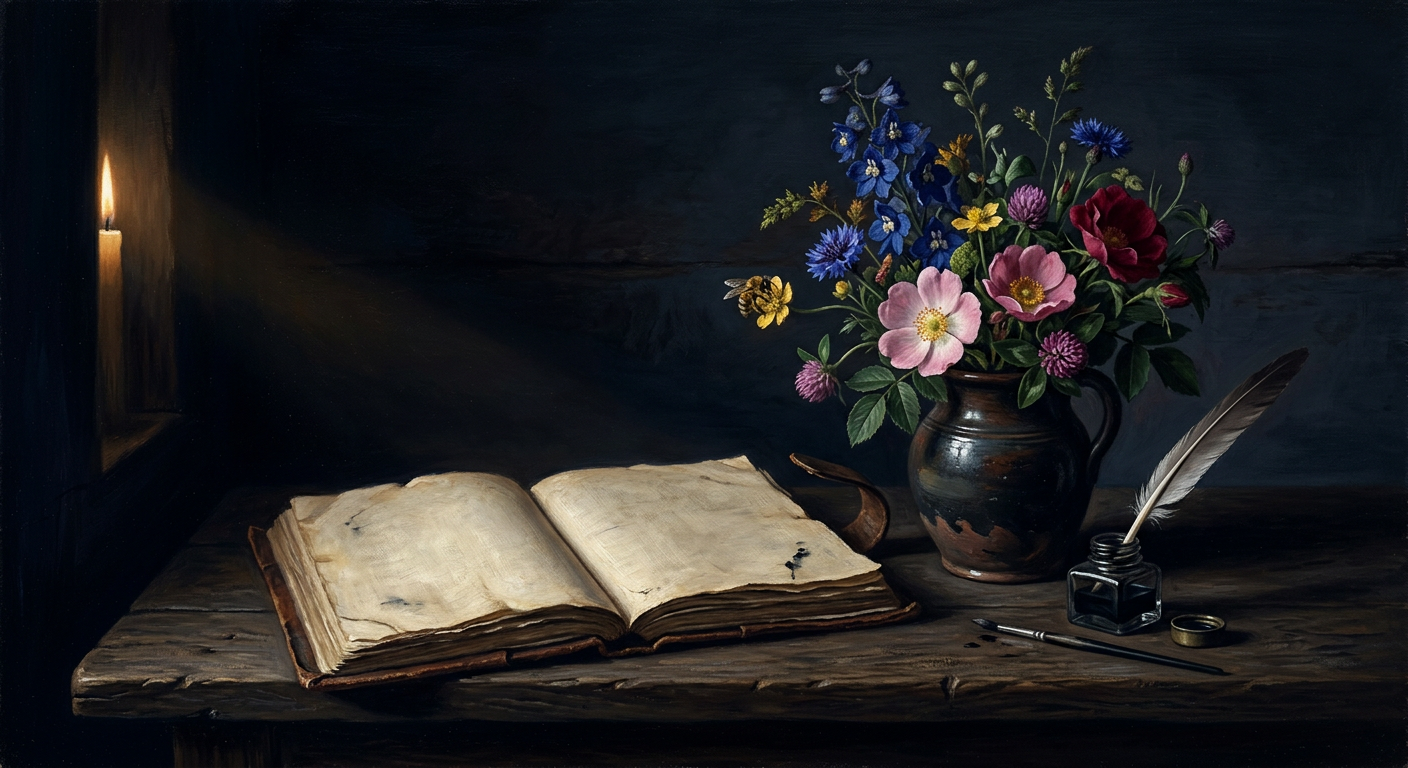
Have you ever heard the one about the bee and the fly? Put a fly in a flower garden, and it will still find the garbage. Put a bee in a garbage dump, and it will still find the flowers. People are much the same. A complainer will find something to grumble about in the best of conditions, while a grateful person will find reasons to give thanks even in the hardest of seasons.
A team of American psychologists once tested this. They asked one group to write down things they were grateful for and another group to write down things that had irritated them. When they compared the results some time later, the people who had recorded their gratitude viewed their lives more positively and reported greater happiness. Their circumstances had not changed. What had changed was the way they saw their lives.
But the gratitude Scripture calls us to is more than a technique for adjusting our mindset. Christian gratitude is a response to the grace of God, who has already acted on our behalf. That is why the ground of our thanksgiving is never our situation. It is always God Himself.
A Heart That Forgets Grace Drifts Toward Complaint
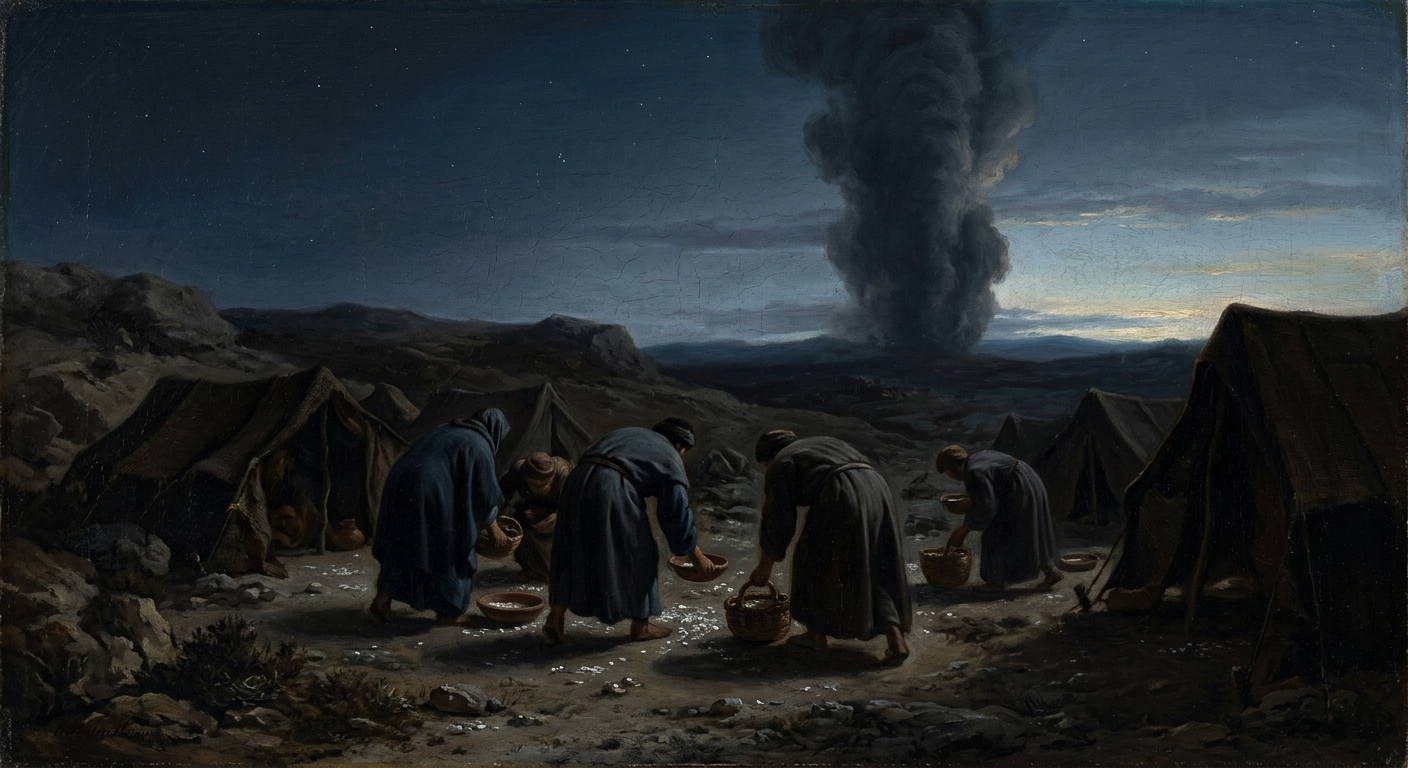
In the book of Exodus, the people of Israel were living miserable lives under crushing labor in Egypt. Through Moses, God sent ten plagues and delivered them from slavery. He brought them through the Red Sea on dry ground. When they went hungry in the wilderness, He rained down manna and quail from heaven, and He made water pour out of a rock. By day He shielded them with a pillar of cloud, and by night with a pillar of fire, guiding a people who did not know the way.
After crossing the Red Sea, the people saw God’s power with their own eyes and sang His praise with Moses (Exod. 15:1). But that awe did not last. As the wilderness journey wore on, their song of thanks slowly turned into a chorus of complaint. Scripture records that the manna first tasted like honey wafers (Exod. 16:31). Yet as time went on, the people grumbled that all they ever saw was manna (Num. 11:6), and in the end they declared that they hated the stuff (Num. 21:5). The grace that came down from heaven every morning had become a tiresome routine.
This is the true face of fallen humanity. When we first receive grace, we rejoice and give thanks. But as the years pass and our hearts harden, we take that same grace for granted and pour out our complaints. It was no different when Jesus healed ten men with leprosy. Of the ten who were made clean, only one came back to give glory to God and thank Jesus, and he was a Samaritan. Jesus asked,
“Didn’t I heal ten men? Where are the other nine?” (Luke 17:17, NLT)
Gratitude and Complaint Part Ways at the Question of Where We Set Our Hearts
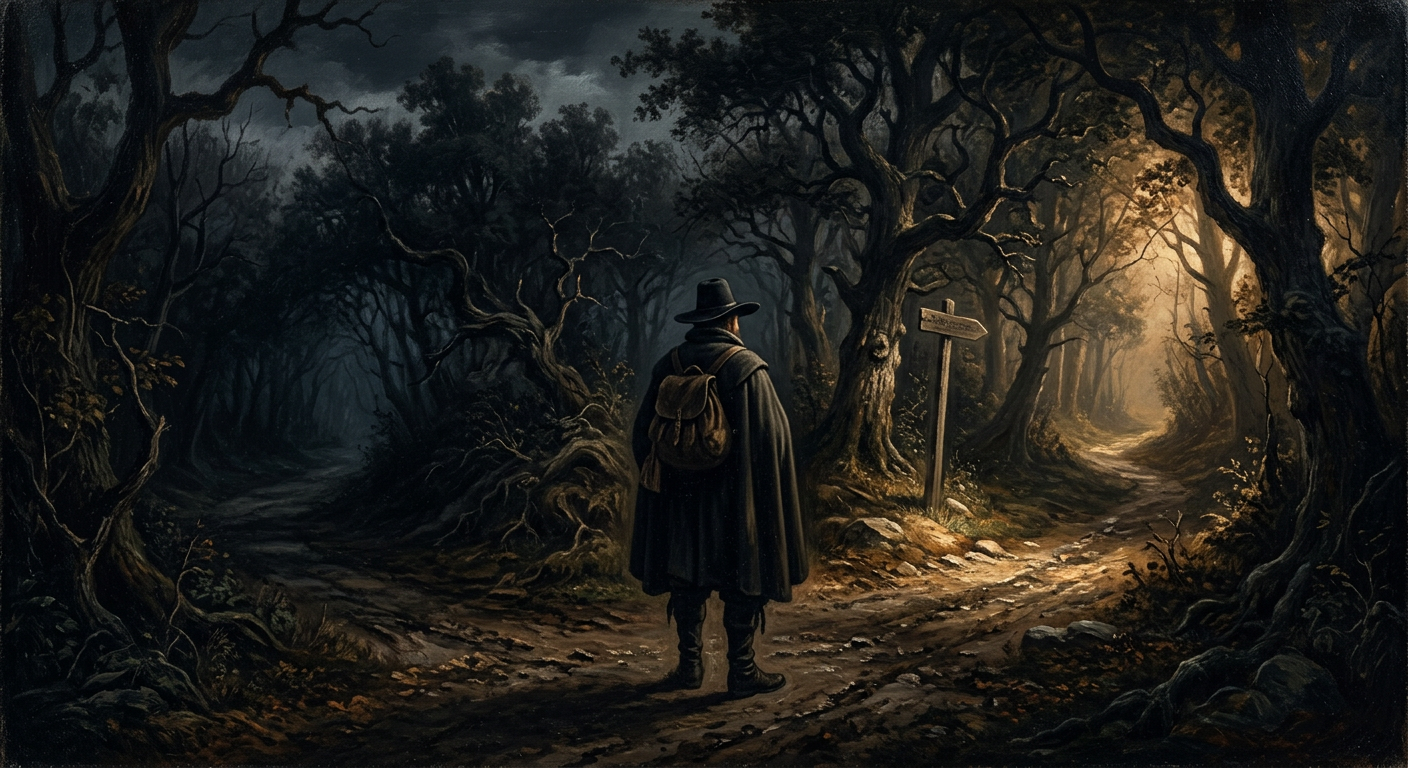
Why do we keep repeating this pattern? Because the same event can lead us to gratitude or to resentment, depending on the heart with which we receive it. That is why Scripture urges us, above everything else, to guard our hearts.
“Guard your heart above all else, for it determines the course of your life.” (Proverbs 4:23, NLT)
How is your heart right now? Even if your circumstances feel cold and barren, those who belong to Christ must not let worry and discouragement carry them down the road of bitterness and complaint. God has not given us a spirit of fear and timidity, but of power, love, and self-discipline (2 Tim. 1:7). When we abide in His love, we can hold on to the future and the hope He has prepared for us, whatever trials come our way (Jer. 29:11). Jesus Himself made us this promise:
“I am leaving you with a gift—peace of mind and heart. And the peace I give is a gift the world cannot give. So don’t be troubled or afraid.” (John 14:27, NLT)
Look Past the Mountains to the One Who Made Them
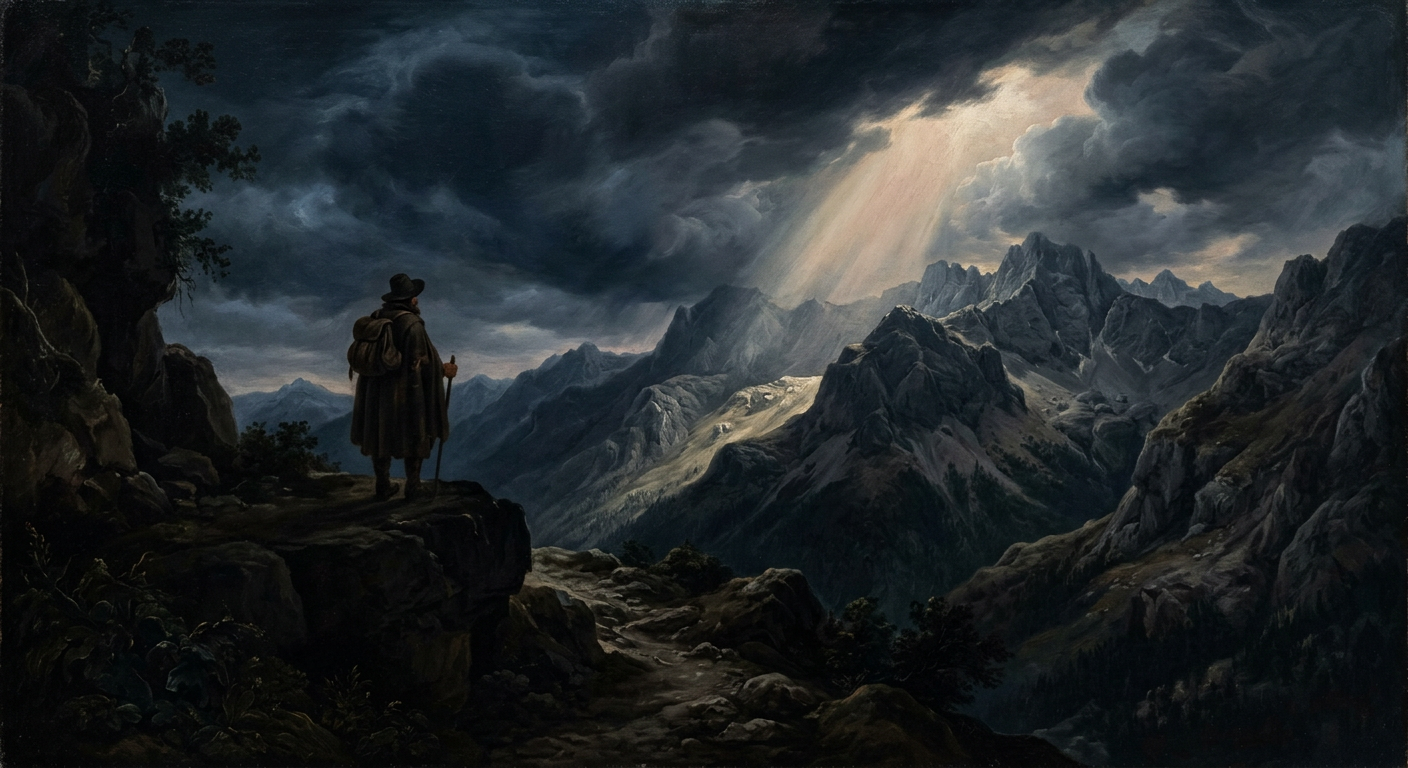
What are you looking at right now? Do you see only the hardships in front of you, the suffering, the problems that refuse to be solved? Or are you looking past all of it to the God who rules over every one of these things? The psalmist confesses:
“I look up to the mountains—does my help come from there? My help comes from the LORD, who made heaven and earth!” (Psalm 121:1-2, NLT)
We must not fix our eyes only on the rugged mountains that block our path. We must look to the God who made those mountains. When we do, He will keep us so that the sun will not harm us by day nor the moon at night (Ps. 121:6), and He will lead us through every trial and hardship.
Even in Prison, the Hymns Did Not Stop
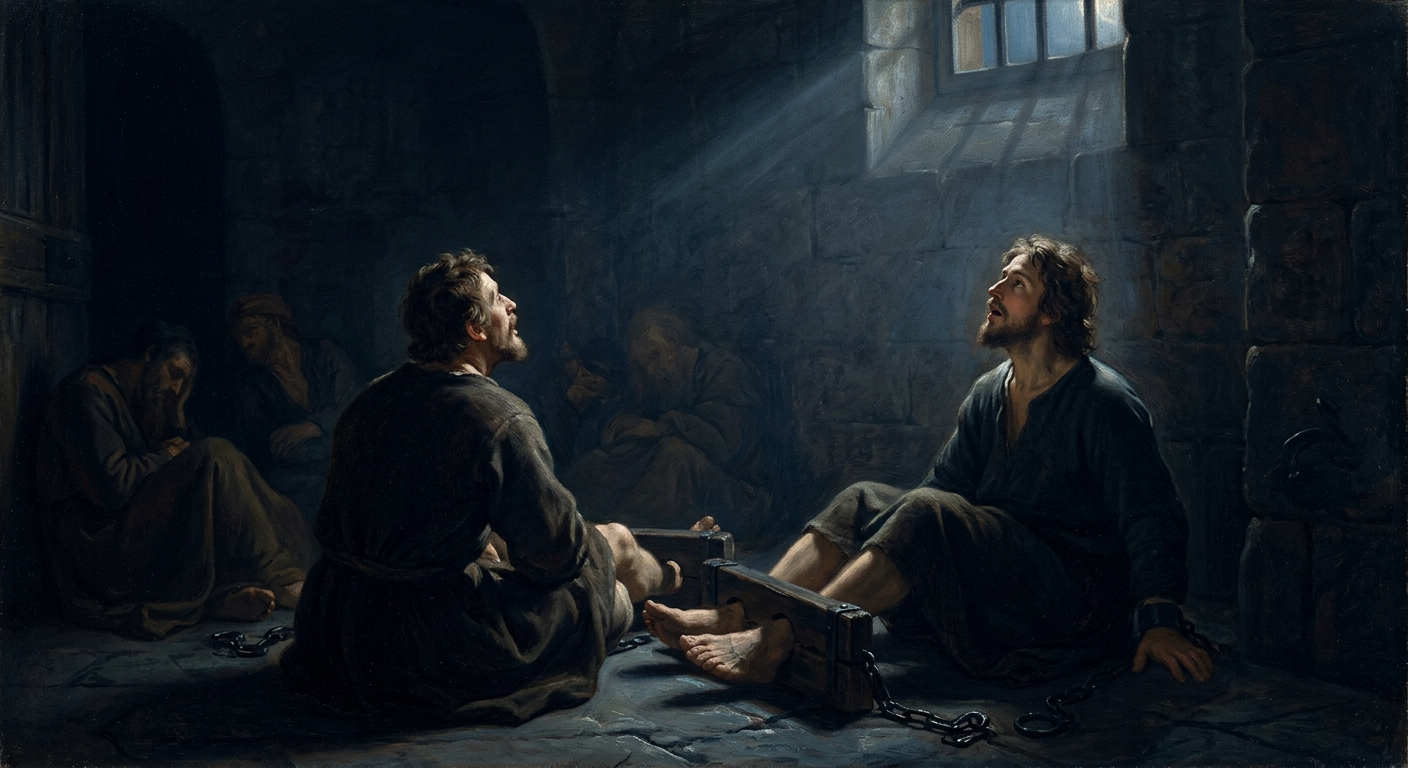
In Philippi, the apostle Paul and Silas were severely beaten and thrown into the inner prison (Acts 16:23-24). Their feet were clamped in stocks, and they had no idea what tomorrow would bring. Yet around midnight, the two of them were praying and singing hymns to God, and the other prisoners were listening (Acts 16:25).
They were in the same prison as everyone else, yet what came out of their mouths was not complaint but praise. What made the difference? More important than our surroundings is where our hearts are looking. Paul and Silas looked not at the prison walls but at God, and because they trusted Him, they did not lose heart. They sang in hope.
Giving Thanks in All Circumstances Is God’s Will
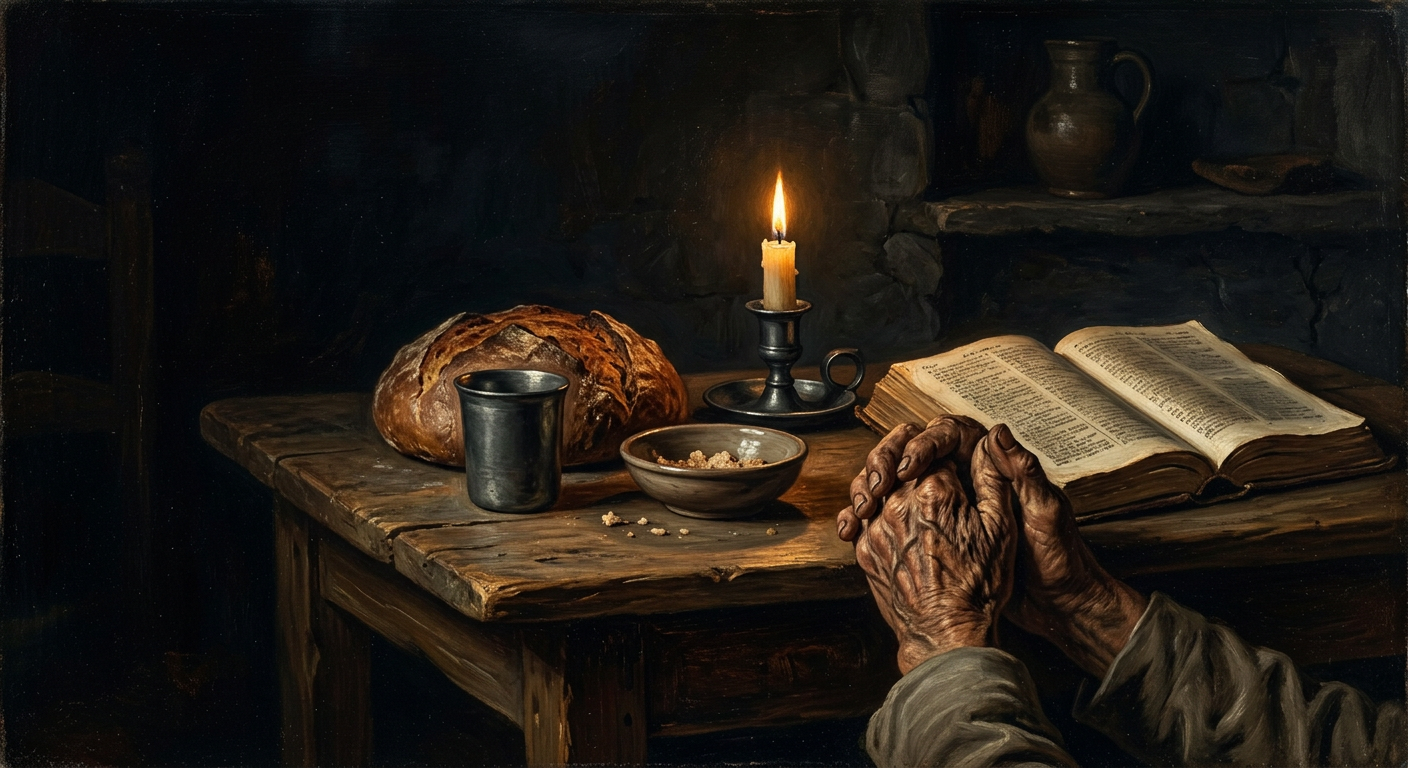
So whatever trials and hardships lie ahead of us, we must not let our hearts be stolen away, living in discouragement and despair and resentment. The life God desires for His people is clear:
“Always be joyful. Never stop praying. Be thankful in all circumstances, for this is God’s will for you who belong to Christ Jesus.” (1 Thessalonians 5:16-18, NLT)
Notice that this command is given to those who belong to Christ Jesus. We can give thanks in all circumstances not because everything is always going well, but because the God who has already forgiven our sins and adopted us as His children in Christ is sovereign over all things. This is why the Heidelberg Catechism, one of the great confessions of the Reformed churches, describes the entire life of the redeemed under a single word: gratitude.
Of course, our hearts are easily shaken by our circumstances, and our faith often grows weak. That is why Paul goes on to say, “Do not stifle the Holy Spirit. Do not scoff at prophecies” (1 Thess. 5:19-20, NLT). When we lean on the help of the Spirit, hold fast to the Word of God, and keep coming to Him in prayer to the very end, God, who knows our weakness, will help us, walk with us, and lead us in the paths of goodness.
May each of us count His grace day by day and, whatever our circumstances, never stop singing the song of thanksgiving. In the name of our Lord, amen.
About Author

Choi Jong Eui
Pastor, teacher, and writer committed to connecting Christian faith with everyday life. He writes with the hope of praising the Lord and faithfully completing the mission entrusted to him, bearing good fruit to the glory of God.


